Sky Sports Pundits Divided Over Premier League's Greatest Midfielders
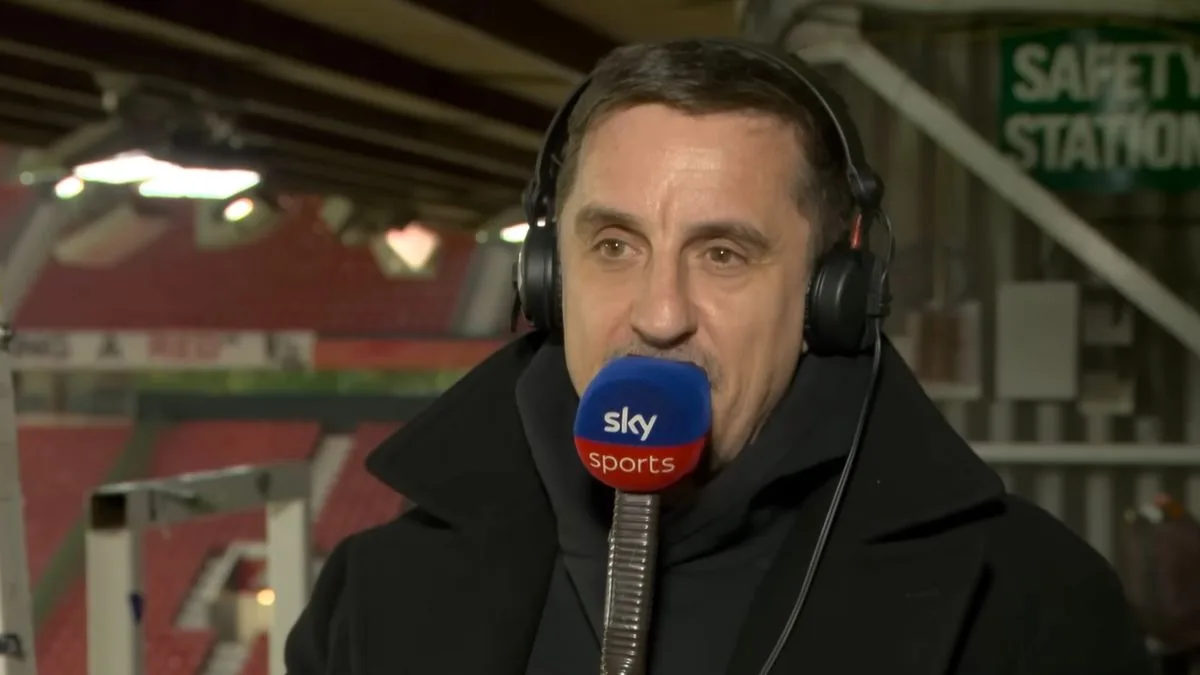
The long-standing football rivalry between Sky Sports analysts Gary Neville and Jamie Carragher has flared up once again, this time over their contrasting selections for the greatest midfielders in Premier League history. The debate unfolded during Monday Night Football, revealing significant disagreements between the former Manchester United and Liverpool defenders.
Carragher's Comprehensive Top Ten Selection
Jamie Carragher initiated the discussion by presenting his personal top ten Premier League midfielders, placing his fellow Liverpool legend Steven Gerrard at the summit. The former England defender positioned Manchester United icon Roy Keane in second place, with Manchester City maestro Kevin De Bruyne completing the podium positions.
Carragher's complete ranking featured:
- Steven Gerrard
- Roy Keane
- Kevin De Bruyne
- Patrick Vieira
- Frank Lampard
- N'Golo Kante
- Paul Scholes
- Yaya Toure
- Rodri
- Cesc Fabregas
Neville's Alternative Top Five Approach
In response to Carragher's extensive list, Gary Neville opted for a more selective approach, naming just five midfielders in his personal ranking. The Manchester United legend's choices diverged significantly from his colleague's selections, with two of Carragher's picks failing to make Neville's shortened list entirely.
Neville explained his reasoning during an episode of The Gary Neville Podcast, beginning with his fifth-placed selection: Rodri. The former right-back praised the Manchester City midfielder's "influence and impact" on matches, describing him as "an outstanding player who plays that position wonderfully." Neville acknowledged Rodri's relatively brief Premier League tenure, suggesting that with more years in England's top flight, the Spaniard would challenge for higher positions.
At number four, Neville selected Steven Gerrard, despite Carragher placing the Liverpool legend at the top of his list. Neville justified this lower ranking by pointing to Gerrard's positional versatility throughout his career. "He didn't always play in central midfield," Neville noted, referencing periods when Gerrard operated as a number ten or in deeper roles within different tactical systems.
Scholes, Vieira and Keane Complete Neville's Rankings
Manchester United icon Paul Scholes claimed third position in Neville's ranking, with the pundit hailing his former teammate as "the best player that I ever played with at Manchester United." Neville described Scholes as "the most beautiful football player, who controlled every single game for us," though he similarly noted that Scholes didn't exclusively operate in central midfield throughout his entire career.
The final two positions sparked particular interest, featuring the legendary captains from Manchester United and Arsenal's historic rivalry. Neville placed Arsenal's Patrick Vieira in second position, praising the Frenchman's defensive qualities, tackling ability, and physical presence. "When you come up against a player like Patrick Vieira, you need somebody in your team who can stand up to him in that respect," Neville observed.
Topping Neville's list was his former Manchester United captain Roy Keane. The pundit delivered an emphatic endorsement of the Irish midfielder, stating: "I don't think there's ever been a more influential football player in the Premier League. Full stop. In fact, I'm absolutely convinced there's not." Neville highlighted Keane's leadership, goalscoring, defensive capabilities, and passing range as distinguishing factors.
Notable Omissions and Positional Considerations
Neville acknowledged that Manchester City stars Kevin De Bruyne and David Silva entered his consideration but ultimately excluded them from his top five. The former defender explained that he didn't consider either player to be natural central midfielders in the traditional sense, which influenced their omission from his specific ranking.
The debate highlights the subjective nature of comparing players across different eras and tactical systems within the Premier League. Both pundits brought distinct perspectives shaped by their playing careers and allegiances, resulting in markedly different assessments of midfield greatness. The discussion continues to engage football fans and analysts alike, demonstrating the enduring appeal of comparing legendary players from English football's modern era.