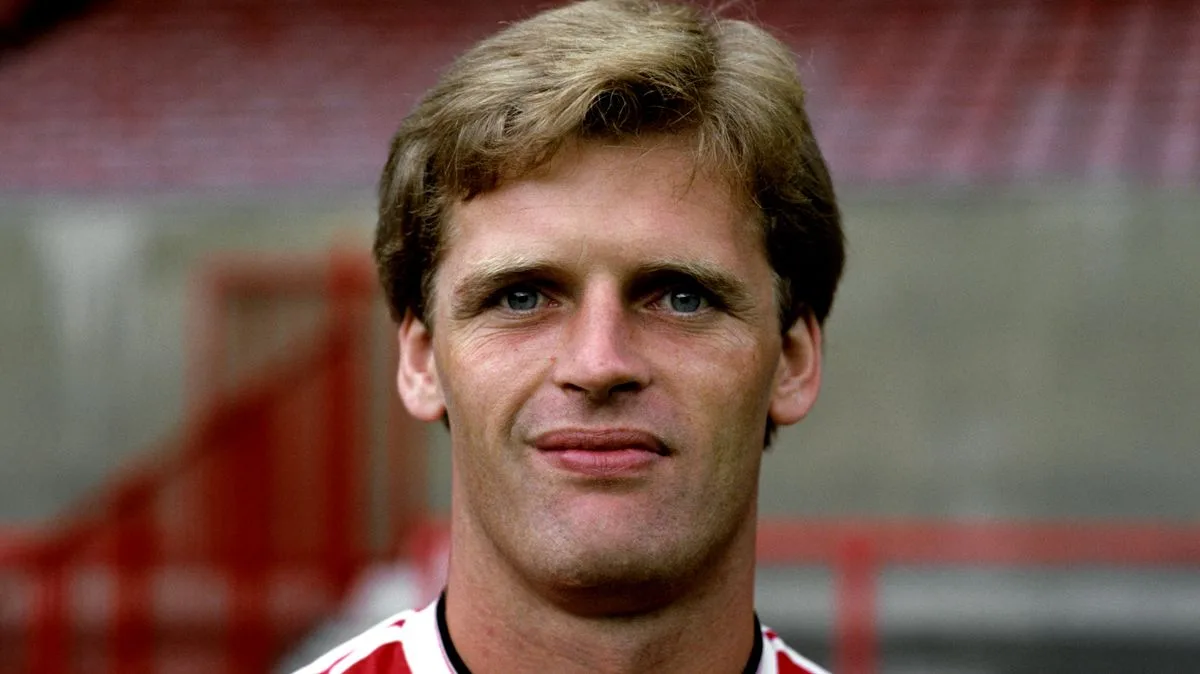
Gordon McQueen's Family Reveal He Blamed Heading for Dementia
McQueen believed heading caused his dementia, inquest hears

The family of football legend Gordon McQueen have revealed he believed heading a football throughout his career contributed to the dementia he suffered from before his death. The inquest into the death of the Scotland and Manchester United icon heard this week that McQueen was convinced the repeated impact had played a part in his condition.

"Heading probably hasn't helped"

Gordon McQueen died in 2023 at the age of 70, having been diagnosed with vascular dementia. Giving evidence at the hearing in Northallerton, North Yorkshire, his daughter, Sky Sports presenter Hayley McQueen, was asked if her father thought football was linked to his illness.

"He would say 'yes, heading a football all those years probably hasn't helped'," Hayley told the coroner. She recalled her father's frequent headaches during her childhood, remembering coming home from school to find him lying down. "I remember thinking 'why are you having headaches?'" she said.

A Changing Personality and Declining Health

Hayley McQueen outlined how her father's health and personality began to change noticeably after he turned 60. The towering defender, who made almost 350 appearances for St Mirren, Leeds United, and Manchester United between 1970 and 1985, began to struggle with his balance and swallowing.

"His balance was very, very off and his personality started to change," she said. "My dad was very outgoing, dinners, part of the after-dinner circuit. He became off, which wasn't really my dad." She described a man who became withdrawn, needing to be prompted to speak, and who gradually lost the ability to perform simple daily tasks.

"He lost the ability to write. He couldn't make a cup of tea. He got confused about what went where," Hayley stated. McQueen, who also battled throat cancer, would repeatedly say, "'there's something not right in my head'".

Medical Evidence Links Career to Brain Disease

Professor Willie Stewart, a consultant neuropathologist at Queen Elizabeth University Hospital in Glasgow, examined McQueen's brain post-mortem. He confirmed the presence of chronic traumatic encephalopathy (CTE), a brain condition linked to repetitive head impacts.

"Gordon technically fell into the lower stage of the disease, although on the threshold of the higher stage," Professor Stewart told the inquest. He stated the symptoms of cognitive decline and neuro-behavioural change were "typical in individuals who have long careers, professional footballers and rugby players".

When asked directly if there was a causal link between CTE and repetitive head injury, Professor Stewart replied: "The answer to that is yes." His own 2021 research found that outfield players, particularly defenders, had a higher risk of neurodegenerative disease compared to goalkeepers, whose risk was equivalent to the general population.

Senior coroner John Heath concluded the post-mortem found pneumonia in McQueen's right lung, mixed vascular dementia, and CTE. The inquest continues.