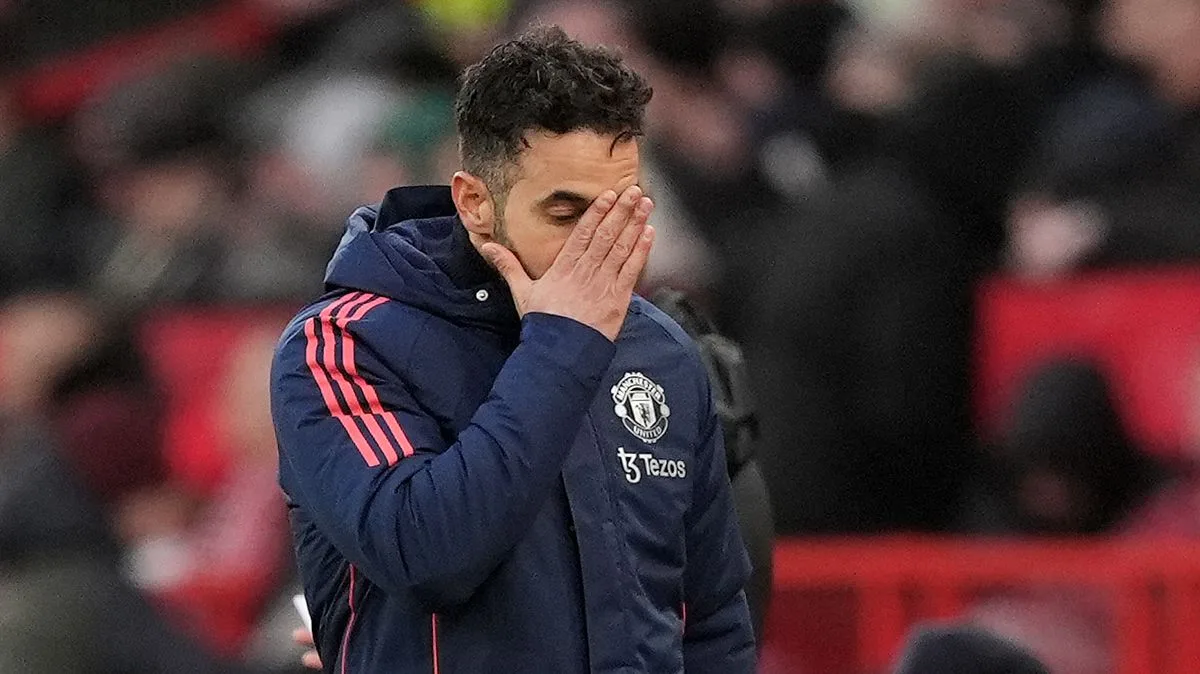
Manchester United's decision to sack Ruben Amorim could result in a total cost of up to £50 million, according to football finance expert Dr Rob Wilson. The club dismissed the Portuguese head coach on Monday after a 14-month stint, making him the seventh permanent manager since Sir Alex Ferguson's retirement in 2013.
Amorim succeeded Erik ten Hag in November 2024, a move that already cost United £10.4 million in compensation to the Dutchman and his coaching staff. Dr Wilson, Director of Executive Education at the University Campus of Football Business in London, estimated that Amorim's contract was worth around £12 million, though it remains unclear if this figure includes his backroom team.
“Intuitively, a figure of £12million seems appropriate for his contract, though it's unclear if this covers only him or his entire backroom team,” Dr Wilson told AceOdds. “However, when you consider the total package to replace Amorim, this figure could quickly rise to £50m based on the estimated costs Manchester United made by sacking and replacing Erik ten Hag with Amorim.”
The finance expert noted that such a sum is particularly unwelcome given the club is implementing redundancies elsewhere. Amorim’s tenure was marked by a disappointing 1-1 draw at Leeds on Sunday, after which he hinted at a possible departure when his contract had 18 months remaining.
In the interim, Under-18s head coach Darren Fletcher has taken temporary charge of first-team affairs. Crystal Palace boss Oliver Glasner and former Chelsea head coach Enzo Maresca have been linked with the permanent role. United face Burnley on Wednesday before hosting Brighton in the FA Cup on Sunday.