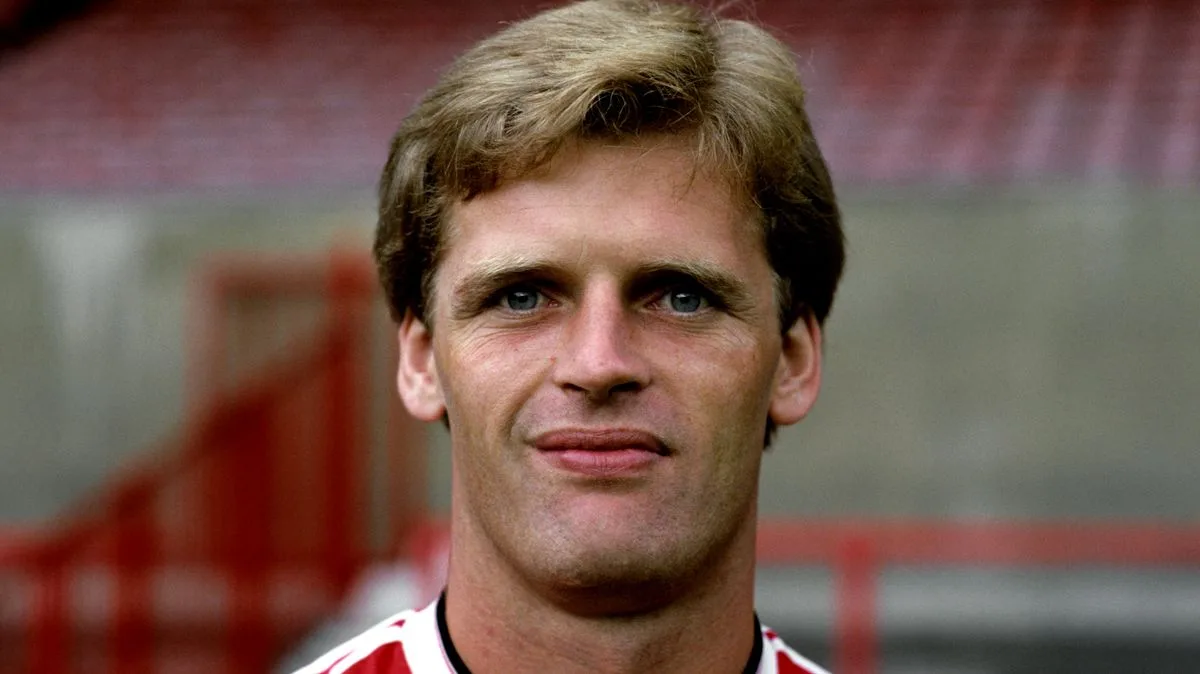
An inquest into the death of Scottish football legend Gordon McQueen has heard the former defender believed repeatedly heading a football during his career contributed to the dementia he developed later in life.
Family's Heartbreaking Testimony
McQueen, who earned 30 caps for Scotland and made almost 350 appearances for clubs including Leeds United and Manchester United between 1970 and 1985, died in 2023 at the age of 70. He had been diagnosed with vascular dementia.
His daughter, Sky Sports presenter Hayley McQueen, gave evidence at the hearing in Northallerton, North Yorkshire. She was asked if her father thought football had played a role in his condition.
"He would say 'yes, heading a football all those years probably hasn't helped'," Hayley told the coroner. She recalled him suffering from frequent headaches during her childhood, often needing to lie down when she returned from school.
While she remembered only a few concussions from his playing days, she described a significant change in his personality after he turned 60. His balance deteriorated and he became withdrawn, a stark contrast to his usual outgoing nature on the after-dinner speaking circuit.
A Progressive Decline
Hayley detailed her father's struggle with dysphagia, a swallowing difficulty that persisted for years, alongside a separate throat cancer diagnosis. His cognitive abilities faded sharply.
"He just wouldn't really know what year it was or what day it was," she said. "He lost the ability to write. He couldn't make a cup of tea." Despite this, McQueen retained a strong memory for people and past events, often stating, "there's something not right in my head."
The family's understanding of the potential link between football and brain disease deepened after McQueen's wife, Yvonne, spoke with Dawn Astle. Dawn's father, former England striker Jeff Astle, died in 2002 aged 59 from chronic traumatic encephalopathy (CTE), a brain condition linked to repetitive head trauma.
Medical Evidence Links Career to Brain Disease
Professor Willie Stewart, a consultant neuropathologist at Queen Elizabeth University Hospital in Glasgow, examined McQueen's brain post-mortem. He confirmed the presence of CTE.
"Gordon technically fell into the lower stage of the disease, although on the threshold of the higher stage," Professor Stewart stated. He explained that symptoms like cognitive decline and behavioural change are "typical in individuals who have long careers, professional footballers and rugby players."
When asked directly if there was a causal link between CTE and repetitive head injury, he replied: "The answer to that is yes."
Senior coroner John Heath recorded that the post-mortem found McQueen died with pneumonia in his right lung, mixed vascular dementia, and CTE.
Professor Stewart, who led a landmark 2021 study on neurodegenerative disease in footballers, noted its relevant findings: "The players, the goalkeepers who don't head the ball had a risk equivalent to general population, whereas in outfield positions, particularly defenders, the risk was higher." McQueen, a towering centre-back famed for scoring goals with his head from set-pieces, fell squarely into that higher-risk category.
The inquest is expected to continue for three days.