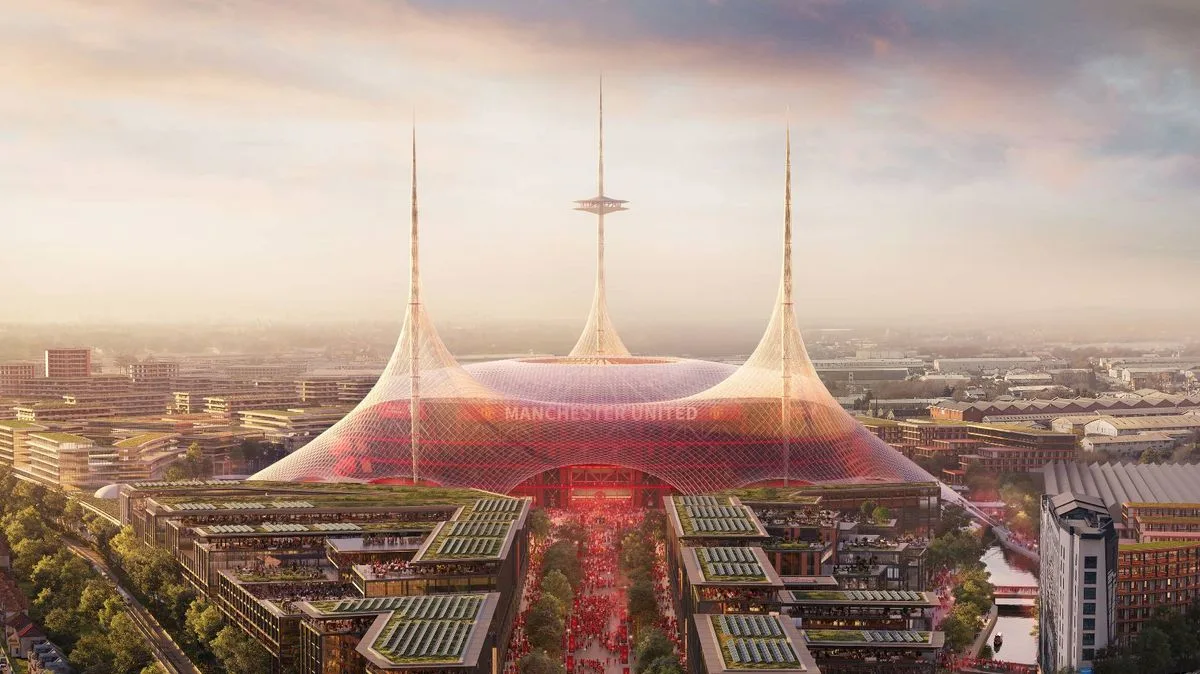
Manchester United's £200m Stadium Roof May Be Scrapped in New Plans
Man Utd Could Scrap £200m Roof in New Old Trafford Plans

Manchester United's £200m Stadium Roof May Be Scrapped in New Plans

Manchester United's ambitious vision for a new 100,000-seater stadium is facing significant revisions, with reports suggesting the club may abandon a controversial £200 million roof design. The Red Devils unveiled initial plans for the proposed 'New Trafford' in March 2025, but fresh developments indicate the project's most eye-catching feature could be eliminated entirely.

Cost Concerns and Design Changes

The tent-like roof, designed by renowned architects Foster + Partners, was originally hailed as a standout element of the stadium proposal. Sir Jim Ratcliffe, the Ineos chief and United co-owner, had previously compared the structure to the Eiffel Tower in its architectural ambition. However, industry sources now suggest this specific feature "may never come to pass" due to its staggering estimated cost of approximately £200 million alone.

This potential change highlights the enormous financial challenges surrounding the entire £2 billion stadium project. Foster + Partners are known for their premium designs, and the roof's expense has reportedly become a point of contention as United continues to seek funding for the ambitious development.

Funding Challenges and Government Position

Behind the scenes, Manchester United are understood to be actively working on securing financial backing for the stadium project. There appear to be "differences" between what has been publicly disclosed and the private realities of the club's search for investment partners.

In a significant blow to funding prospects, reports from November 2025 indicated that the prospective 'New Trafford' would not receive any government funding. The Treasury explicitly stated it would not allocate public money toward the stadium construction, forcing United to rely entirely on private investment and club resources.

Timeline and Vision for a 'Wembley of the North'

Sir Jim Ratcliffe has previously outlined that any move to a world-class new stadium would not occur before 2030, with hopes that construction might begin by the end of 2025. The Ineos chief has consistently emphasized his desire to create a "Wembley of the north" - a stadium befitting Manchester United's global stature and the footballing heritage of northern England.

"The north of England has won 10 Champions League medals, London has two. But London has Wembley, Twickenham, Wimbledon and the Olympic Village," Ratcliffe remarked when the plans were first unveiled. "The north of England deserves a stadium where England can play football, where we can hold the Champions League final, and one befitting of Manchester United's stature."

Current Stadium Limitations and Future Prospects

The decision to pursue a new stadium rather than renovate Old Trafford stems from recognition that the current 115-year-old ground has "fallen behind the best arenas in world sport." While the roof design may be modified or eliminated, the broader vision for a state-of-the-art facility capable of hosting major international events remains intact.

As Manchester United continues to refine their stadium plans, the potential scrapping of the £200 million roof represents both a practical response to financial realities and a significant design evolution for what could become one of English football's most important infrastructure projects in decades.