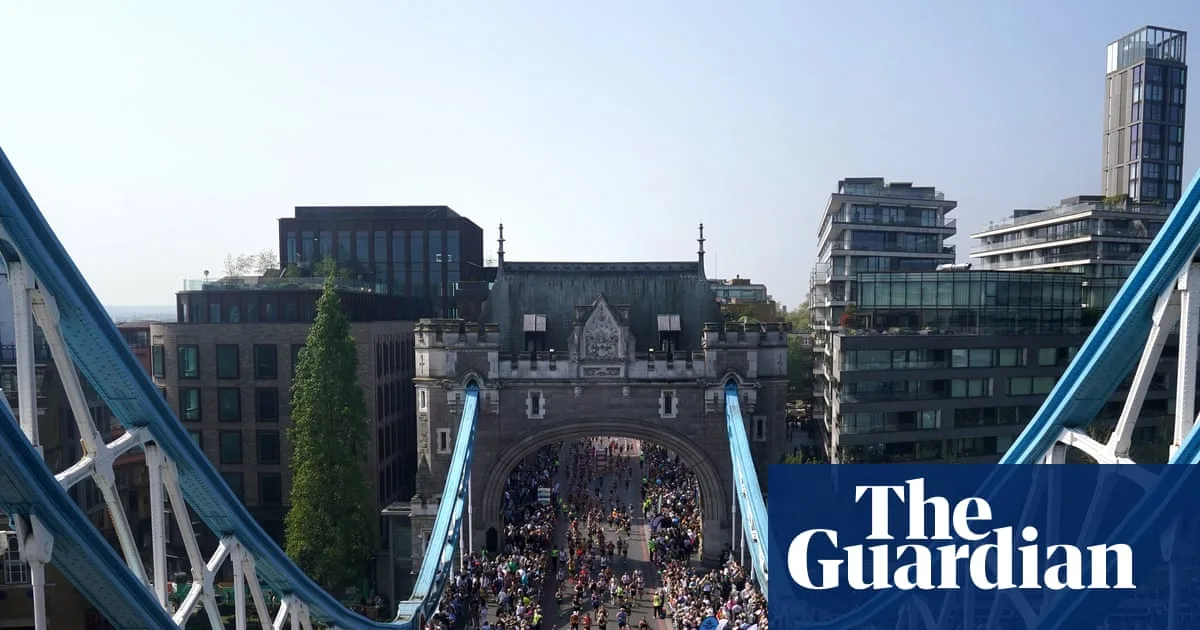
The London Marathon is in advanced talks about staging a two-day event in 2027, allowing tens of thousands more runners to participate in the iconic race and raise tens of millions more for charity. The proposal, internally referred to as the Double London Marathon, would be a one-off event on Saturday and Sunday 24-25 April next year.
If approved, a world-record 100,000 amateur runners would take part over the weekend, with 50,000 running the course each day. The elite men's and women's races are also expected to be held on separate days, combining top-level and grassroots sport in a single celebration.
Last year, a record 56,540 finishers raised £87.3m for charity, making London the world's largest annual one-day fundraising event. The ambition for 2027 is to deliver a major boost to the capital's wellbeing and economy, potentially raising more than £130m for charity.
The plan will be welcomed by runners who have struggled to secure a place due to soaring popularity. More than 1.1 million people entered the public ballot for the 2026 race, up from 410,000 just three years ago, leaving most disappointed. The two-day event would provide a unique opportunity to show unity and community at a time of growing social and economic division.
Hugh Brasher, chief executive of the London Marathon, said: 'The TCS London Marathon is the world’s most popular marathon, and we are always exploring innovative ways to enable more people to take part and to deliver positive benefits for London.' A Mayor of London spokesperson added that the mayor looks forward to working with the marathon and partners to consider if a two-day event might be possible next year.