Ibrahima Konate's Underrated Value Makes Liverpool Contract Extension a Pragmatic Move
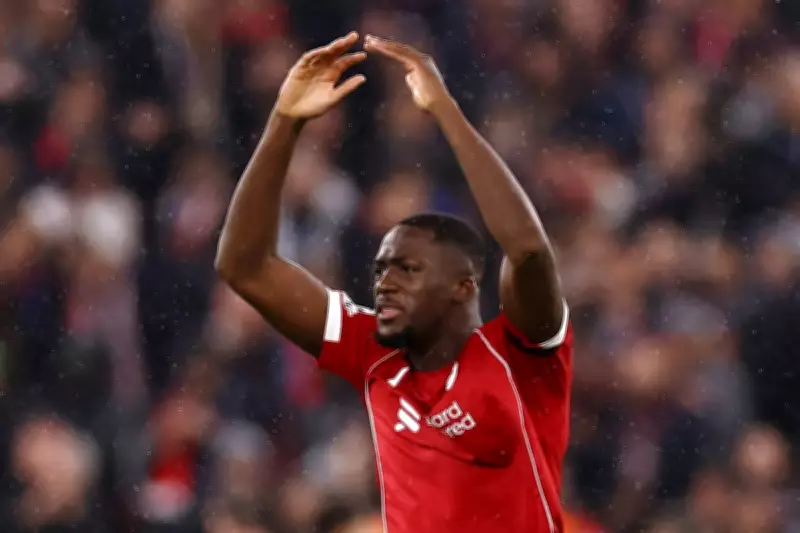
The impending contract extension for Ibrahima Konate at Liverpool FC represents a pragmatic and strategic decision for both the player and the club. While the French centre-back's current deal expires this summer, negotiations have progressed to a point where a new agreement appears imminent. This development underscores Konate's underrated qualities, which extend far beyond his inconsistent performances during the recent campaign.
A Quiet Negotiation Amid High-Profile Contract Sagas
Last season, Liverpool faced significant attention surrounding the expiring contracts of Virgil van Dijk, Trent Alexander-Arnold, and Mohamed Salah. This year, Konate has found himself in a similar situation, albeit with considerably less public scrutiny. History seems poised to repeat itself in one crucial aspect: like Van Dijk and Salah before him, Konate is expected to commit his future to Anfield rather than depart on a free transfer.
Konate himself has confirmed that he is very close to signing a new deal, marking what could be viewed as a successful piece of negotiation by Liverpool's management. The patient, low-profile approach adopted by director of football Richard Hughes has yielded positive results, demonstrating that not panicking in contract situations can pay dividends. However, the imminent exit of Salah—just one year after his own contract extension—serves as a reminder that such agreements do not always guarantee long-term stability.

Inherited Challenges and Ongoing Uncertainties
When Hughes and the returning Michael Edwards assumed their roles, they inherited the complex contract situations involving Van Dijk, Salah, and Alexander-Arnold. These players were entering the final twelve months of their deals, creating obvious knock-on effects for others like Konate, whose contract was set to expire in 2026. Prioritising these high-profile negotiations inevitably delayed discussions with secondary figures.
Nevertheless, Liverpool would benefit from engaging in fewer games of brinkmanship. While the club eventually negotiated a reduced fee for Alexander-Arnold's early departure to Real Madrid—facilitating his participation in the Club World Cup—a self-sustaining model like Liverpool's cannot afford to regularly risk losing valuable assets without compensation. Even with Konate's extension secured, significant uncertainties persist. Contracts for Van Dijk, Joe Gomez, Curtis Jones, and Alisson all expire next summer, alongside those of Hughes, Edwards, and manager Arne Slot.
Talks have commenced with Dominick Szoboszlai, Liverpool's outstanding performer this season, but the Hungarian midfielder confirmed on Sunday that no substantial progress has been made. Despite investing £450 million in predominantly young talent last summer, much of Liverpool's future remains shrouded in doubt, highlighting the precarious nature of long-term planning in modern football.
Pragmatism Over Perfection
The decision to extend Konate's stay at Anfield is fundamentally pragmatic. Both parties likely concluded that, under the current circumstances, they represent the best available option for each other. Konate's decidedly mixed form and poor first half of the season may have deterred potential suitors, such as Real Madrid, who were reportedly interested in securing his services on a free transfer. Arguably, the French defender would not command a starting position in several of the world's elite teams.
Conversely, Liverpool probably cannot afford to both lose Konate and commit substantial resources to acquiring a replacement. The club recognises that, at his best, Konate is a high-class performer. He has delivered two terrific seasons at Anfield—in 2021-22 and 2024-25—but otherwise exhibits significant variability in his performances. This high-ceiling, low-floor dynamic means the gap between his best and worst can be substantial, a trait also long associated with his teammate Joe Gomez.

Contextualising Konate's Season
Four months ago, manager Arne Slot reflected that Konate had been "too much at the crime scene" this season, referencing the centre-back's propensity for being involved in defensive errors. While such scrutiny comes with the territory for defenders, Konate's mistakes were indeed too frequent. However, his commitment to the cause has been widely appreciated. He voluntarily returned early from compassionate leave following the death of his father, Hamady, in January, stepping up when Liverpool were critically short of players—a recurring theme throughout the campaign.
Part of Konate's appeal lies in his availability; he has made 46 appearances this season, providing much-needed consistency in a squad plagued by injuries. At 26 years old, he should be entering his peak years as a defender. If Gomez departs, Konate will serve as the bridge between generations in Liverpool's centre-back quartet next season. New signing Jeremy Jacquet will arrive, and Giovanni Leoni will return to fitness, but both are untested at the highest level, aged just 20 and 19 respectively.
Van Dijk will turn 35 in July and cannot reasonably be expected to shoulder the same immense workload again. While Jacquet and Leoni represent the long-term future, each remains unproven over a full season. This campaign has provided Liverpool with stark warnings about the time required for new signings and imports to adapt to the demands of Premier League football.
Leadership and Future Role
Even if Jacquet and Leoni realise their potential, Konate will likely be required to help stabilise the team for the next couple of seasons. This role would entail demonstrating leadership qualities as a senior partner—a challenge given he has always operated as the junior figure alongside Van Dijk. Improved continuity of selection and consistent performances on his flank, following a season disrupted by using seven different right-backs, could also enhance Konate's effectiveness.
Konate's troubled season is not entirely his fault, a sentiment that applies to several other players at Anfield. Consequently, his new deal may not be met with widespread celebration. Yet, for both Konate and Liverpool, this extension represents a sensible, pragmatic solution that addresses immediate needs while acknowledging underlying uncertainties. In a landscape of constant flux, securing a proven, if inconsistent, performer makes perfect sense.