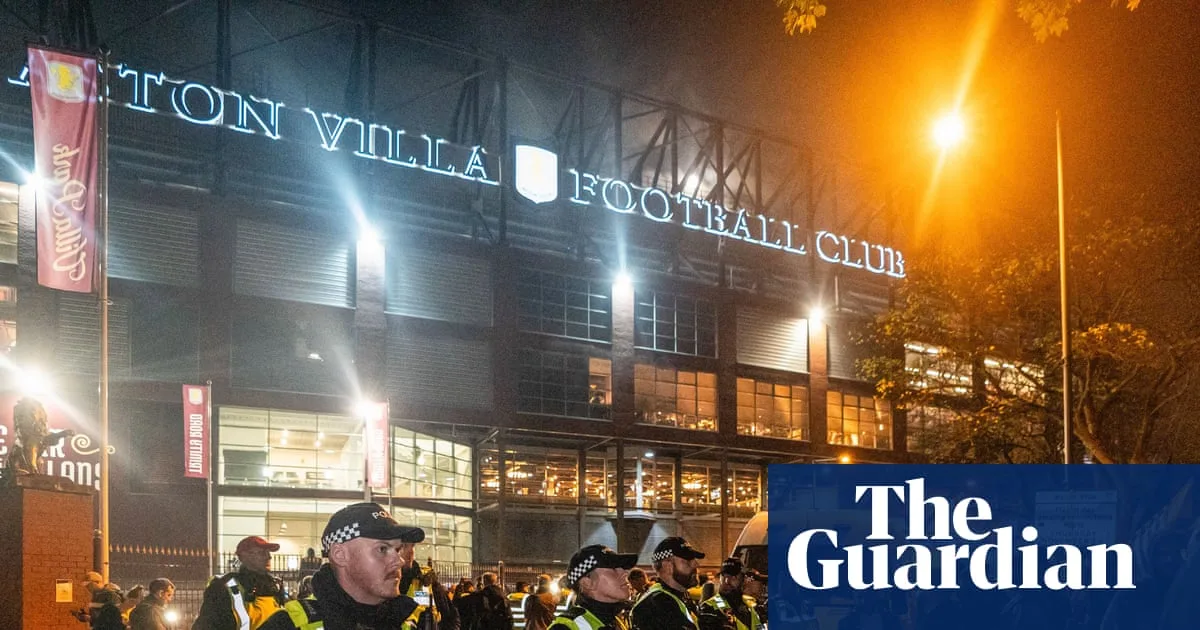
Jewish community groups warned West Midlands police that banning Maccabi Tel Aviv fans from attending a Europa League match against Aston Villa could be seen as antisemitic, according to documents obtained under freedom of information laws. The ban, imposed for the fixture at Villa Park on 6 November, was condemned by Prime Minister Keir Starmer as "wrong" and suggestive of antisemitism.
Redacted minutes from a meeting of the council-led safety advisory group on 16 October show that West Midlands police recorded the concerns. The document states: "Jewish community groups have expressed concern that banning away fans could be perceived as antisemitic, rather than a public safety decision. This perception could undermine trust and increase reputational risk for authorities and the club." The police also noted awareness of concerns among Aston Villa fans about hate crime incidents, particularly "isolated incidents of antisemitic abuse".
The revelations follow an apology by Assistant Chief Constable Mike O'Hara to Birmingham's Jewish communities after he told MPs that some had expressed support for the ban. A force spokesperson later clarified that it was not intended to imply explicit support. The minutes redact the names of more than 25 attendees, except for councillors Waseem Zaffar and Mumtaz Hussain, with five police representatives present.
According to the document, the force cited "significant intelligence indicating potential for disorder" involving Maccabi Tel Aviv fans, referencing incidents in Italy, Norway and Amsterdam, as well as disorder at baseball matches in Holland involving Israeli teams. It warned of a "high likelihood of protest activity" and rated the threat at the "highest" level. However, the match risk was assessed as "medium" without away fans, and no members of the group objected to the ban.
West Midlands Police Chief Constable Craig Guildford has been recalled to parliament by the Home Affairs Committee, which is scrutinising the decision. Further details provided by Guildford include an email summarising a meeting with Dutch police about violent confrontations before an Ajax-Maccabi Tel Aviv match in Amsterdam in 2024, including alleged attacks on Muslim taxi drivers and anti-Muslim chants. The notes also describe a "national mobilisation of Muslim youths" travelling to Amsterdam on match day and hit-and-run incidents involving Maccabi fans. The government's independent adviser on antisemitism, Lord Mann, has described some of the force's claims as "inaccurate" and said they "conflated different things", while Dutch police were reported to be "surprised" by the claims attributed to them.