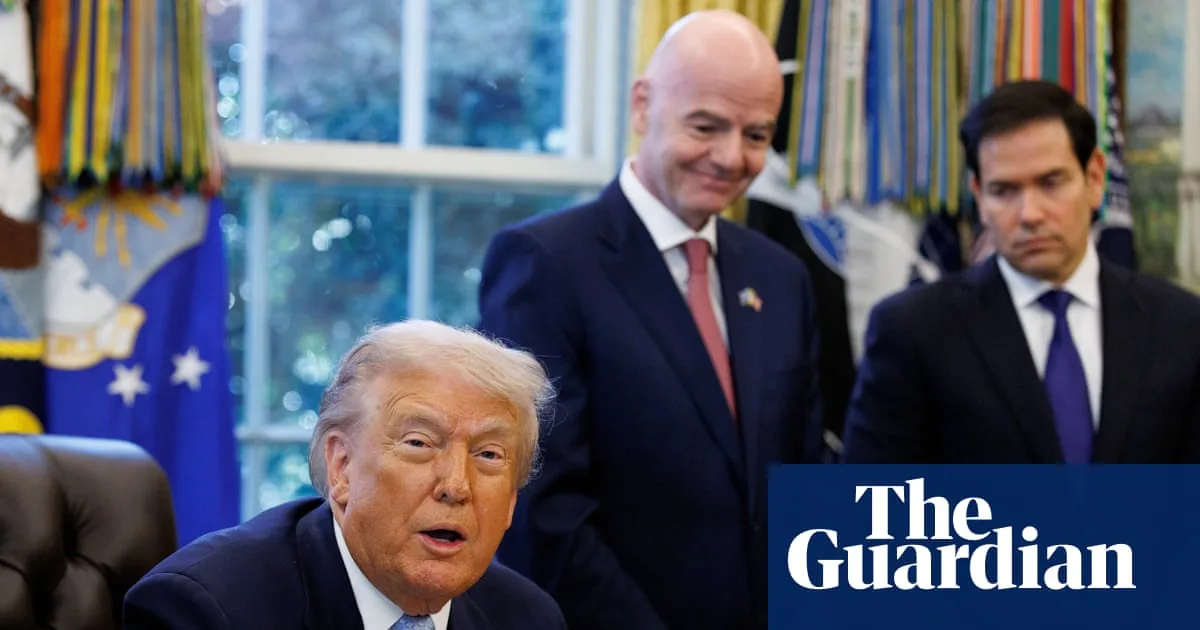
A powerful coalition of human rights organisations has issued a stark warning to football's global governing body, demanding it breaks its silence on mounting concerns surrounding the 2026 World Cup. The tournament, set to be hosted across the United States, Canada, and Mexico, faces allegations of serious human rights risks that advocacy groups say FIFA is failing to adequately address.
Mounting Pressure on Football's Governing Body
The call to action comes in an open letter sent to FIFA President Gianni Infantino, co-signed by over a dozen prominent groups including Amnesty International, Human Rights Watch, and the Sport & Rights Alliance. The correspondence, dated 3 December 2025, accuses FIFA of not fulfilling the human rights commitments it made following the controversial 2022 tournament in Qatar. The groups state that lessons from past events are being ignored, putting the 2026 competition at risk.
Central to their concerns are the conditions for migrant workers involved in infrastructure projects across the three host nations. While acknowledging that legal frameworks in the US, Canada, and Mexico differ from Qatar's, the letter highlights that migrant workers remain highly vulnerable to exploitation. The organisations point to documented issues such as wage theft, unsafe working conditions, and excessive recruitment fees, demanding FIFA ensures robust protections are enforced for all World Cup-related construction.
Policing and Surveillance Under Scrutiny
Beyond labour rights, the coalition raises significant alarms about security plans for the event. The letter references a report published in October 2025 by the University of Chicago Law School's Global Human Rights Clinic, which examined policing in potential host cities. That investigation found a high risk of discriminatory policing, particularly against Black, Latino, and Indigenous communities, as well as the potential for excessive use of force.
Furthermore, human rights advocates warn of the threat posed by expansive surveillance technologies. They fear the deployment of tools like facial recognition, predictive policing algorithms, and extensive camera networks could violate privacy rights and target marginalised groups. The open letter insists FIFA must publicly guarantee that its security arrangements will adhere to international human rights standards.
A Test of FIFA's Reformed Policies
This public challenge represents a critical test for FIFA's stated reforms. In the wake of the Qatar World Cup, the organisation strengthened its human rights policies and established a Human Rights Advisory Board. However, the signatories argue that these mechanisms are now failing. They claim their repeated attempts to engage with FIFA on these specific 2026 issues have been met with silence or vague assurances, rather than concrete action.
The groups are demanding immediate and transparent steps. Their requests include a comprehensive human rights risk assessment for the 2026 event, made public, and the establishment of clear accountability measures with independent oversight. They emphasise that with the tournament now less than a year away, time is running out to implement meaningful safeguards.
The ball is now firmly in FIFA's court. The world will be watching to see if football's richest governing body will move to protect the most vulnerable people connected to its biggest spectacle, or if the warnings of human rights defenders will once again go unheeded until it is too late.