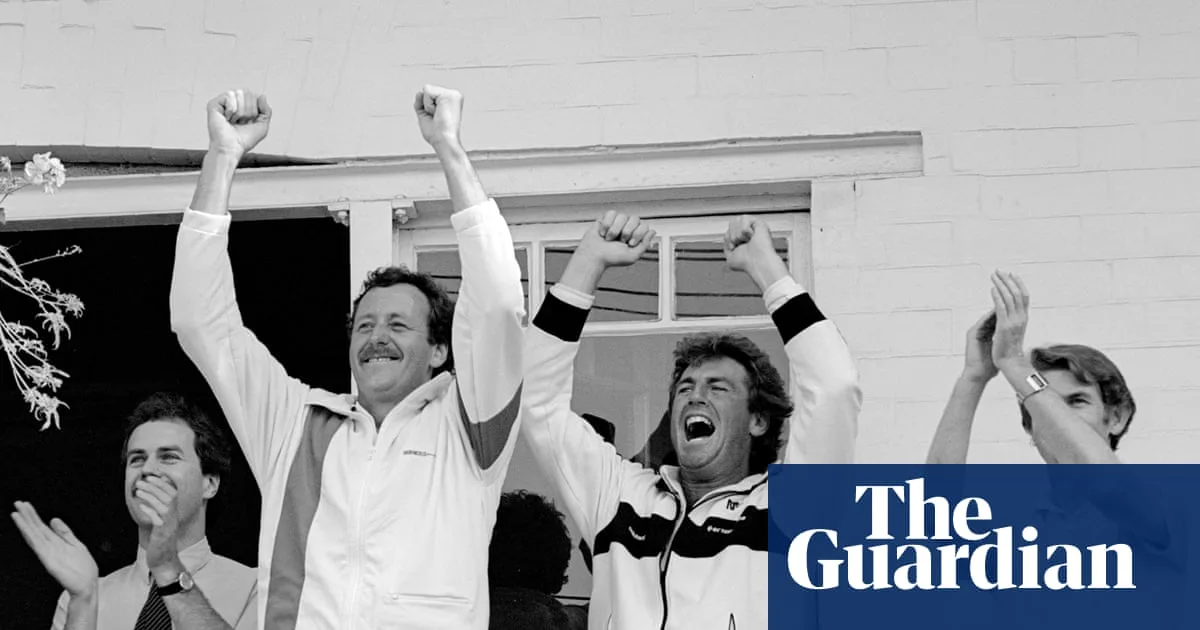
Jeremy Coney is barking with laughter recalling the story of winding up England’s Phil Edmonds at Trent Bridge 40 years ago. “We needed about 70-odd runs to win the match and go 1-0 up in the series. Edmonds was bowling to myself and Martin Crowe with this rather garish sponsored wristwatch on.”
Having drawn the first match of the series at Lord’s in 1986, Coney’s semi-professional and delightfully ramshackle New Zealand side were about to go 1-0 up with one match to play. They had won their first ever Test match in England three years previously but now had the prospect of a first full series win in their sights.
“Martin asked the umpire if he could ask Edmonds to take his watch off as it was distracting him, which he duly did and Edmonds begrudgingly complied. Martin clipped a single and then I was on strike. “We only needed a few more and I decided to have a bit of fun. There was a white streak on Edmonds’ wrist where the watch had been and the sun hadn’t. I think I pulled away in his run up and politely asked the umpire if he wouldn’t mind asking Philip to put the watch back on as the translucent patch on his wrist was dazzling me …”
The incident is testament to a rankling between the two sides created in the aftermath of the first Test at Lord’s that ended in a draw after Graham Gooch hit 183 in England’s second innings. What happened next was often cited to have come from Gooch’s mouth. Coney, however, confirms it was the England captain, Mike Gatting, who made the remark that belittled the bulk of the New Zealand bowling attack and alluded to the gulf in standard between the core and their spearhead, Richard Hadlee.
“Everyone has heard it by now but Gatting said that batting against us was like playing against the World XI at one end, meaning Richard, and Ilford Second XI at the other, meaning the rest. Coney and his side took umbrage – “nobody likes to be belittled” – and decided to embrace the slur wholeheartedly, ordering T-shirts with “Ilford Seconds” emblazoned on the front and referring to themselves as Ilford in the field for the rest of the tour.
In his early 70s now, Coney is a much-loved and respected broadcaster and will be commentating on the BBC’s Test Match Special this summer. It isn’t lost on him how Tom Latham’s New Zealand side of today exist in “almost a totally different universe” to the one at his disposal in 1986. With only three professional players in the squad, the 1986 Kiwis were a mix of labourers, teachers and, in the case of John Bracewell, a gravedigger from Dunedin. “Players weren’t scared of Brace because of what he did back home, but they were scared of him when he opened his mouth!” he says of the off-spinning all-rounder.