
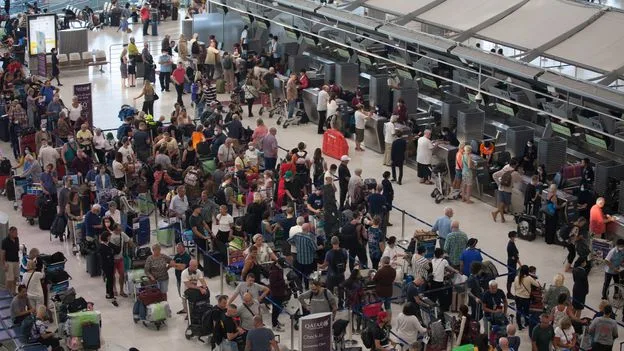
A coordinated US-Israeli military offensive against Iran, dubbed "Operation Epic Fury", has triggered widespread disruption for travellers across the Middle East. The strikes on 28 February killed Ayatollah Ali Khamenei and have since expanded to affect a dozen countries, including drone attacks on the Royal Air Force base in Cyprus and assaults on civilian and economic hubs in the UAE and Qatar.
The Dubai International Airport, the world's busiest for international travel, was closed for three consecutive days after being damaged by drone debris, stranding hundreds of thousands of passengers. A fire also broke out at the luxury Fairmont The Palm hotel in Dubai following a projectile strike. Dr John Rose, Chief Risk Advisor at ALTOUR, said the retaliation against areas like the UAE surprised many, as the region had been considered relatively safe.
In response to the escalating conflict, the US State Department has advised American nationals to "depart now" from 14 nations across the Middle East, including Egypt, and has begun charter flights to evacuate citizens from the UAE, Jordan and Saudi Arabia. The UK government has initiated flights to bring British nationals out of Oman, with additional departures from the UAE starting 4 March. Australia and Canada have also issued their highest-level travel advisories for affected countries.
Iran's airspace remains closed to all civilian travel, though overland crossings into Turkey and Armenia are open. In the UAE, both Dubai International and Abu Dhabi's Zayed International airports have slowly resumed operations, with Etihad and Emirates operating initial flights. The UAE government has said it will cover food and accommodation for 20,200 stranded travellers. The US, UK, Canada and Australia are advising against all but essential travel to the UAE, though Dr Rose suggests the situation could stabilise quickly given the nation's importance as a business hub.
Qatar has reported intercepting numerous Iranian attacks, including at Doha's Hamad International Airport, which remains closed due to the closure of Qatari airspace. The US and UK have issued shelter-in-place advisories, while Australia and Canada have issued "do-not-travel" warnings. Many travellers are reportedly driving from the UAE to Oman, where flights are still operating and the risk is considered lower, despite an attack on Oman's Duqm commercial port.




