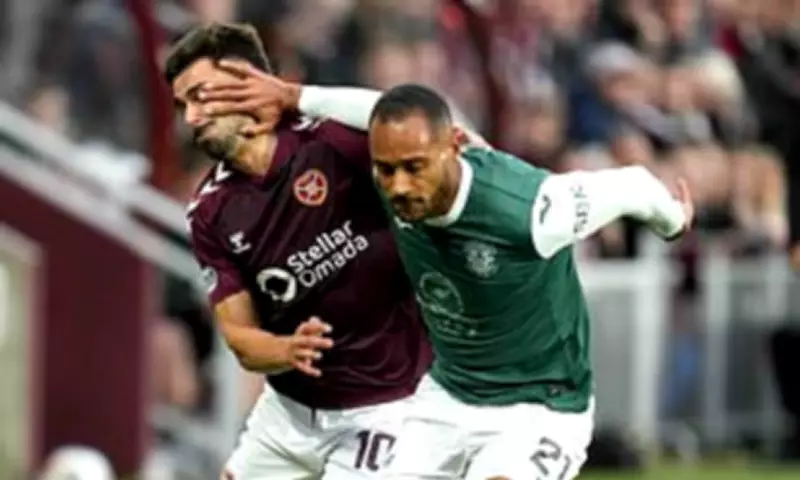
Eight years have passed since Craig Levein walked into the Tynecastle media room, lit the blue touch paper, and stood back to watch the fireworks. His Hearts side had just knocked Hibernian out of the Scottish Cup with a late Don Cowie goal, securing their first win over arch-rivals Hibs in ten attempts. Rather than simply savouring the victory, Levein chose to rub salt in the wound with carefully chosen words that would echo through the years.
The Infamous Jibe That Still Resonates
'Natural order has been restored,' Levein smiled that day in January 2016, a remark he would later claim was made in jest. Neil Lennon's Hibs didn't see the funny side. When they won the next league derby at Easter Road in March, extending their lead over Hearts, a giant banner unfurled in the Famous Five Stand carrying Levein's own words back at him.
'These things come back to bite you,' Lennon remarked after a 2-0 victory. 'If the natural order means being 12 points ahead with a game in hand, I'll take that all the time.' For neutral observers and journalists, the pantomime was magnificent theatre, showcasing Scottish football's unparalleled verbal jousting tradition.

Historical Context and Shifting Fortunes
Whether there was any legitimacy to Levein's claim of Hearts' historical supremacy remained subjective. As a player, the future Scotland manager was part of a Tynecastle side that famously went 22 games unbeaten against Hibs between 1989 and 1993. Yet the clubs' respective league finishes this century tell a more nuanced story.
Including the 2014-15 season when both Edinburgh clubs were in the Championship, Hearts have finished above Hibs in 14 of the last 25 years. Having spent one term fewer in the second tier, the men in maroon have edged the historical rivalry. But the question now is how the next quarter-century will unfold in what might be called 'The Tony Bloom Years.'
The Bloom Effect: Transforming Hearts' Prospects
Hibs finished third last season and currently sit fifth in the Premiership. Ordinarily, remaining behind Motherwell would be deemed more disappointing than disastrous. What amplifies the current noise in the capital is the astonishing progress Hearts have made this season under Derek McInnes.
David Gray can hardly be held responsible for the fact that Hibs' great rivals now have Bloom's Jamestown Analytics in their corner. This strategic partnership has ensured players like Claudio Braga and Alexandros Kyziridis have transformed Hearts into genuine title contenders. As McInnes's side have surged to the top of the Premiership and stayed there, a theory has emerged that this might be their best chance to become the first non-Old Firm team since Aberdeen in 1985 to win the title.
Long-Term Vision Versus Short-Term Success
While it's true that both Celtic and Rangers have faced challenges this season, assuming Hearts will regress come summer ignores Bloom's proven track record. There's absolutely nothing in his history with Union Saint-Gilloise or Brighton to suggest this will happen. It took seven years before his initial investment in the Belgian side manifested in a title, and fourteen years between taking control of Brighton and securing European football.
Whether Hearts finish first, second, or third this season, this appears to be only the beginning. Remember Bloom's words from August last year after his £10 million investment was ratified: 'I'm not saying we're going to win trophies this season, that season, next season, but I genuinely believe that we will be a significant factor in Scottish football right here, right now and for the long term.'
Five months on from that interview, Hearts remain top of the league and haven't lost a home match. A snapshot of the table shows McInnes's side sitting sixteen points ahead of Hibs. If nothing changes, could this scenario become the 'natural order' for years to come? The evidence suggests it might.
Hibs' Search for Their Own Game-Changer
There's a certain irony in how events have unfolded. Two years ago, before Bloom and Jamestown arrived on the scene, Hibs appeared to have secured their own potential game-changer. When American billionaire Bill Foley invested £6 million in the Easter Road club via his Black Knight Group, it felt like Christmas had come early down Leith way.

Alongside significant capital injection came promises of players arriving from Bournemouth—one of Foley's other clubs—on loan, with Hibs players moving in the opposite direction and intelligence being shared. The only question seemed to be how far the club could go. In the fullness of time, however, the deal proved disappointing, with little personnel movement between clubs.
From the moment Foley publicly questioned decision-making processes north of the border, the game was up. The only surprise was that it took until November for him to sell his 25 percent stake back to the Gordon family.
New Hope from Scandinavia?
With the potential benefits of the Foley deal gone and Hearts strengthening, Hibs fans have been buoyed by suggestions that another wealthy figure might yet get involved. The good news for the green half of the capital is that Anders Holch Povlsen—Scotland's richest man and the UK's largest individual private landowner—has been talking to owner Ian Gordon.
The bad news is that the Danish billionaire, who owns FC Midtjylland, hasn't agreed to step into Foley's shoes—at least not yet. An informal dialogue between the two men began when Hibs played Midtjylland in the Europa League at this season's start.
While club sources insist that potential investment wasn't part of discussions, you can bet it was on Gordon's mind. Midtjylland, once Danish football also-rans, have won the Superliga four times since 2014, building a reputation for talent development, innovative coaching, and analytical recruitment methods that sound familiar to Hearts' current approach.
The Control Conundrum
The trouble for Hibs is that wealthy investors typically want influence. That's why the Black Knights arrangement didn't work out. Hearts appear to have the best of both worlds with Bloom: eight-figure investment, access to Jamestown's resources, and the Foundation of Hearts remaining majority shareholder.
Across the city, the Gordon family understandably don't want to relinquish control. That's their prerogative, but it's unlikely that savvy individuals will queue around Easter Road willing to part with millions and secrets if their voices aren't heard. Knowledge is power, and for as long as Hearts possess more of it than Hibs, they may grow accustomed to looking down the table at their great rivals.
The natural order Levein spoke of eight years ago might be undergoing its most significant redefinition yet, driven not by temporary form but by structural investment and strategic vision that could shape Edinburgh football for generations.