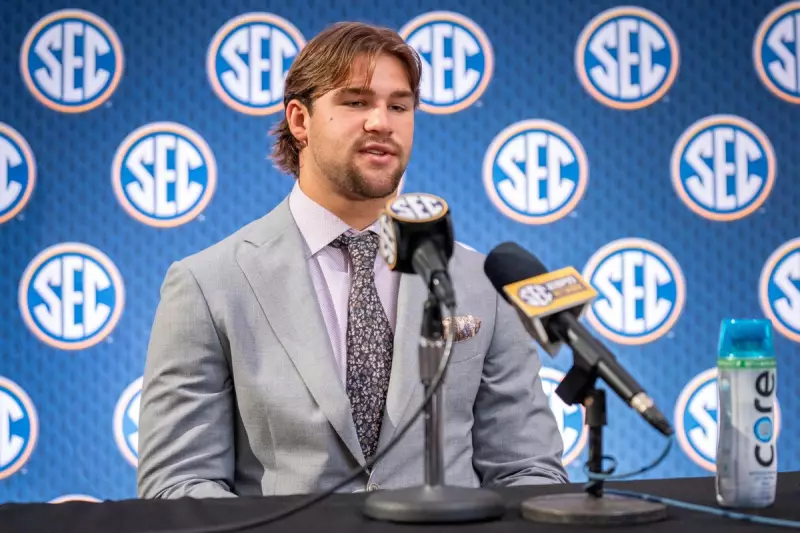
Five American college football players from major conference programmes have petitioned a federal judge for an emergency order that would allow them to compete for a fifth season next year. The players, who have all completed four seasons without taking a traditional 'redshirt' year, are seeking a preliminary injunction against the National Collegiate Athletic Association (NCAA).
The Players and Their Legal Challenge
The group includes linebacker Langston Patterson, kicker Nathanial Vakos, and tight end Lance Mason from Vanderbilt University. They are joined by long snapper Nick Levy of Wisconsin and long snapper Kevin Gallic of Nebraska. The quintet filed their request with U.S. District Judge William L. Campbell on Monday, 15 December 2025.
This action forms part of a broader, proposed class-action lawsuit alleging that the NCAA's redshirt rule violates U.S. antitrust law. The lawsuit, which could encompass thousands of current and former NCAA athletes in football, baseball, and tennis, argues the rule constitutes an unreasonable restraint on competition.
Precedent and Personal Testimony
The legal move follows a successful injunction granted by Judge Campbell nearly a year ago, which allowed quarterback Diego Pavia to play for Vanderbilt. Pavia proceeded to become the Heisman Trophy runner-up and led his team to a 10-2 record.
During testimony, Langston Patterson, a lead plaintiff and recent graduate, revealed he had inquired about redshirting as a freshman but was told he was "too valuable" to the team. He stated he realised by Vanderbilt's fifth game this past September that he would be unable to utilise a redshirt year. Patterson also testified that Vanderbilt officials questioned him about the lawsuit during an end-of-year review.
Both Patterson and Nick Levy warned that their respective universities would likely seek replacements via the transfer portal, which opens on 2 January, if the injunction is not granted. Another season would offer these athletes crucial additional practice, game time, and exposure to NFL scouts, alongside the opportunity to pursue postgraduate degrees.
Arguments and Wider Implications
The judge raised pointed questions about the potential "ripple effect" of granting the injunction. The NCAA's attorney, Taylor Askew, contended the players knew they were in their final season and argued that eligibility rules, by nature, will always exclude someone. "If you have eligibility rules, someone won't be eligible," Askew told the court.
In contrast, the players' attorney, Ryan Downton, framed the request as specific to five individuals ahead of the transfer window. He cited the Pavia case and other rulings, stating, "The NCAA has been found to be a serial violator of antitrust law."
Adding to the high-stakes context, commissioners from the ACC, Big Ten, Big 12, Pac-12, and Southeastern Conference filed a declaration supporting the NCAA's rules. They argued the regulations are anchored in the principle that athletics are an integral part of the academic experience and that changes could harm opportunities for future high school athletes.
The outcome of this hearing could have profound consequences for the governance of college sports in the United States, further challenging the NCAA's authority over athlete eligibility.