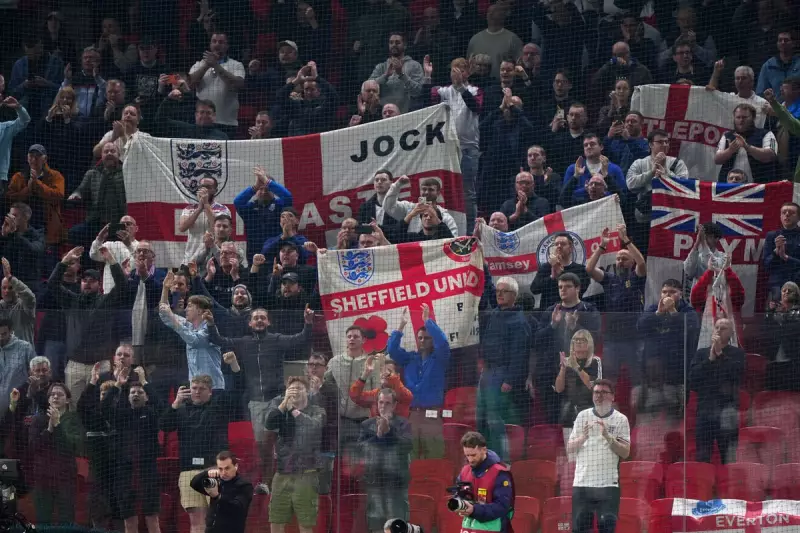
The Football Association faces a pivotal test of its backbone this week, as pressure mounts for it to directly confront FIFA over the astronomical ticket prices for the 2026 World Cup. With fans accusing football's global governing body of 'betrayal', the FA's response could define its relationship with supporters and its influence within the sport's power structures.
A Crisis of Confidence and Cost
As FIFA's leadership convened in Doha on Monday 15 December 2025 for 'The Best' awards, the agenda for many national associations was dominated by a single, burning issue: the crippling cost for fans to attend the next World Cup. The Football Supporters' Association (FSA) has made clear that merely relaying concerns is insufficient. They demand the FA publicly challenges FIFA President Gianni Infantino on a pricing structure that could see supporters pay over £5,000 for the cheapest tickets to follow England through the tournament.
This controversy strikes at the heart of the FA's primary obligation: to represent the football public of England. The refusal to take a firm stand, critics argue, would be "utterly spineless". The situation is particularly acute given the widespread belief that the upcoming tournament represents England's best chance to win a World Cup in decades, making full, affordable fan support more valuable than ever.
The Power Play: Diplomacy vs. Dissent
Sources within major federations like the FA often justify their diplomatic, non-confrontational approach towards FIFA and UEFA by citing the risk of political ostracisation. Both organisations operate as top-down executive models with little tolerance for dissent. However, this stance is now being questioned as a failure of duty. What is the point of maintaining influence if you never use it when it matters most to your constituents?
Insiders suggest that if the 10-15 wealthiest federations, including the FA, coordinated their action or issued a joint statement, it would seriously "rattle" Gianni Infantino. Such unified dissent is something he is not accustomed to facing. Yet, federations are frequently described by stakeholders as "the most complicit in the preservation of football's system" and even as "patsies", for refusing to flex their collective muscle.
A Moral and Political Imperative for the FA
Beyond the immediate ticket crisis lies a broader moral and political argument. Football associations, and the FA in particular, are seen by many as potential moral guardians of the game. Their current meekness, however, allows FIFA and UEFA to operate with minimal challenge, a stance that carries significant future risks for the sport's integrity and accessibility.
If FIFA remains immovable on pricing, a clear alternative exists for the FA: use the substantial funding it receives from FIFA and UEFA to subsidise tickets for regular, match-going fans. This direct action would demonstrate where its loyalties truly lie.
All eyes are now on FA Chair Debbie Hewitt, who also holds a prominent role within FIFA. Upon taking her position, she stated, "I'm not known for being a silent observer." The escalating ticket furore presents a critical moment to prove that assertion. The FA must decide whether to remain a diplomatic bystander or become a powerful advocate for the fans it is mandated to serve.