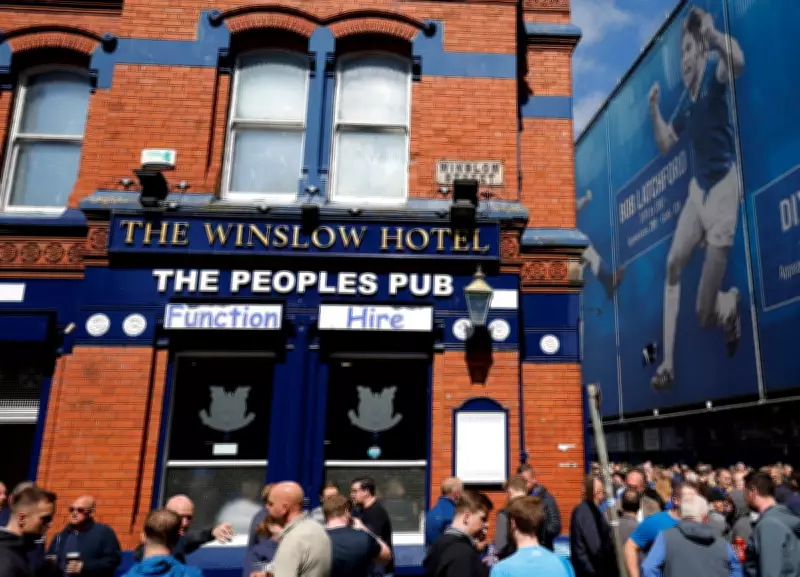
The End of an Era: How Everton's Stadium Move Crushed a Historic Pub
The Winslow Hotel pub, a cherished institution nestled in the shadow of Goodison Park's Main Stand for 140 years, closed its doors last month, marking a poignant symbol of the community upheaval following Everton's relocation. For generations, this pub served as a vibrant hub for players, managers, and fans, but with the club's move to a new stadium two miles away, the soul of the establishment has vanished, leaving behind empty spaces and fading memories.
A Farewell Gesture from Everton Legends
On Saturday, January 24, former Everton centre-forward Duncan Ferguson made a heartfelt visit to the Winslow, handing licensee Dave Bond £1,000 to put behind the bar as a final tribute. Ferguson was joined by other Everton icons, including ex-captain Alan Stubbs, 1995 FA Cup winners Graham Stuart and Joe Parkinson, and 1987 League champion Ian Snodin, each taking turns on the microphone to share stories. Kevin Sheedy, a hero from Howard Kendall's legendary mid-1980s team, also appeared, underscoring the deep connections between the pub and the club's history.
Established in 1886, the Winslow's legacy is inextricably linked to Everton, which set up home next door six years later. Legendary striker Dixie Dean was a regular drinker during his time living on Goodison Avenue, while Norman Greenhalgh, a member of the 1939 championship-winning team, became landlord in the 1950s. The pub witnessed countless celebrations, such as when Mike Lyons led the entire team over the road after winning his first Merseyside derby in 1981, or when Joe Royle stopped for a pint following a derby triumph in 1994.

Memories Etched in Every Corner
Inside the Howard Kendall Bar, a flag bearing the name of the late Kevin Campbell hung above the favourite seat of the former Everton and Arsenal striker. After Bond, an Irishman and lifelong Evertonian, took over in 2014 following a brief closure, he transformed the Winslow into an Everton shrine, adorning walls with photos and artwork by Thomas Regan of the Everton Heritage Society. Flags and scarves festooned the bar, creating a tapestry of shared history.
Bond's personal memories are vivid, such as the moment Abdoulaye Doucouré's goal against Bournemouth saved Everton from relegation in 2023. He recalls running downstairs to watch the goal "live" on TV after hearing the roar from the stadium. On the day of Goodison's final Premier League game against Southampton last May, a queue had already formed outside an hour before opening at 9am. In an interview with ITV's Granada Reports, Bond reflected, "Once we lost the Everton fans to the degree that we did, the soul left this building."
Struggles to Adapt in a Changing Landscape
Bond attempted to sustain the business by offering a coach service to the new stadium for the first few games, but with only around 25 supporters interested, it proved financially unviable. While Everton's women have eight WSL fixtures at Goodison this season, Bond estimated that matchday profits from these events are less than 5% of what a men's game would bring. Where he once sold 3,000 pints in a day, now families might only have one or two drinks. He warned, "I think eventually a lot of businesses will go under. The pubs predominantly are suffering because, let's face it, it's 40,000 people on a matchday ... we were so dependent on that."
Other local pubs are facing similar struggles, highlighting the broader economic impact of Everton's move. Bond has since taken on a new challenge, running an Everton-themed bar called Dixie's on Dickson Street near the new ground, but the Winslow now stands empty. Across the road, the awning on the Main Stand bears the slogan "A new era," but for many in the community, it feels more like an end than a beginning.