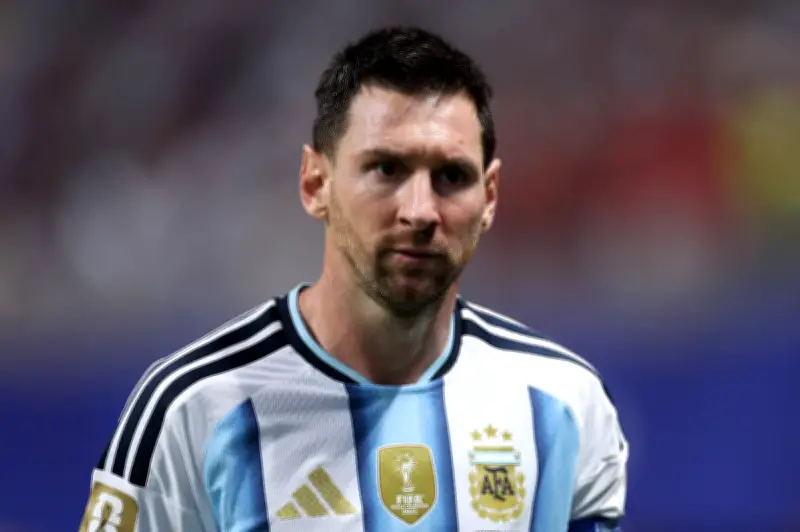
It may be inconceivable to think, but in another universe, Lionel Messi - Argentina’s top goalscorer and arguably the greatest footballer of all time - could have lined up for Spain in the World Cup final this weekend. Argentina and Spain are set to meet in New Jersey on Sunday, with Messi looking to secure back-to-back World Cup victories for La Albiceleste. The 39-year-old was instrumental to another famous Argentine comeback on Wednesday, leading Lionel Scaloni’s holders to an incredible semi-final fightback against old rivals England in Atlanta. Messi’s legacy as a footballing idol in Argentina is already firmly cemented, but things could have been so different for the diminutive magician.
Messi's Argentine Roots and Spanish Upbringing
Messi was born in Rosario, a city located in the south of the central Santa Fe province in Argentina, and began his football journey first with local side Abanderado Grandoli, and then Newell's Old Boys, where he played aged seven. Messi moved to Spain and Barcelona’s famous La Masia academy at 13 before progressing through to the first team at 17 and eventually making his name as one of the all-time great players. Messi’s ties to Argentina have never wavered. But having been raised and developed in Spain, he qualified to play for La Roja under FIFA rules, and the Royal Spanish Football Federation (RFEF) made repeated attempts to convince Messi to commit to them while he was still a youngster.
Rejection of Spain and Debut for Argentina
Messi, though, consistently knocked back their interest before making his senior debut for Argentina as an 18-year-old, sent off less than a minute after coming on as a substitute in a friendly against Hungary in Budapest. He has Spanish heritage on both sides of his family and became a Spanish citizen in 2005, holding dual citizenship. While Messi’s affection for Argentina has always been apparent, his relationship with the country of his birth and their supporters has been complicated, with the shadow of Diego Maradona hanging over him for many years.
Legacy and World Cup Glory
Messi’s ability has certainly never been in doubt, but a succession of near-misses at both the World Cup and Copa America meant that it was not until he led Argentina to the 2022 World Cup title that many supporters were prepared to put him in the same conversation as 1986 World Cup winner Maradona. There is no question now that Messi stands alongside Maradona when it comes to the greatest players ever to pull on an Argentina shirt, and he could go one better than his idol if he were to become a two-time World Cup winner this weekend.