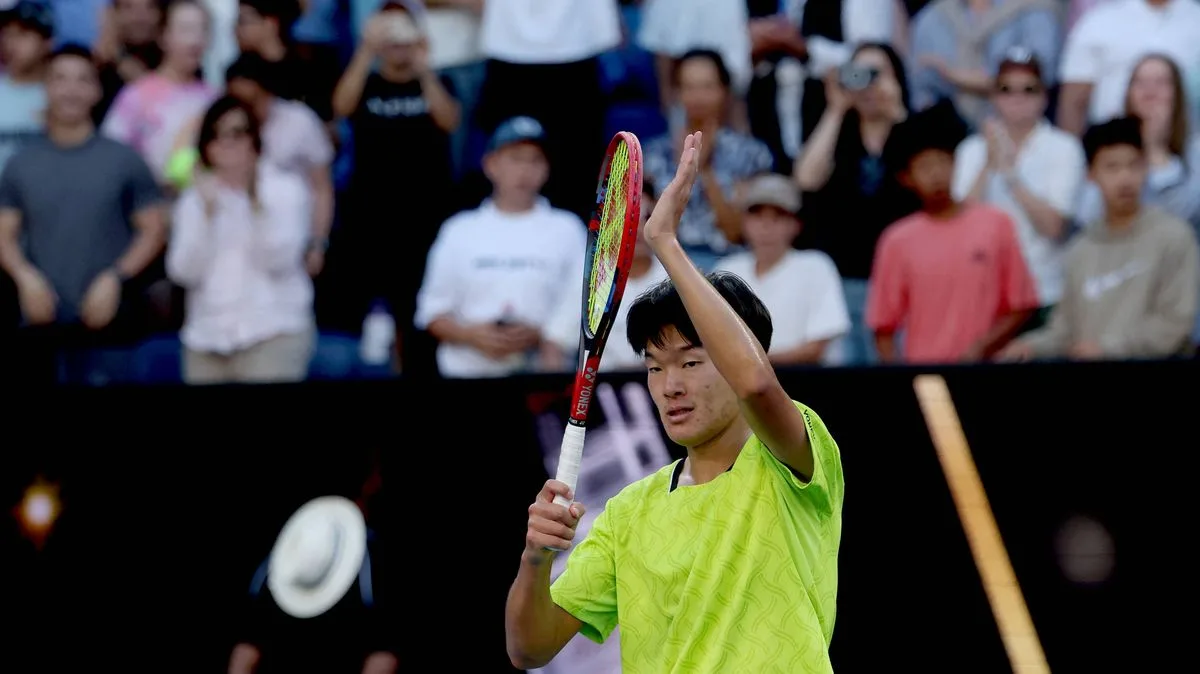
US College Tennis Star Forced to Forfeit Six-Figure Australian Open Prize Money After Injury Retirement
American qualifier Michael Zheng faces the loss of over £100,000 in Australian Open prize money following his injury-enforced retirement during the second round of the Grand Slam tournament in Melbourne. The 21-year-old, who celebrates his 22nd birthday next week, was making his main draw debut at the prestigious event.
Promising Run Cut Short by Physical Setback
Zheng's Australian Open campaign began impressively with a first-round victory over former quarter-finalist Sebastian Korda. The triumph earned him at least £75,000 in prize money, with the amount rising to approximately £113,000 for players who reach the second round. However, his tournament ended abruptly during his subsequent match against 32nd seed Corentin Moutet.
After clinching the first set 6-3, Zheng struggled in the following two sets, losing them 6-1 and 6-2 respectively. At the start of the third set, the Columbia University senior took a medical timeout to receive treatment on his left leg before attempting to continue playing.
"I took the medical timeout and tried to push through, but ultimately my body just wouldn't allow me to continue at the required level," Zheng explained after the match. "It's incredibly disappointing to have to retire when you're competing at this level, especially in your first Grand Slam main draw."
NCAA Regulations Create Financial Dilemma
The situation highlights the ongoing tension between collegiate athletics and professional sports, with NCAA rules restricting college athletes to earning no more than $10,000 (£7,440) per year from their sporting activities. This regulation means Zheng cannot legally accept the substantial prize money he earned through his Australian Open performance.
Following his victory over Korda, Zheng addressed the financial uncertainty surrounding his tournament earnings. "I feel like the line between turning professional and staying in college has become increasingly blurred in recent years," he stated. "Once my tournament run concludes, I'll be returning to university and consulting with our head coach to clarify the situation regarding prize money and eligibility requirements."
The Columbia University administration has confirmed they are actively investigating the matter. A university spokesperson revealed they are "working closely with NCAA officials to determine precisely what compensation arrangements are permissible under current regulations."
Broader Context of College Tennis Compensation Disputes
Zheng represents the latest in a series of college tennis players facing significant financial forfeitures due to NCAA restrictions. In 2024, University of Texas athlete Maya Joint relinquished more than £100,000 after reaching the second round of the US Open while maintaining her collegiate status, before turning professional several months later.
This ongoing issue has sparked legal challenges against the NCAA's compensation policies. University of North Carolina tennis player Reese Brantmeier, who received $50,000 from the United States Tennis Association in March 2024, has initiated legal proceedings alleging that the NCAA's prize-money restrictions constitute illegal price fixing. Joint has since joined this case as a claimant, with the trial scheduled for November this year.
Zheng's situation comes just months after he made collegiate tennis history in November, becoming the first back-to-back National Collegiate Athletic Association champion in thirteen years. His Australian Open performance demonstrated his capability to compete at the highest professional level, further complicating the relationship between his collegiate commitments and potential professional earnings.
"I've heard suggestions that I might be permitted to accept the prize money since this is my final semester, but I need to verify this thoroughly to avoid any eligibility complications," Zheng emphasised. "The last thing I want is to encounter regulatory problems that could affect my collegiate tennis career."
The case continues to highlight the evolving landscape of athlete compensation in tennis and other collegiate sports, with increasing pressure on governing bodies to reconsider traditional restrictions in light of athletes' professional opportunities and financial realities.