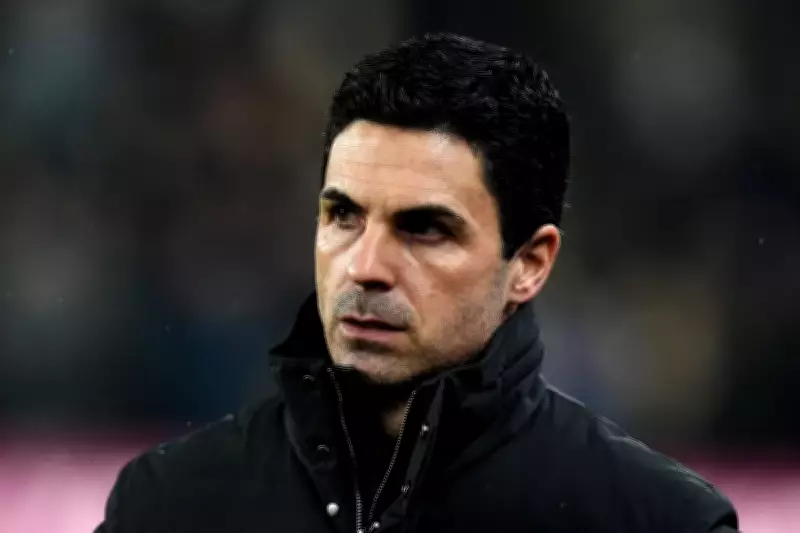
Arteta's Meticulous Control: A Double-Edged Sword for Arsenal's Title Ambitions
Mikel Arteta's relentless pursuit of perfection, extending to minute details like the temperature of ice baths and the steering wheel on the team bus, has been instrumental in Arsenal's ascent to the summit of the Premier League. However, this very obsession with control is now emerging as a potential obstacle to their championship dreams, as the team appears increasingly constrained and exhausted.
The Irony of Control: From Command to Chaos
In a recent match against Wolves, Arsenal's commanding 2-0 lead and seven-point advantage at the top of the table dissolved into a chaotic 2-2 draw, with players embroiled in arguments post-game. This scene underscored a profound irony: Arteta, a manager who seeks more control over his team than even Pep Guardiola, now presides over a squad that seems to be losing its grip at critical moments.
For the first time this season, the title race is not entirely in Arsenal's hands, a stark contrast to their earlier dominance. Arteta's shell-shocked post-match press conference highlighted the tension between his meticulous approach and the team's recent performances.

The Psychological Toll of Over-Coaching
Arteta is described by insiders as the ultimate "probabilities guy," constantly analyzing every facet of the game to statistically enhance success chances. While this has driven Arsenal's progress, it is now fostering a psychological lock that prevents the team from pushing forward. The last two matches—draws against Wolves and Brentford—exemplify this issue: Arsenal seized up after taking leads, allowing inferior sides to regain control.
The team's approach has become too clever for its own good, over-coached to the point where players lack the freedom to express themselves, leading to exhaustion and angst. This intertwining of Arteta's innate desire for control with the deep yearning for a title amplifies negative effects, creating a cycle that threatens to derail their campaign.
Recruitment and Attack: A Question of Quality Over Quantity
Arteta's control extends to recruitment, where Arsenal's summer signings, such as Viktor Gyokeres, have deepened the squad but not necessarily raised its quality. The attack, in particular, lacks the killer instinct seen in past champions, with goal numbers for key attackers like Bukayo Saka and Leandro Trossard remaining modest. For instance, Saka and Trossard top the team's statistics for crucial goals—openers, equalizers, or match-winners—with just two each, a figure that pales in comparison to historical champions like Diego Costa, who contributed significantly more in title-winning seasons.
This raises questions about whether Arsenal should have pursued more guaranteed star power, especially as talents like Martin Odegaard and Saka enter their primes but are not maximizing their potential under the current system.
Historical Context and the Path Forward
Looking back to the 2022-23 season, Arsenal impressed with their dynamic play, penning teams in with fluid movement around Odegaard and Saka. However, they lacked the experience to clinch the title, finishing as runners-up to a dominant Manchester City. The following season saw Arsenal reach 89 points, only to be edged out by City again, highlighting the fine margins in title races.
Last season presented an opportunity as Guardiola faced a crisis at City, but Arsenal's own injury woes, possibly linked to Arteta's rigorous training methods, thwarted their chances. The manager responded by deepening the squad, but this has not translated into greater on-field quality or inspiration in clutch moments.
Despite these challenges, Arsenal remain in a strong position, with arguably the best squad in England and Europe. The contradiction lies in their ability to reduce their own chances through over-control. Arteta must now find a balance, perhaps by letting go of some control to unlock the team's full potential and secure the long-awaited title.