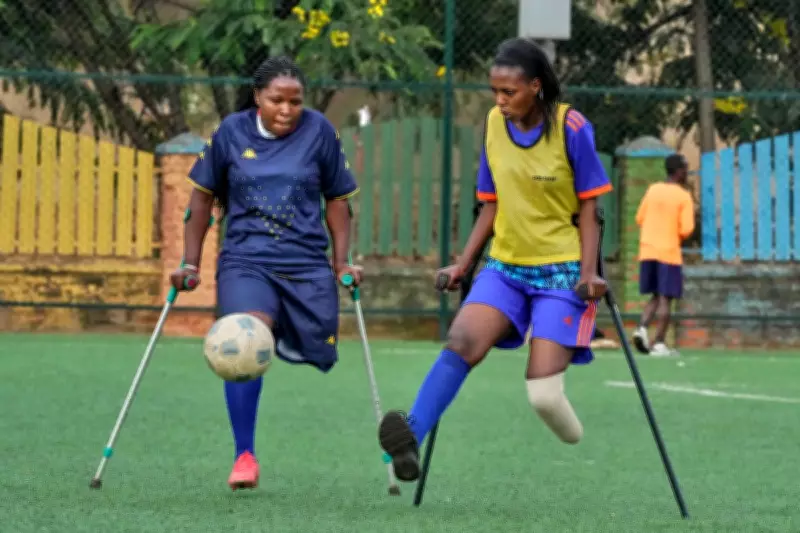
Amputee football players in Rwanda have found a unique sense of healing and community through the sport, which has grown steadily over the past decade. The players, using crutches to chase the ball and goalkeepers with one arm, say they have overcome stigma and found belonging on the field.
Background and Growth
Rwanda, a country that endured the 1994 genocide in which about 800,000 Tutsis and moderate Hutus were killed, now has an estimated 3,000 lower-limb amputees. Many are survivors of the genocide, road accidents, or illness. Amputee football, a seven-a-side version of the game, has become a tool for physical rehabilitation and social cohesion.
Personal Stories
Nyiraneza Solange, born two years after the genocide, lost her leg at age five after a fall and infection. She was drawn to the sport by the resilience of genocide survivors who lost limbs. Encouraged by a former coach, she quickly overcame fear. "I don't even think about I don't have a leg," she said, feeling free while playing.

Goalkeeper Nikuze Angelique noted the challenge of saving balls on her side with a receding hand but emphasized the community found on the field. She hopes the team will reach the World Cup, calling it "a dream come true."
Community and Healing
Louise Kwizera, vice president of the Rwanda Amputee Football Federation, said the sport builds trust and unity in a society "once divided." She added, "In communities affected by conflict or trauma, the playing field becomes a place of peace."
Gilbert Muvunyi Manier, director general of sports development at Rwanda's sports ministry, described the sport as a "powerful tool" for healing, reconciliation, and social cohesion.
International Aspirations
Rwanda hopes to participate in the second women's amputee football World Cup, expected in Poland or Brazil next year. The country had only one player at the first edition in 2024 but now has five women's professional teams and ten for men. Haitian women's team manager Fred Sorrels, who visited to develop the local program, supports Rwanda hosting a World Cup, though no formal bid has been made.
Sorrels highlighted the psychological benefits: "It's a win psychologically and mentally for these ladies to have an opportunity to experience wholeness and wellness again."