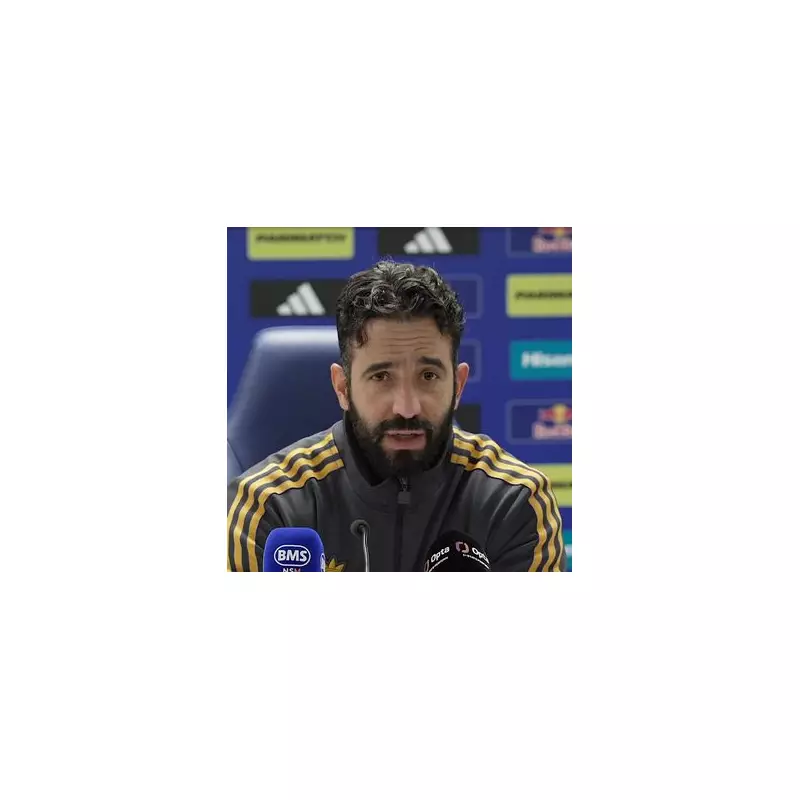
Manchester United manager Ruben Amorim has delivered a stunning public ultimatum to the club's hierarchy, demanding greater authority after his side's latest Premier League setback.
Amorim's Fiery Post-Match Declaration
The dramatic intervention came immediately after Manchester United were held to a 1-1 draw away at Leeds United on Sunday afternoon. Brenden Aaronson had put the visitors ahead at Elland Road, only for Matheus Cunha to equalise for the hosts, forcing the Red Devils to share the points.
However, the post-match focus swiftly shifted from the on-pitch action to the dugout. In a candid and forceful conclusion to his press conference, the 40-year-old Portuguese coach made his position unequivocally clear.
"I just want to say that I came here to be the manager of Man Utd, not the head coach," Amorim stated, drawing a direct line between the two roles. He continued with a pointed reference to some of the game's most powerful figures: "I know my name is not (Thomas) Tuchel, is not (Antonio) Conte, is not (Jose) Mourinho but I am the manager of Man United."
A Clear Message to Old Trafford Decision-Makers
Amorim's remarks represent a significant challenge to the United board, highlighting a potential power struggle behind the scenes at Old Trafford. The distinction between 'manager' and 'head coach' is crucial in football, with the former traditionally wielding far greater influence over transfer policy and broader club strategy.
In his closing statement, the coach issued a stark reminder of his own tenure, adding: "...and it's going to be like this for 18 months or when the board decides to change." This timeline references the remaining duration of his reported contract, framing his demand as a non-negotiable condition for his continued leadership.
Implications for United's Future
This public bombshell throws the spotlight onto the working relationship between Amorim and the United executives, including the club's ownership. Such a direct appeal for control, made in the media, is rare and suggests underlying tensions have reached a boiling point.
The timing is particularly sensitive, following a disappointing result that further dents United's ambitions for the season. It raises immediate questions about the club's structure and whether the board will accede to their manager's demands or face a period of intensified scrutiny and instability.
As the story develops, all eyes will be on the reaction from the Old Trafford boardroom and whether Amorim's bold strategy to assert his authority will succeed or backfire.