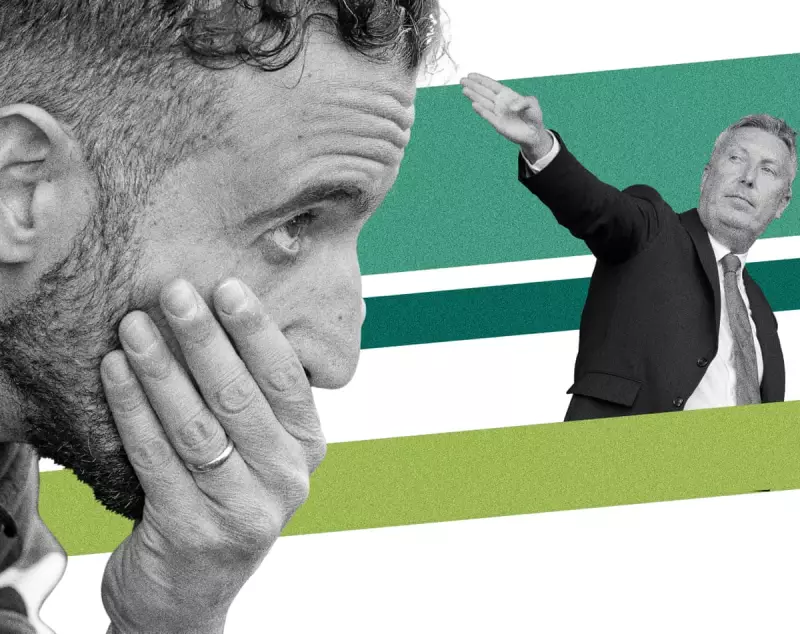
The perpetual crisis at Manchester United has claimed another victim. The club confirmed on Monday the departure of head coach Ruben Amorim, ending a turbulent tenure marked by internal power struggles and underwhelming results.
The Press Conference That Sealed His Fate
Amorim's exit, while anticipated, was precipitated by a cryptic yet pointed outburst following Sunday's 1-1 draw with Leeds United. His official title was "head coach," but Amorim insisted, "I'm going to be the manager of this team, not the coach." He pointedly added that this arrangement would last only "18 months" before everyone moved on, highlighting a fundamental disagreement with the club's hierarchy over his role.
The core of the dispute appears to have been control over player recruitment. Amorim stated that "every department, the scouting department, the sport director, needs to do their job," a clear reference to reported clashes with Manchester United's technical director, Jason Wilcox. This public airing of grievances left the club's leadership with little choice but to act.
A Costly Experiment Fails to Deliver
United's decision represents the abrupt end of a costly project. Over two transfer windows, the club backed Amorim's vision to the tune of approximately £430 million, while recouping only around £165 million in sales. This significant investment has failed to yield progress on the pitch.
After a brief flicker of hope in October with three consecutive wins, the team's form collapsed. They have managed just three victories in their last eleven Premier League outings. Amorim's tactical rigidity, initially wedded to a 3-4-2-1 formation, gave way to confused pragmatism, including a late shift to a back four, which only amplified the sense of a manager losing faith in his own methods.
What Next for the Forever Crisis Club?
Amorim becomes the seventh permanent manager to leave since Sir Alex Ferguson's retirement in 2013, a stark testament to the ongoing instability at Old Trafford. His departure leaves the club in a profound dilemma. Do they seek a successor, like Oliver Glasner, to continue the flawed 3-4-2-1 experiment, or appoint a manager with a completely different philosophy, necessitating another expensive squad overhaul?
The financial ramifications are severe. Amorim's United finished 15th last season and lost the Europa League final, missing out on Champions League revenue. This season's poor form has further diminished prize money and commercial appeal. The club's summer spending of £200 million on three forwards, when one may have sufficed, now looks like a catastrophic misstep.
The grim reality for United is that the standards have fallen so far that merely flirting with European qualification feels like their new level. With each passing season and each failed managerial appointment, the path back to former glories becomes steeper and more distant. The crisis, it seems, is forever.