Freshly released state papers have exposed a catalogue of security and communication failures that contributed to the infamous Lansdowne Road riot during a football friendly between the Republic of Ireland and England in 1995.
Chaos on the Pitch: A Match Abandoned
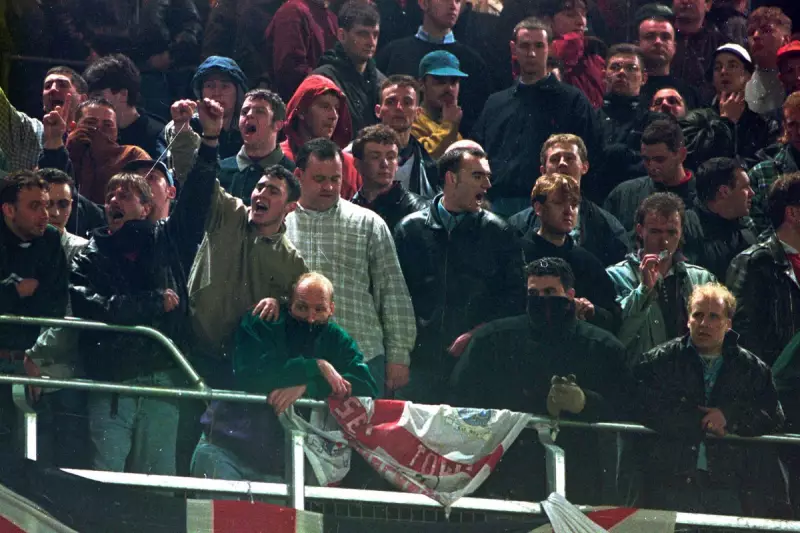
The violent disorder erupted on February 15, 1995, during the first half of the international friendly at Dublin's Lansdowne Road stadium. The match was forced to be abandoned after just 27 minutes, moments after Ireland took the lead, as English supporters began rioting.
More than 20 people were injured as projectiles were hurled from the upper tier of the stadium onto fans below. A confidential government report, now published by the National Archives of Ireland, concluded the "actual serious violence... was caused solely by English fans and that this violence had been planned".
Systemic Failures in Planning and Communication
In the aftermath, Irish government ministers were briefed on a series of critical shortcomings. The Garda reserve and public order units present at the stadium were deemed "insufficient" to handle the scale of the disturbance.
Perhaps most damning was the finding on pre-match coordination. Ministers were told that safety decisions and information shared in meetings between the Football Association of Ireland (FAI) and gardai were "not clearly understood or remembered" in the absence of written records.
Key failures identified included:
- Poor segregation of fans, undermined by ticket resales and ineffective seating barriers.
- Insufficient meetings between stewards and Garda personnel.
- A critical failure to properly convey intelligence from the English National Criminal Intelligence Service (NCIS) to FAI officials.
- The report stated gardai should have had the final say on the kick-off time.
Lasting Recommendations and Legacy
The official inquiry, known as the Finlay report, led to major recommendations for future matches. It advised that the number of away fans should be limited to less than 10% of the total attendance.
It also recommended relocating away supporters to "a portion of the north end of the lower deck of the east stand" and insisted that seating arrangements for such fixtures must be robust, "irrespective of whether the match is competitive or a friendly".
The documents, part of the annual archive release under reference 2025/115/986, provide a stark, official record of the planning failures that allowed one of Irish sport's darkest days to unfold.