Avalanche Tragedy Claims Two Lives in Italian Alps Near Mont Blanc
Two skiers have died, while another narrowly survived after being buried in the snow following an off-trail avalanche in Italy, close to the borders with France and Switzerland. The tragedy occurred on Sunday morning on the Mont Blanc massif, specifically in the Couloir Vesses, a well-known freeride route in Courmayeur, located in upper Val Veny.
Rescue Efforts and Location Details
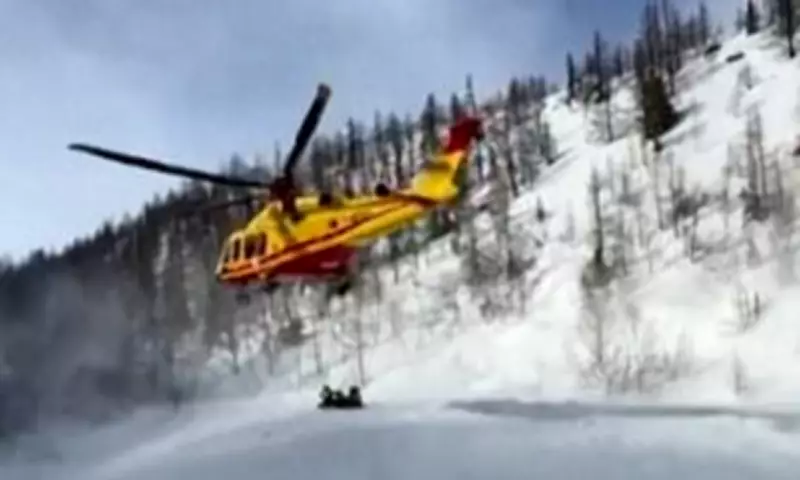
According to Italy's Alpine Rescue, at least three skiers were caught up in the avalanche. One of the victims was taken to a hospital in serious condition but later succumbed to their injuries. Fifteen rescuers, three canine units, and two helicopters participated in the search and rescue operations. Courmayeur, a town with approximately 2,900 inhabitants, is situated 124 miles northwest of Milan and is one of the venues hosting the upcoming Milan-Cortina Winter Olympics.
In a separate incident in Trentino, another person was partially buried by an avalanche but was successfully rescued by their companions, as reported by authorities on Sunday.

Dangerous Alpine Conditions and Recent Fatalities
Alpine Rescue highlighted that fresh snowfall from recent storms and wind-swept snowcaps on weak internal layers have created exceptionally risky conditions across the entire Alpine crescent bordering France, Switzerland, and Austria. This has led to a spike in avalanche-related deaths.
Last Monday, Alpine Rescue reported a record 13 backcountry skiers, climbers, and hikers died in the Italian mountains during the first week of February, including 10 in avalanches triggered by an unstable snowpack.
The latest incident follows closely on the heels of another avalanche tragedy in the French Alps. On Friday, an avalanche in Val d'Isere swept away six skiers in an off-piste area, killing one French national and two British citizens. A third British skier sustained minor injuries. All victims were equipped with avalanche transceivers, and the incident occurred as red alerts were issued across the Alps.
Red Alerts and Resort Closures
Emergency services responded swiftly but could not prevent the fatalities. The deaths came after a rare, day-long red alert was issued across the south-eastern Savoie region on Thursday—a danger level that has only been activated twice before in the 25 years since the system was introduced. This warning prompted several ski resorts to close all or part of their pistes.
Although the red alert was lifted in Savoie on Friday, the risk level remained high throughout the Alps. Meteo France weather service noted very unstable snow cover, particularly above altitudes of 1,800 to 2,000 metres. Storm Nils, which passed through France on Thursday, dumped between 60 to 100 centimetres of snow, exacerbating the hazardous conditions.
Recent Avalanche Incidents Across the Alps
In the French Alps, avalanches have claimed multiple lives in recent weeks. Last Monday, two skiers were killed, following the deaths of two others in a separate slide the previous weekend. A 38-year-old man died near Grenoble, while another in his early 30s was a victim of a very large avalanche near Montgenevre.
Additionally, two off-piste ski tourers died last Saturday near Saint-Veran, the highest village in the French Alps. They were part of a group of four unguided skiers when an avalanche swept down the north side of the Tete de Longet mountain peak.
So far this season, avalanches have claimed the lives of at least 20 skiers across the French, Swiss, Italian, and Austrian Alps. Last month, a British man was among six skiers killed in avalanches in the French Alps. The man, believed to be in his 50s, was skiing off-piste at the La Plagne resort without an avalanche transceiver or professional instructor.
Rescue teams, including over 50 people, medics, ski school instructors, and a helicopter-deployed piste dog, responded to the alert but were unable to revive him after he was buried under eight feet of snow for 50 minutes.
Between December and January, at least 17 deaths have been reported on European slopes, underscoring the severe risks posed by current Alpine conditions.