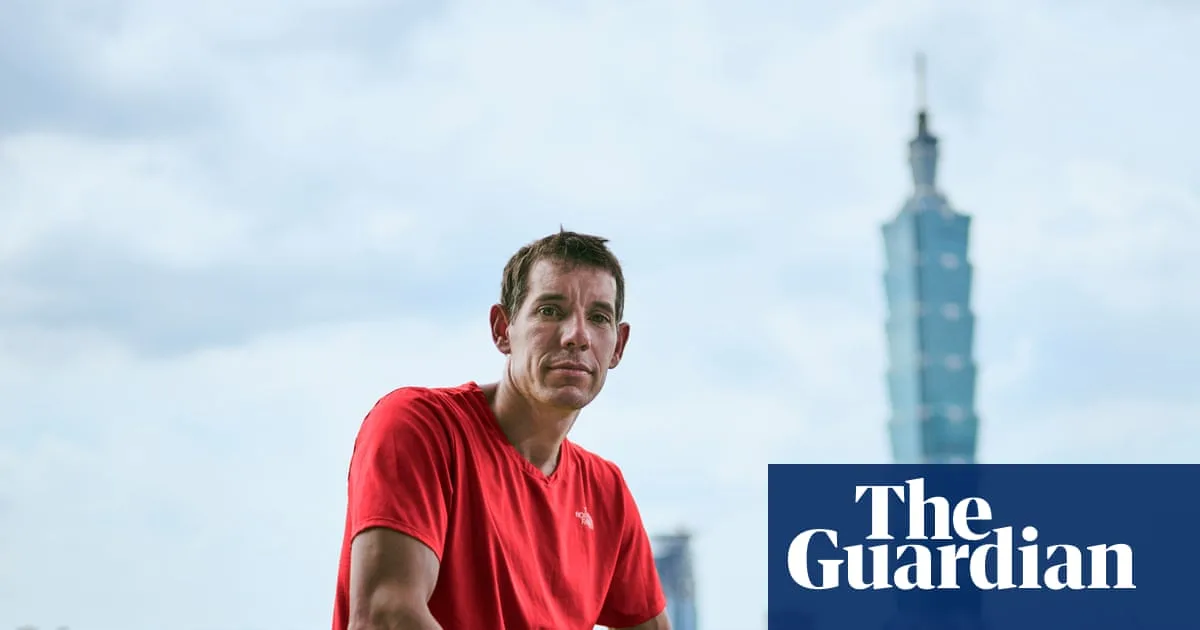
Alex Honnold's Historic Free Solo Climb of Taipei 101 to be Broadcast Live on Netflix
Professional rock climber Alex Honnold is set to undertake a breathtaking and controversial feat this Saturday morning, as he ascends the iconic Taipei 101 skyscraper in Taiwan using his signature free solo style—completely without ropes or any protective gear. The event, which will be broadcast live on Netflix, has generated a wave of global excitement alongside deep-seated concerns regarding the ethical implications of such a high-risk endeavour being televised.
The Monumental Challenge: Scaling a 1,667-Foot Engineering Marvel
Towering at 1,667 feet (508 meters) above Taiwan's capital city, the earthquake-proof Taipei 101 has dominated the skyline for over two decades. For Honnold, this steel and glass behemoth has been a captivating objective for more than ten years. Known globally for his legendary ropeless ascent of Yosemite's El Capitan, documented in the Oscar-winning film "Free Solo," Honnold continues to push the boundaries of climbing worldwide.
"When you look at climbing objectives, you look for things that are singular," Honnold told The Associated Press recently. "Something like El Capitan where it’s way bigger and way prouder than all the things around it." Taipei 101, with its unique architectural profile, represents just such a singular challenge.
Preparations and the Legacy of Past Ascents
While Honnold will be the first to attempt the climb without a rope, he is not the first to scale the building. French climber Alain Robert accomplished the feat on Christmas Day in 2004 during the skyscraper's grand opening, taking nearly four hours while battling an injured elbow and adverse weather. After months of dedicated training and consulting with Robert on his podcast, Honnold expresses a measured confidence.
"I don’t think it’ll be that extreme," Honnold remarked. "We’ll see. I think it’s the perfect sweet spot where it’s hard enough to be engaging for me and obviously an interesting climb." The 101-floor structure presents its greatest difficulty in the middle 64 floors, known as the "bamboo boxes," which feature steep, overhanging sections interspersed with balconies for brief rests.
Broadcast Production and Safety Protocols
The live broadcast, titled "Skyscraper Live," will employ a 10-second delay and feature an extensive safety apparatus. James Smith of Plimsoll Productions, the event producer, has worked closely with risk management specialists from Secret Compass to mitigate dangers. The production team includes cameramen positioned inside the building, four high-angle operators suspended on ropes, and multiple escape hatches along the route.
"These people all know Alex. They trust Alex. They’re going to be close to him throughout the whole climb," Smith explained. "They’re going to get us kind of amazing shots, but they’re also there just to keep an eye on him, and if there’s any problems, they can kind of help." Professional weather forecasters are monitoring conditions, with the climb contingent on favourable weather.
Ethical Debates and Cultural Impact
The decision to broadcast the climb live has ignited a significant ethical debate. Subbu Vincent, director of media and journalism ethics at Santa Clara University, emphasises the necessity of a "back-off clause" and ensuring the production does not amplify the inherent risks. The broadcast delay is a critical safeguard, allowing the feed to be cut immediately if a tragedy occurs.
"I don’t think it’s ethical to proceed to livestream anything after," Vincent stated. Further concerns centre on the potential influence on impressionable viewers, with parallels drawn to televised daredevil stunts of the past. The climbing community itself is reflective; author Jeff Smoot, who wrote "All and Nothing: Inside Free Soloing," notes that while public perception often labels it as thrill-seeking, many climbers view free soloing as a profound, meditative art form.
Local Perspectives and the Spirit of Adventure
Within Taiwan, the climb has captured the imagination of local climbers. Chin Tzu-hsiang, a Taiwanese rock climber, expressed a shared sentiment: "For Alex Honnold to finish the climb, it’s like he’s helping us fulfill our dream." He trusts in Honnold's meticulous preparation and rejects notions of recklessness.
As the world watches, this event stands at the intersection of human achievement, media spectacle, and profound risk. It prompts essential questions about responsibility, the boundaries of sport, and our collective fascination with witnessing the ultimate test of nerve and skill.