Avalanche Survival: A Physicist's Guide to Snow Slide Science and Safety
As a physicist and avid skier, I have dedicated my research to understanding the complex dynamics of avalanches. Recent events, such as the rescue of six skiers near Tahoe in February 2026 with ten still missing, highlight the ongoing dangers in mountainous wilderness areas. This article, originally published in 2024, is being republished to address renewed concerns after avalanches struck skiers near Lake Tahoe.
The Mechanics of Avalanches: What Triggers a Snow Slide
Avalanche behavior is intricately linked to snowpack structure, but this is just one component. For an avalanche to occur, multiple conditions must align unfavorably. The slope angle of a mountain is critical; slopes between 25 and 40 degrees pose the highest risk. Interestingly, these angles are also ideal for skiing. Slopes under 25 degrees may experience minor slips without gaining speed, while those over 40 degrees typically prevent snow accumulation, reducing avalanche hazards.
Triggers are essential to initiate movement. A snowpack might appear stable until disturbed by a snowmobile, skier, strong winds, or rock falls. Wind loading can create cornices—overhangs that may collapse and trigger avalanches below. In my lab at the University of Colorado Boulder, we study small-scale avalanches using photoelasticity and high-speed cameras to observe rapid particle collisions, occurring within 1/1,000th of a second.

Inside the Snowpack: The Physics of Avalanche Formation
Mountain snowpack is not uniform; it builds over time, reflecting recent weather conditions with both stable and weak layers. Fresh snow falls as fluffy crystals, but temperature fluctuations cause melting and refreezing, transforming it into granular, icy weak layers. When new snow accumulates on top, these weak layers can shear, providing a sliding surface for avalanches.
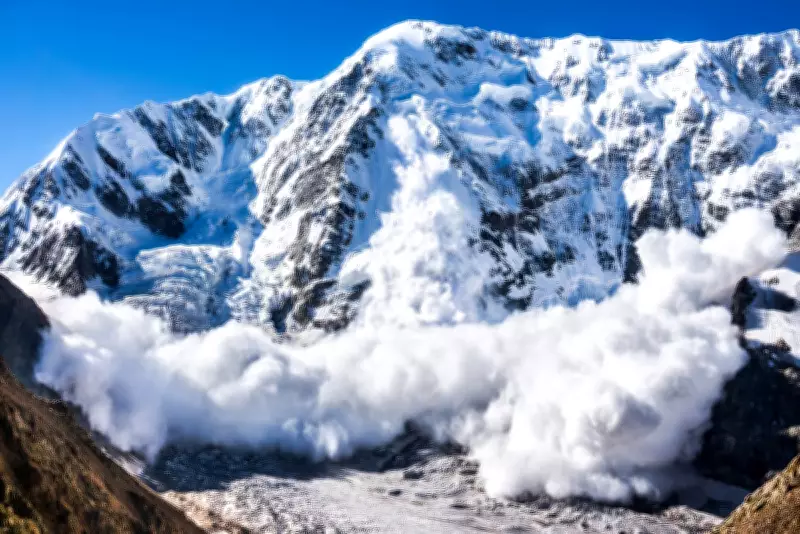
As an avalanche accelerates, it incorporates more snow and debris, becoming large and violent. Friction from particle collisions generates heat, leading to melting. Upon stopping, this liquid refreezes quickly, cementing the snowpack like concrete. This phenomenon complicates survival efforts, as moving within the frozen mass is extremely difficult.
Survival Strategies: Essential Tools and Techniques for Skiers
During fieldwork in Switzerland, I observed intentionally triggered avalanches moving at speeds exceeding 110 miles per hour. Even small avalanches are challenging to outrun, especially when deep snow buries victims under several feet. Backcountry skiers must rely on preparedness and peer support, as emergency response can take hours.
Key survival tools include:
- Avalanche transceivers: These devices transmit signals to help locate buried individuals. Friends can switch to receiving mode to pinpoint your beacon.
- Avalanche probes and shovels: Essential for extraction, as frozen snow resembles concrete.
- Avalanche air bags: Inflating these bags increases your size, helping you stay near the surface for easier location.
Climate Change and Avalanche Risks: Evolving Dangers in Winter Sports
Rising winter temperatures do not simply reduce avalanche risks through less snow. Instead, increased temperature variability leads to more melting and refreezing cycles, creating weaker snowpacks compared to historical norms. Communities accustomed to stable conditions may face unexpected hazards, as seen in a 2017 avalanche in Italy that destroyed a hotel in a previously low-risk area.
Computer models aid in predicting avalanche-prone zones, but shifting temperature, snowfall, and precipitation patterns complicate cause-and-effect understanding. As climate change progresses, skiers and mountaineers must stay informed and adapt their safety practices accordingly.
By combining scientific insights with practical safety measures, we can better navigate the risks of avalanches in an ever-changing environment.