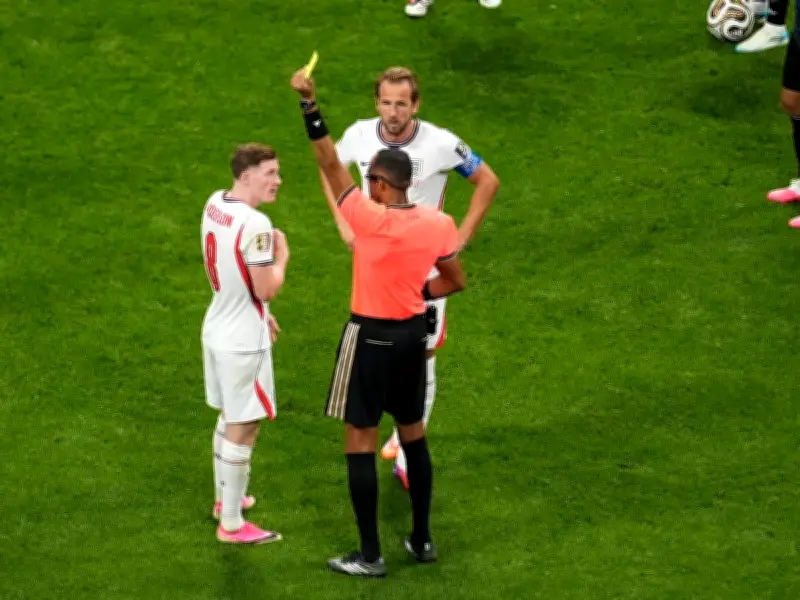
England's Elliot Anderson was booked in the first half of the World Cup semi-final against Argentina, placing him on a yellow card tightrope. However, FIFA regulations ensure that no player can miss the final due to yellow card accumulation, as all cautions were wiped clean after the quarter-finals.
Anderson's Booking and the Risk
In the 34th minute, Anderson, who recently joined Manchester City, fouled Lionel Messi during a mazy run and received a yellow card from American referee Ismail Elfath. Despite England players being victims of multiple Argentina fouls earlier, Anderson's challenge was deemed worthy of a caution. He must now avoid a second yellow in the second half to prevent a one-match ban, though that ban would not apply to the final.
FIFA Suspension Rules Explained
FIFA tournament regulations state that players accumulating two yellow cards in separate matches receive a one-match suspension. However, yellow card tallies are reset after the quarter-final stage. This means no player can miss the World Cup final due to yellow cards received in the semi-final. Only a red card in the semi-final can result in a suspension for the final.

Before the semi-final, no England players were at risk of suspension from yellow cards. Declan Rice, Jude Bellingham, Marc Guehi, and Nico O'Reilly all avoided bookings in the quarter-final win over Norway, which would have sidelined them against Argentina.
Jarell Quansah's Suspension
Defender Jarell Quansah was the only England player suspended for the Argentina match. He received a straight red card for a heavy challenge on Jesus Gallardo against Mexico. FIFA initially imposed a one-match ban but extended it to two matches due to serious foul play. Quansah missed the Norway quarter-final and the Argentina semi-final but is expected to be available for the final should England advance.
According to FIFA disciplinary rules, a straight red card typically results in a one-match suspension, but the governing body can extend it based on the severity of the offense. Quansah's tackle was judged as serious foul play, leading to the extended ban.