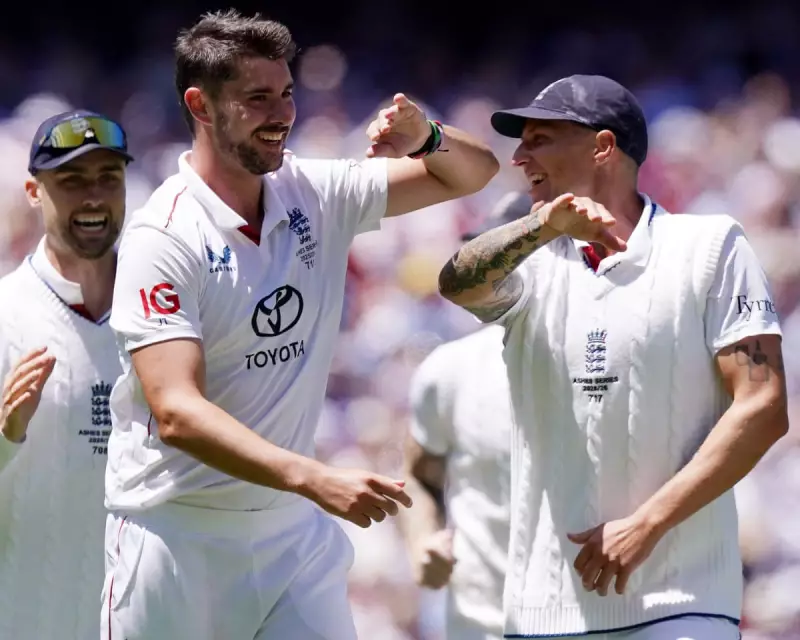
England's four-wicket victory in the fourth Ashes Test at the Melbourne Cricket Ground (MCG) has been overshadowed by controversy over the pitch, but it has unearthed a potentially significant new chapter for the team's bowling attack. The win, secured despite being bowled out for 110 in their first innings, was built on the pivotal contributions of seamers Josh Tongue and Brydon Carse.
A Victory Mired in Pitch Controversy
The match in Melbourne has been widely criticised, with Australian media and officials dismissing it as an 'ugly' and 'meaningless' contest due to the green, seaming pitch prepared by curator Matt Page. Some have suggested the game should be voided, a stance England fans may find reminiscent of 'moral victory' debates. However, the scoreline remains definitive: England won by four wickets, a notable overseas achievement that demonstrated resilience.
While the aggressive fourth-innings batting captured the 'Bazball' spirit, the foundation for success was laid by the bowlers. In a squad depleted by the absence of stalwarts like Stuart Broad and James Anderson, and with Jofra Archer and Mark Wood injured, Tongue and Carse stood up as the last men standing, taking 12 of England's 20 wickets in the match.

Josh Tongue Emerges as Attack Leader
With just eight Test caps, Josh Tongue has effectively become the leader of England's bowling attack. His focused and hostile spell on Boxing Day yielded a five-wicket haul, making him a central figure in the fightback. At 28, the late-bloomer now has 43 Test wickets at an average of 26 against strong opposition.
His method is deceptively simple—a straight run-up and full length—but nuanced with an angled seam and an ability to shape the ball. This performance earned him the Man of the Match award, the first English bowler to receive the honour in Australia since Dean Headley at the same venue in 1998.
Brydon Carse Answers His Critics
For Brydon Carse, the tour has been a puzzle. Often criticised for an expensive economy rate and labelled a 'stat-padder', he delivered his best day in Test cricket during the crucial second innings. With Australia threatening at 161 for six, Carse made things happen, dismissing Cameron Green with a caught and bowled and removing Mitchell Starc.
His raw energy and knack for creating moments, even during a brief, chaotic batting cameo, provided the disruptive 'Bazball' spark England needed. The Melbourne Test proved he can be a match-influencing bowler at this level, not just a supporting act.
Looking Ahead: A Lasting Partnership or a Winter Fling?
The question now is whether the Tongue-Carse partnership is a marriage of convenience for a battered touring party or the start of something more substantial. With the old guard retired and others injury-prone, they represent the immediate future.
If Carse can build on the pressure he created in Melbourne and Tongue maintains his new-found status as attack leader, England may have discovered a reliable pairing. Their performance turned what many called a 'Test of shame' into a platform for regeneration, offering hope that this could be the beginning of a serious new era for England's Test bowling.