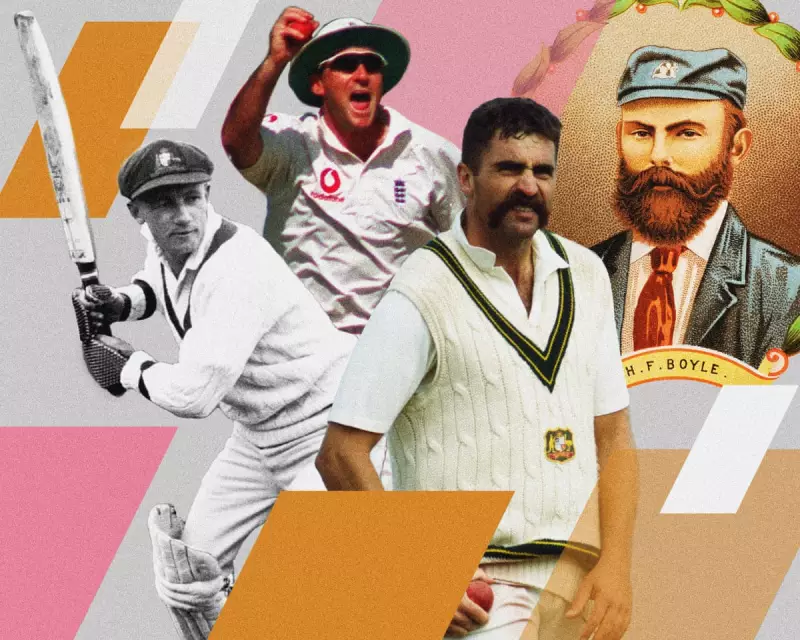
What defines a favourite cricketer in the storied history of the Ashes? Is it sheer statistical dominance, moments of unforgettable heroism, or simply a unique style that captures the imagination? Following the publication of a top 100 list, readers of The Guardian have passionately shared their personal selections, highlighting the players who have made the greatest impression on them throughout the decades of this fierce England-Australia rivalry.
Legends of a Bygone Era
The name Don Bradman remains inescapable. Readers cited his phenomenal Ashes average of nearly 90, his two triple centuries, and his tactical acumen, such as reversing the batting order on a wet Melbourne wicket in 1937. His resilience during the Bodyline series, where he still averaged 56, cements his status for many as the ultimate Ashes batter.
Other early greats were also celebrated. The "terrifying" Syd Barnes, who took 13 for 163 in 80 overs during the 1901-02 series, was hailed as perhaps the greatest bowler of all time. Meanwhile, the modest Harry Boyle, Spofforth's bowling partner in the famous 1882 Oval Test, was championed as a crucial but often forgotten figure in Ashes lore.

From the 20th century, Richie Benaud's glamour and charismatic leadership in 1961 left an indelible mark on one reader, who recalled the Australian captain's match-winning six for 70 at Old Trafford. The elegant David Gower was praised for his artistry, with his 123 at Sydney in 1991 described as "shotmaking to behold".
Modern Icons and Unforgettable Characters
The modern era provides a wealth of favourites. For sheer excitement with the bat, Adam Gilchrist's blistering 57-ball century in Perth in 2006 was singled out as a pinnacle Ashes moment. With the ball, Shane Warne was described as making fans "fizz with excitement", with his 90 at Old Trafford in 2005 remembered as a heartbreakingly brilliant innings in a losing cause.
English heroes also feature prominently. Ian Botham was celebrated for his indefatigable heroics in 1981 and beyond. Andrew Flintoff was lauded as embodying everything the Ashes should be about—a ferocious athlete with an enormous heart. Kevin Pietersen was credited as the dominant force who helped break England's long barren spell.
Other choices highlighted compelling personal stories. David Steele, the 33-year-old, grey-haired, bespectacled batsman who defiantly faced down Lillee and Thomson in 1975, was hailed for his unexpected and heroic cameo. Monty Panesar's unwavering commitment and his famous rearguard with Jimmy Anderson in Cardiff 2009 exemplified "bulldog spirit".
Fast Bowlers, Captains, and Cult Heroes
The pace battery has its devoted followers. Dennis Lillee inspired awe with his speed and cunning in the 1970s. Frank "Typhoon" Tyson was recalled as the fastest ever seen by one reader, for his devastating 7 for 27 in Melbourne in 1954-55. Bob Massie's mesmerising debut at Lord's in 1972, with his 16 wickets and famous mutton chops, captured a generation's imagination.
Leadership also earned plaudits. Mike Brearley was revered for taking the art of captaincy to a higher level through intelligent, psychological leadership. Steve Waugh was identified as a ray of hope and grit during Australia's rebuilding phase in the mid-1980s.
The list reflects deep personal connections. From Jim Laker inspiring a young fan to bowl off-spin after his 19-wicket haul in 1956, to Simon Jones's mastery of reverse swing in the epic 2005 series, each selection tells a story of how a player can define an era for a spectator. The consensus is clear: while greatness is measured in statistics, a favourite cricketer is remembered in the heart.