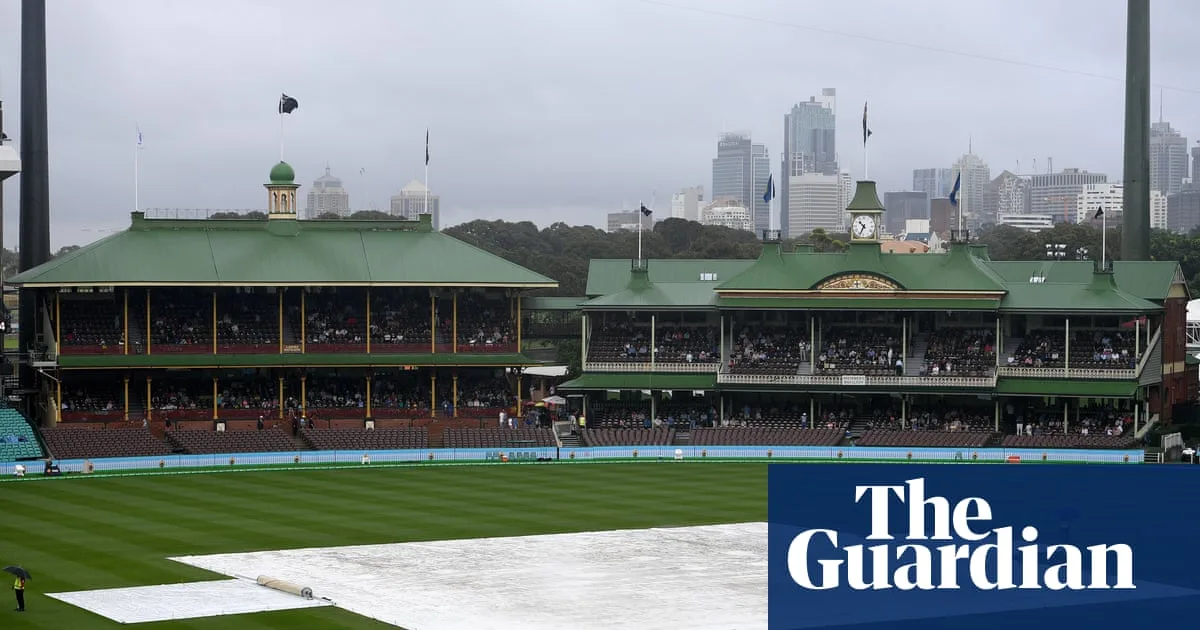
England enjoyed their best day with the bat in the current Ashes series, only for familiar weather woes to intervene and cut proceedings short on the opening day of the final Test at the Sydney Cricket Ground.
Play Abandoned Amid Stormy Skies
Joe Root and Harry Brook had expertly navigated England to a promising position of 211-3, taming the Australian bowling attack. However, their progress was halted as dark clouds gathered over the iconic venue. Despite the floodlights being switched on, umpires deemed the light insufficient and led the players from the field at 2.50pm local time.
The decision was swiftly followed by the arrival of a storm. Ground staff rushed to deploy the covers as thunder rumbled in the distance, rain began to fall, and an early stumps was called. "I could hardly see the ball when I was batting at the end," batsman Harry Brook commented later. "Everybody was pretty much in the same boat."
Sydney's Inconvenient Weather History
The premature end thrust the SCG's notorious weather record back into the spotlight. Historical data reveals a stark pattern: since the 1880s, Sydney Tests have lost a total of 26 full days to washouts. This figure is 17 more than the next most affected Australian venue, Melbourne, which has seen nine.
As Australia's second wettest major city, Sydney has endured a particularly soggy 2025, much to the frustration of the 49,574 fans in attendance. The incident immediately reignited the age-old debate on social media, with one fan quipping: "Death, taxes and the Sydney Test being stopped due to weather every year."
The Never-Ending Scheduling Controversy
The disruption has intensified calls for Cricket Australia to reconsider hosting the New Year's Test in Sydney. Many argue the marquee Ashes finale deserves a venue with more reliable conditions. The late Shane Warne was a prominent advocate for change, suggesting in 2022 that the Sydney and Brisbane Tests should swap slots in the calendar.
"It just seems to always rain in the Test match," Warne said. "Imagine if the tourists... played the first Test in Sydney rather than the fourth Test always in the New Year." This sentiment is widely shared among supporters who believe the series should not consistently conclude with weather interruptions.
However, any schedule change faces significant institutional resistance. Cricket NSW has a deal to host the New Year's Test at the SCG until 2030. Former Australian captain Michael Clarke has been a staunch defender of the tradition, stating: "You can’t take New Year’s away from the SCG, [an] absolute no-brainer."
Cricket NSW chief executive Lee Germon echoed this, highlighting the cultural significance of the 'Pink Test' for the McGrath Foundation and its tourism benefits. A previous attempt by South Australia to move the fixture to Adelaide Oval was swiftly rejected.
While forecasts suggest clearer skies for the remainder of the week, the fundamental question over the SCG's January slot remains unresolved, ensuring this debate will storm on long after the current clouds have passed.