A century-old mystery in English cricket has finally been solved, revealing how one of the game's most brilliant minds was corruptly denied the ultimate honour.
The Shrewdest Captain Never to Lead England
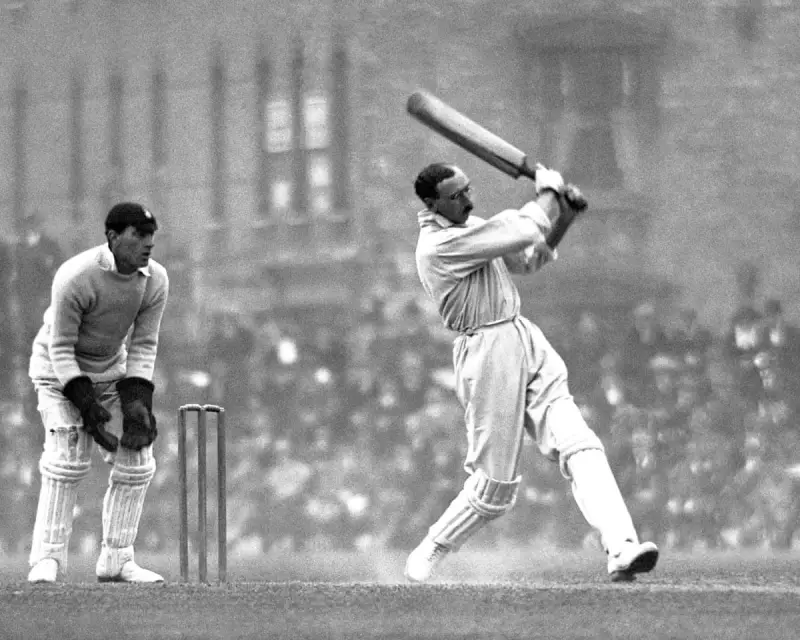
For a hundred years, it has perplexed cricket historians why Percy Fender, hailed by Wisden as "the shrewdest county captain of his generation", was never appointed to lead England. Now, private family archives being compiled for a new documentary film have uncovered the shocking truth: Fender was effectively blackmailed out of the job by a corrupt cricket official.
In a private audio recording made shortly before his death in 1985 at age 92, Fender detailed an extraordinary encounter in May 1924. A "gentleman who was very well known in the cricket world" visited Fender's flat at the Adelphi. Over two half-bottles of champagne, the official offered Fender the England captaincy for the 1924-25 Ashes tour in Australia.

A Corrupt Proposition Over Champagne
As an amateur cricketer with a day job as a wine merchant, Fender needed to arrange cover for his business during the six-month tour. The official suggested he could manage it. "I rather jumped at that idea," Fender recalled, immediately asking about salary.
The official's response revealed his true intentions. He stated he couldn't accept a salary or commission, but "there's nothing to prevent me a dividend on shares." Fender, misunderstanding, suggested a blank share transfer that could be reversed after dividend payment. The official corrected him: he wanted permanent ownership of shares in Fender's business.
"I finished up by telling him quite bluntly that while I was perfectly prepared to pay him for any work he did for the business while I was away, I was not prepared to bribe him by giving him that share in my business for all time," Fender said. The official left immediately, and Fender knew his chance had gone. "After that he got up and said that he had to go. And so I knew that not only was I not going to captain England but that I probably wasn't even going on the tour."
Fender played two Tests in June 1924 but wasn't selected again until 1929 for one final appearance. He never publicly named the blackmailer, but evidence suggests he was likely a member of the MCC selection committee for that Ashes squad.
The Maverick Genius of Percy Fender
On the field, Fender was a revolutionary. He still holds the record for the fastest century in first-class cricket history, scored in just 35 minutes. He once hammered 52 runs off 14 consecutive balls. As a bowler, he delivered whatever his team required. His creative captaincy became legendary, exemplified by a match against Essex where nine Surrey players arrived late; Fender and one teammate played 20 minutes of championship cricket alone, taking turns to bowl and keep wicket.
Off the field, he was a fighter pilot and adventurer who survived multiple near-death experiences. A meritocrat, he repeatedly clashed with cricket's establishment over the rigid separation of amateurs and professionals.
The Birth of Bodyline: Fender's Hidden Role
Omitted from the 1924-25 Ashes tour, Fender began covering England as a journalist. On the 1928-29 tour, he first saw a young Donald Bradman. While Fender never led England against Bradman, his protégé, Douglas Jardine, would.
The archives reveal Fender's crucial, behind-the-scenes role in developing the infamous Bodyline tactics used to defeat Bradman's Australia in 1932-33. Fender received letters from Australian journalist friends detailing how Australia's senior batters planned to counter England's fast bowlers—Harold Larwood, Bill Voce, Bill Bowes, and Gubby Allen—by standing in front of their stumps and playing short-pitched bowling to the leg-side.

Jardine studied these letters with Fender before the tour. While "leg theory" bowling was decades old, Jardine's innovation was placing a cordon of leg-side catchers. Fender argued this was a direct response to Australian tactics. Days before the first Test, Jardine wrote to Fender: "I am already forced to have five men on the leg-side for the quickies... it rather looks as if, by the time the first Test starts, I shall have to have the whole lot on the leg-side."
Fender forgave the officials who blocked his career but never accepted criticism that he and Jardine had acted wrongly. "Those who stand in front of their wickets and do not play the ball with their bat, usually get hit," as Jardine later noted.
A Legacy Finally Recognised
The documentary, supported by Surrey County Cricket Club, seeks final funding to complete the project. It promises to fully illuminate the life of this extraordinary cricketer—a man whose absence from England's leadership altered the game's history and whose strategic mind helped craft one of cricket's most controversial and effective tactics.
The revelation arrives as English cricket reflects on its future. The contemporary dilemma of players choosing lucrative, less stressful franchise cricket over the Test arena echoes Fender's own era of amateur-professional divides. As one modern example, Jamie Overton, once pencilled in for an Ashes squad, now earns around £10,000 per match in Australia's Big Bash with minimal pressure compared to his former Test teammates.
A century later, Percy Fender's story remains a potent reminder of how corruption and establishment resistance can deprive sport of its greatest talents—and how those talents often find other ways to leave an indelible mark on the game they love.