The aftermath of Anthony Joshua's victory over Jake Paul in Miami has left a peculiar taste in the mouth of the boxing world. While the former two-time world heavyweight champion secured a stoppage win, the dominant narrative isn't one of triumph, but of profound disappointment directed at the spectacle's architect: Jake Paul himself.
A Victory Overshadowed by Controversial Tactics
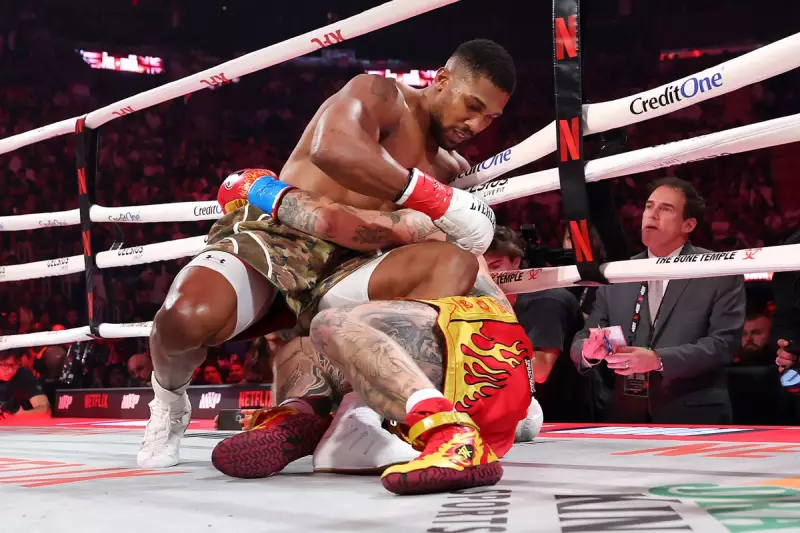
On Friday 20 December 2025, at the Kaseya Center in Miami, Anthony Joshua finally put an end to Jake Paul's challenge in the sixth round. The 36-year-old Briton dropped his 28-year-old opponent four times before the referee waved it off. Paul later posted from a hospital bed with a suspected broken jaw, having bravely climbed off the canvas three times. Yet, the respect for his grit is severely undermined by his conduct during the bout itself.
The fight, streamed globally on Netflix, was anticipated by many as a moment for Joshua to swiftly demolish the social media star turned boxer. Instead, viewers witnessed a bizarre and frustrating contest. Jake Paul landed a mere 16 punches across the fight. His primary survival mechanism was not elusive footwork or a tight guard, but a repeated and deliberate tactic of diving at Joshua's legs to cling on and waste time.

The Real Source of Fan Anger
This was the crux of the farce. In any other professional boxing contest, a referee would be strongly tempted to deduct points or even disqualify a fighter showing such a clear "lack of desire to engage". Paul's approach transformed a sporting contest into a prolonged game of evasion. While some pundits correctly predicted Paul's shorter stature and a larger-than-usual ring might cause Joshua problems, no one foresaw that leg-diving would be a central, calculated part of the American's game plan.
The anger directed at Joshua for not ending the fight inside 30 seconds is, therefore, largely misplaced. Yes, "AJ" underperformed by his own admission, perhaps rusty after 15 months out following a brutal loss. However, the energy is better spent critiquing the man who sold the fight. Paul, once again, promised a competitive boxing match but delivered a cynical performance designed for survival, not competition.
A Cycle the Audience Fuels
This incident forces viewers to confront their own role in the 'Jake Paul phenomenon'. How many swore off his fights after the action-light eight-round affair with a 58-year-old Mike Tyson 13 months ago, only to tune in again for Joshua? Paul's entire boxing venture is built on weaponising public loathing and curiosity. He understands how to wind people up and profit from it.
Make no mistake: Anthony Joshua did not kill off Jake Paul in the boxing ecosystem. The YouTuber will be back, selecting another opponent that guarantees headlines and pay-per-view buys. The disappointment some feel in Joshua may be a projection; a deeper frustration with themselves for being drawn into the circus once more.
You are allowed to be angry. Not because Joshua took six rounds, but because Jake Paul sold a fight that, in its essence, he did not come to fight. The spectacle in Miami was a reminder that in the modern boxing landscape, the most effective punch is sometimes a well-marketed farce.