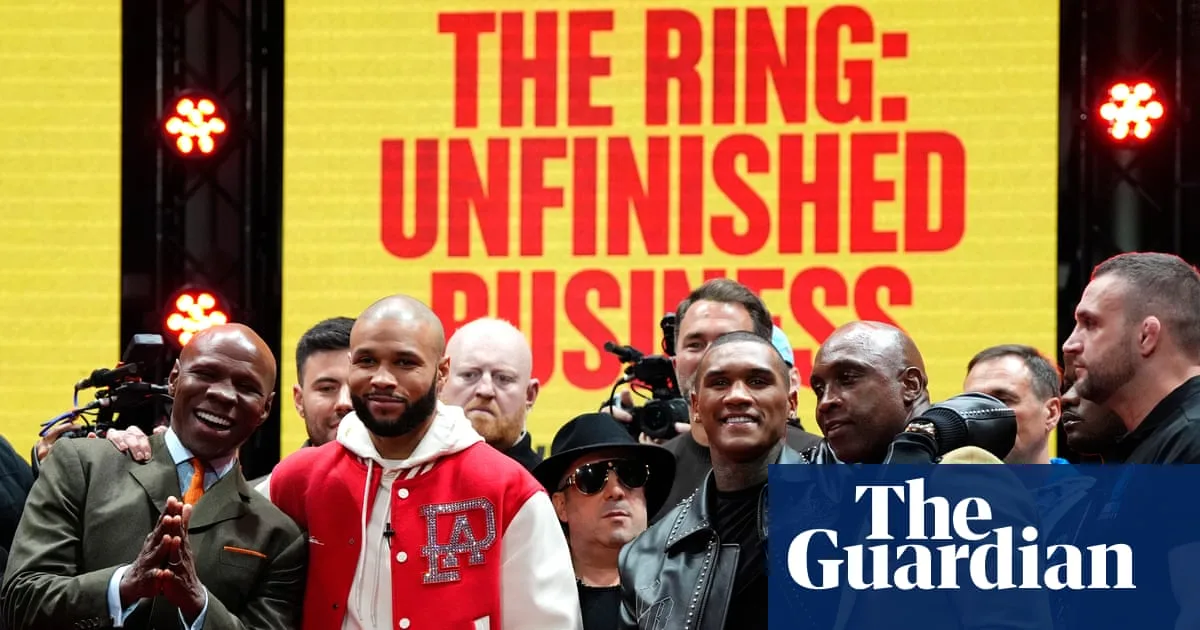
Boxing’s relentless commercialism is on full display with Saturday’s rematch between Conor Benn and Chris Eubank Jr, a fight that exists purely for financial gain rather than sporting necessity. The pair first met in April, a brutal contest that saw both men hospitalised – Eubank Jr spending two nights in care due to a punishing weight cut and rehydration clause, while Benn was discharged the same night. Eubank Jr won decisively on all scorecards (116-112), leaving little competitive justification for a sequel.
The fighters typically operate in different weight classes: Benn is a welterweight, Eubank Jr a natural middleweight who has fought at super-middleweight. At the weigh-in, both made the 160lbs limit, with Eubank Jr surprisingly lighter at 159.1lbs and Benn at 159.3lbs. Yet the rematch is driven by their famous surnames – Nigel Benn and Chris Eubank Sr – whose rivalry in the 1990s provides the commercial hook for promoters to cash in on a manufactured feud.
Financially, the fight makes sense for both men, as they would earn far less against opponents in their own divisions. But the cost is high for Eubank Jr, 36, who has agreed to a damaging rehydration clause and struggles to maintain a brisk pace over three-minute rounds. Benn, 29, is less worn but relies on hope that his opponent has declined since April, despite Eubank Jr’s clear victory.
Benn has promised greater discipline after his wild slugging in the first fight, but his prospects hinge on Eubank Jr being a diminished force. The uncertainty provides slim intrigue, but charging fans £25 on top of a Dazn subscription to see a rematch built on weight manipulation and family legacy epitomises boxing’s shameless hucksterism.