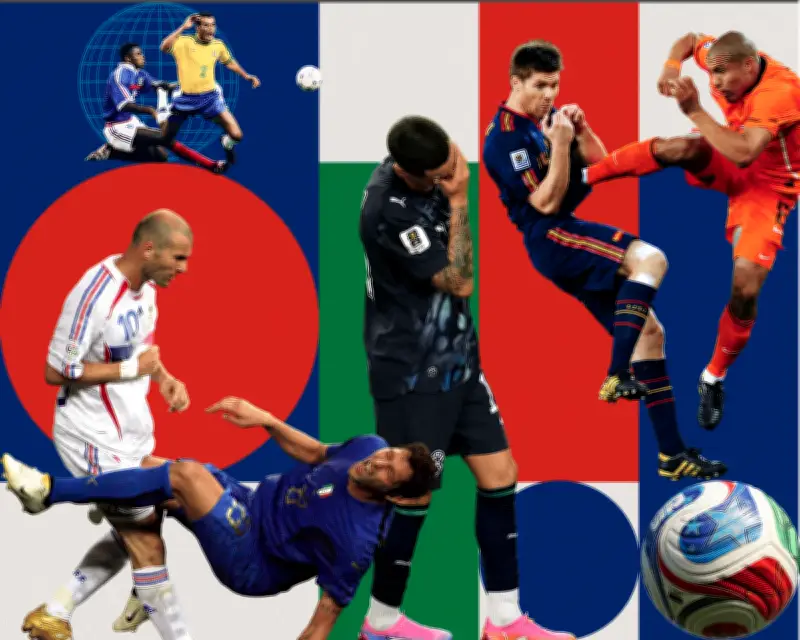
Miguel Almirón's dismissal for covering his mouth while speaking to an opponent in a confrontational situation during Paraguay's 1-0 win over Turkey at the 2026 World Cup is the latest in a long history of unusual and controversial red cards at the tournament. The sending-off, which occurred in the 2026 edition, adds to a tradition of players losing their cool on the biggest stage, from Zinedine Zidane's head-butt to the infamous Battle of Nuremberg.
Early Red Cards and the First Dismissal
The first sending-off at a World Cup occurred on the second day of the inaugural tournament in 1930 in Montevideo. Peru captain Plácido Galindo was sent off (though red cards were not introduced until 1970) in a 3-1 defeat to Romania. The match was reportedly littered with fights, one of which required police intervention. Galindo's dismissal set a precedent for disciplinary action in the tournament.
The Battle of Nuremberg: Four Red Cards
The only World Cup match to feature four red cards was the 2006 last-16 clash between the Netherlands and Portugal, known as the Battle of Nuremberg. The match saw 16 yellow cards, with the first booking coming when Mark van Bommel fouled Cristiano Ronaldo in the second minute. Khalid Boulahrouz also targeted Ronaldo, leading to a second yellow. Costinha received a red card just before half-time for deliberate handball, his second yellow. Despite hopes for a calmer second half, Petit was booked minutes after coming on as a substitute. Luís Figo was fortunate to only receive a yellow for head-butting Van Bommel. The Netherlands lost 1-0.
Zidane's Infamous Head-Butt and Other Final Dismissals
Zinedine Zidane, one of football's most cultured players, was sent off in the 2006 World Cup final for head-butting Italy defender Marco Materazzi. This was Zidane's second red card at a World Cup, having earlier been dismissed for stamping on a Saudi player in 1998. He is one of two players sent off twice at World Cups, alongside Cameroon's Rigobert Song (1994 and 1998). In the 1998 final, Marcel Desailly was sent off for a second yellow after fouling Cafu, but France still won 3-0. The first dismissal in a World Cup final came in 1990, when Argentina's Pedro Monzón and Gustavo Dezotti were both sent off in a loss to West Germany. In 2010, John Heitinga was sent off for two bookable offences, but Nigel de Jong escaped a red card for a studs-up tackle on Xabi Alonso's chest, a decision referee Howard Webb later admitted was a mistake: 'One of the things I would change is the colour of the card for De Jong's tackle.'
Recent Trends and High Card Counts
The Netherlands have been at the centre of several high-card matches. In the 2022 quarter-final against Argentina, referee issued 18 yellow cards (16 for players, two for coaching staff) in a physical contest Argentina won on penalties. The 2010 final saw 14 yellow cards, with eight Dutch starters booked. At the 2026 World Cup, referees have been unusually strict: after Belgium's Nathan Ngoy was sent off in a goalless draw with Iran, the tournament matched the total red cards from the previous two World Cups combined (four in 2018 and four in 2022). The Mexico vs South Africa match featured three red cards, making it the seventh World Cup game with more than two dismissals.
Almirón's Unique Red Card
Miguel Almirón's red card for covering his mouth while speaking to an opponent in a confrontational situation is a new type of dismissal. The incident occurred in Paraguay's 1-0 win over Turkey, with no major fights involved. This unusual sending-off highlights how players continue to break new ground in disciplinary actions nearly a century after the first World Cup red card.
This article is by Richard Foster, who presents the It Started With A Kick podcast and writes a daily World Cup quiz on the Seventh Heaven app.