Exclusive: Jakob Ingebrigtsen Opens Up on His 'No Compromise' Approach to Running
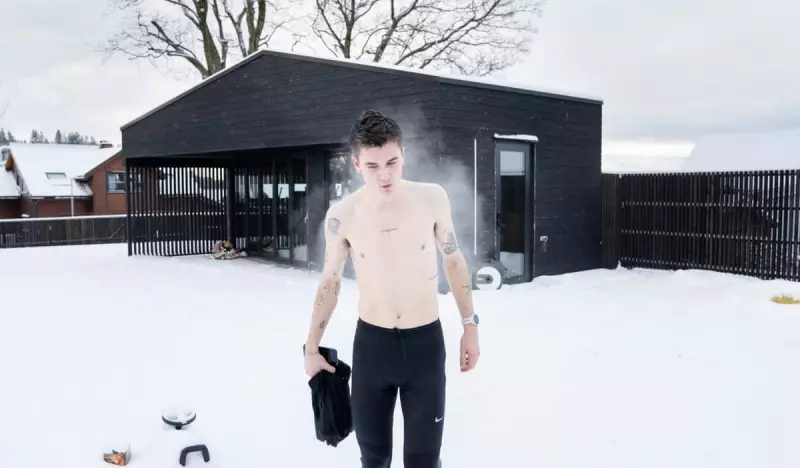
On a frigid New Year's morning in Sandnes, Norway, the world's most compelling athlete is drenched in sweat, creating tiny puddles across his treadmill. For forty minutes, Jakob Ingebrigtsen makes 6-minute 40-second mile pace appear effortless, chatting breezily as the temperature in his home gym exceeds 32.4°C (90°F). Only when asked about his super-strength does the double Olympic champion pause for breath. "In Norwegian we have a word for it," he eventually replies. "Ingen kompromiss. No compromise."
The Iron Man Returns After a Year from Hell
Following a tumultuous 2025, during which the Norwegian tore his Achilles and endured a highly public court case against his father and former coach, Gjert, track and field's iron man is poised for a powerful comeback. For the final twenty minutes of his run, Ingebrigtsen intensifies his effort. The music switches on, the treadmill accelerates to 5:13 minute-per-mile pace, and his pulse climbs from 130 to 172 beats per minute. As Black Sabbath's "Iron Man" pounds through the stereo, the symbolism is unmistakable: "Running as fast as they can, Iron Man lives again!"
Ingebrigtsen is frequently mischaracterised as arrogant, yet in reality, he is remarkably forthright and welcoming. He invites us into his Sandnes home, where we spend an entire day with him, his wife Elisabeth, and their two golden retrievers, Maximus and Jupiter. Elisabeth even visits the local bakery to fetch lunch, while Jakob later drives me to his farm in one of his sports cars. Notably absent is any PR intermediary, making this candid access highly unusual in elite athletics.

The Psychology of a Champion: 99% Losses to Wins
Ingebrigtsen's unfiltered honesty, which sometimes irritates rivals, extends to blunt self-assessment. When questioned whether victories or defeats linger more in his mind, his response is startling. "I want to say that I almost don't remember the wins," he admits. "Almost. Right now I feel like it's 99% losses to wins." This mindset stems from a lifetime of performance-oriented existence, beginning with professional training from age four or five, progressing to over 100km weekly by twelve, and achieving a sub-four-minute mile at sixteen.
His upbringing, part scientific experiment and part reality television through Norway's successful Team Ingebrigtsen docu-series, shaped this relentless focus. By twenty, he was Olympic 1500m champion, and his CV now boasts two Olympic golds, four world titles, five world records, and twenty-two European titles. Yet it is the near-misses, like finishing fourth in the Paris Olympics 1500m final after a suicidal 54-second first lap, that continue to haunt him. "Considering how good shape I was in, I think nine out of ten times I would have won," he reflects. "And this was the tenth."
Redemption, Rivalry, and Realistic Ambitions
Despite redeeming himself with 5,000m gold days later, Ingebrigtsen dismisses any notion of consolation. "It definitely wasn't a redemption," he insists. "There's really nothing that can outweigh the disappointment." Winning has become an obsession, one he has fed throughout his life. This uncompromising attitude drove him to compete at last September's world championships in Tokyo, despite knowing he wasn't fully fit post-injury. "I'm always competing, even if the odds are against me," he explains. "That chance is taken away if you don't show up."
Now, four months after his last race, his Achilles has recovered, though he remains cautious, prioritising fitness for the outdoor season. He plans to start at June's Bislett Games, targeting double gold at the European Championships, a Diamond League final victory, and world record attempts in the 1500m, mile, and 5,000m. The 25-year-old also anticipates renewing his testy dynamic with Britain's Josh Kerr, though he doesn't consider anyone a true rival. "I'm always competing against myself," he states. "I usually don't look at the start list."

Outspoken Views on Sport and Personal Passions
Ingebrigtsen is equally vocal about athletics' broader landscape. He praises the Athletics Integrity Unit but advocates for increased anti-doping funding. Drawing a comparison to Formula One, he questions why track and field hasn't maximised its potential. "The paradox is indescribable," he remarks. "How can a sport that is so boring in reality be so entertaining for so many people?"
Beyond running, his passions include cars and collecting. He owns multiple vehicles, enjoys weekly mechanical sessions with friends, and has invested in Pokémon cards. "I think I have a collecting gene," he concedes, prompting a smiling interjection from Elisabeth: "No, it is not!" He also owns a nearby farm, currently growing potatoes but potentially rearing Wagyu cows in future.
Family, Fatherhood, and Future Goals
The shadow of last year's court case, which resulted in his father receiving a suspended sentence, remains, but Ingebrigtsen prefers to focus on positive family moments, like his 18-month-old daughter Filippa's rapid development. Parenthood hasn't altered his competitive nature. "As an athlete, it's completely the opposite," he says. "I don't allow myself to have those feelings and thoughts." He describes himself as an introvert who becomes extroverted in safe environments, a sentiment Elisabeth echoes: "You do care about people, just a very small group."
Despite 2025's setbacks, Ingebrigtsen's ambitions are undimmed. He aims to retire as history's greatest distance runner, currently running 175-180km weekly—far above typical 1500m specialists—and never takes days off. "If you have a day off, you lose 20-25km of running," he explains, having trained twice on Christmas Day. "I know I can beat most world records from 1500m to the marathon," he asserts. "If I can have ten more years, I think I have a good chance of reaching my ultimate goal." With that, he returns to the treadmill for another hour of sweat and suffering, fuelling the burning obsession that defines him.