
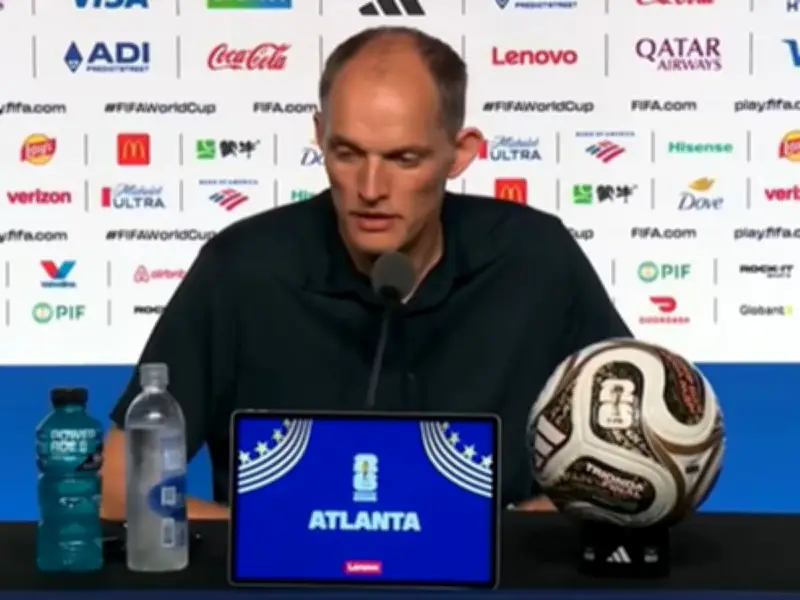
Thomas Tuchel correctly identified a deep-rooted issue in English football after England's World Cup semi-final exit to Argentina, but his own tactical decisions fueled those anxieties instead of fixing them. The phrase "when in doubt, kick it out" manifested itself in England's performance, as they retreated into a defensive shell after Anthony Gordon's opening goal.
Tuchel's Diagnosis and Contradiction
In his post-match press conference, Tuchel said: "I think ball possession plays a crucial role. It's maybe not in our DNA like it is in the Spanish DNA or Argentinian or Brazilian DNA to take the ball, control the game and the ball, which is also a big problem." However, his substitutions told a different story. He brought on six defenders, finishing the game with a defensive lineup, and left possession-minded players like Kobbie Mainoo on the bench for the entire match. Adam Wharton, a player admired by Real Madrid, was left at home entirely.
Missed Opportunity
England had players comfortable on the ball, including Cole Palmer, Phil Foden, and Mainoo, but Tuchel did not trust them to seize control. Instead, he reinforced England's fearful instincts. The FA has invested millions in technical development, yet the collective instinct was to crowd the 18-yard box and clear the ball aimlessly. Tuchel had earlier in the tournament made positive substitutions against Croatia, DR Congo, and Norway, but against Argentina, he reverted to fear.
Cultural Quirks Persist
English football's cultural quirks—groans when a goalkeeper plays short, shouts of "man on" from the stands—remain entrenched. Tuchel's challenge now is to use upcoming Nations League matches to force his players to confront these demons. He must also confront his own, as his decisions in Atlanta mirrored the very anxieties he promised to exorcise. As he said, "We needed to get back on the ball otherwise you cannot break the pressure and you cannot get the momentum back." His own advice remains unheeded.




