
Donald Trump’s proposed 25% tariff on Brazilian imports has recast Brazil’s efforts to protect its democracy as an unfair commercial practice, according to a Guardian editorial. The move follows a Brazilian Supreme Court ruling last June that held social media platforms liable for users’ posts, forcing companies like X and Meta to remove hate speech and anti-democratic content. Trump complained that the ruling forced US tech firms to take down political material.
Bolsonaro Son Lobbies in Washington
At a US International Trade Commission hearing last week, Flávio Bolsonaro, son of former president Jair Bolsonaro and opposition candidate in Brazil’s upcoming election, argued that the trade dispute stems from President Luiz Inácio Lula da Silva’s clashes with Trump. He requested that the US delay tariffs until Brazil’s October election, suggesting that he—unlike the anti-American Lula—could soon be in power. The White House decision is expected Wednesday.
Flávio Bolsonaro’s lobbying was described as an extraordinary act of chutzpah, effectively auditioning to be Trump’s preferred Brazilian president. While less charismatic than his father, he shares the same far-right anti-leftism and punitive law-and-order policies.
Lula’s Record and Sovereignty Push
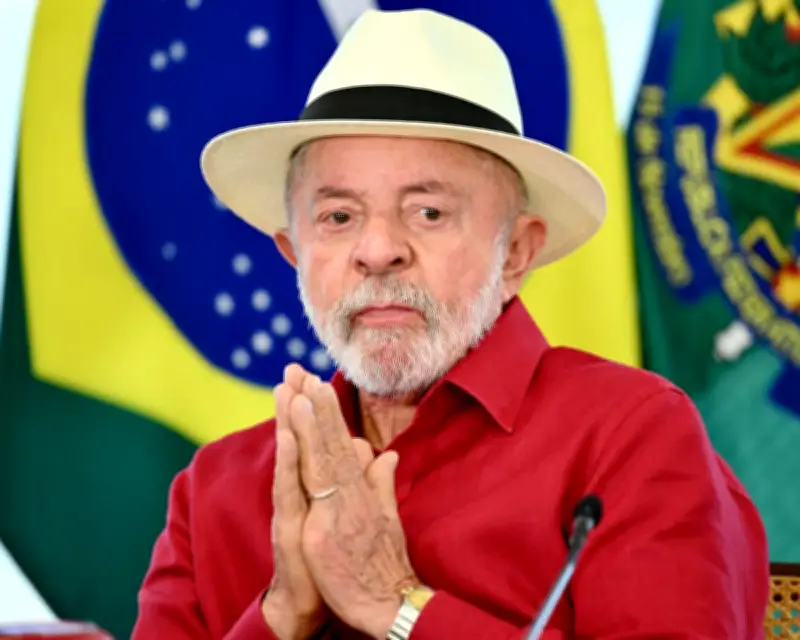
President Lula, aged 80, is ahead in polls and considered one of this century’s most successful politicians. From factory worker to union leader to party founder, he made redistribution central to Brazilian democracy. Extreme poverty fell from 30 million in 2002 to under 7 million today. He governed from 2003 to 2011 and returned in 2023 after corruption convictions were annulled.
Trump rejects Lula’s push for Brazilian sovereignty. Lula wants Brazil to police anti-democratic disinformation, while Trump argues the US should have jurisdiction over Brazil’s information sphere. Another sovereignty issue concerns Brazil’s financial plumbing, specifically the Pix payments system.
Pix Payments System
Brazil’s Pix system allows instant payments between individuals, businesses, and government entities. In 2025, its total transaction volume reached $6.7tn. Like India, Brazil built this digital public infrastructure to reduce reliance on foreign-controlled payment networks and insulate domestic payments from external pressure or sanctions, effectively bypassing Visa and Mastercard-style systems and threatening their profits.
According to economist Andres Arauz, a former minister in Ecuador’s left government, payments are data. Routed through US-linked networks, they become tools of surveillance and pressure. Kept national, they become infrastructure for sovereign AI development.
The real offence, the editorial argues, is not protectionism but autonomy. Brazil built a public payments system and asserted jurisdiction over US tech platforms. Trump has recast that sovereignty as unfair commercial discrimination, and Bolsonarism is willing to play along.




