
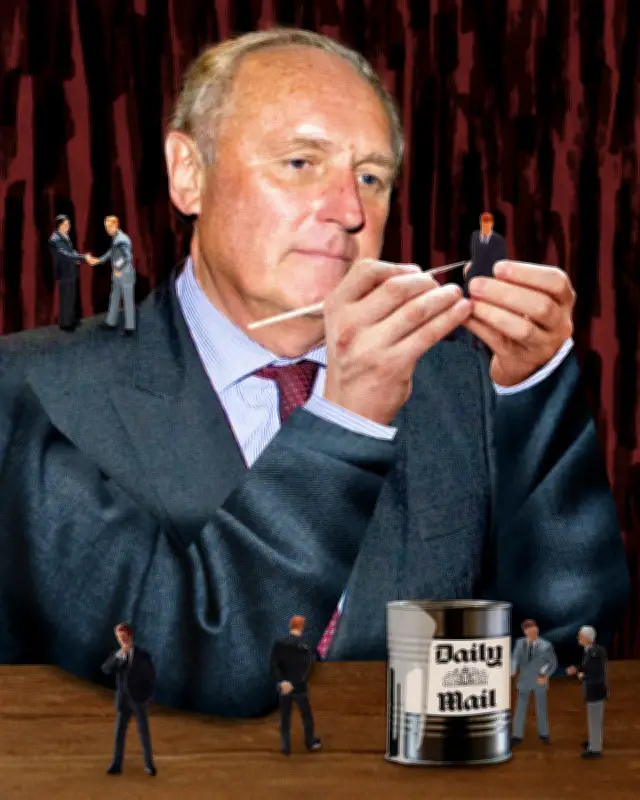
The British rightwing press has undergone a dramatic transformation, becoming angrier and more partisan. A key driver of this shift is the influence of Paul Dacre, the former Daily Mail editor, whose protégés now lead the Telegraph, the Times, and the Sunday Times. These editors—Chris Evans, Tony Gallagher, Ben Taylor, and Ted Verity—all spent formative years at the Mail under Dacre's tutelage, importing his aggressive, campaign-driven approach to journalism.
From Reassurance to Outrage
In 1986, Daily Telegraph editor Max Hastings described his paper as 'nice,' focused on reassurance and providing readers with a sense of stability. Today, the Telegraph is one of the angriest rightwing papers globally. A typical column by Allister Heath in September 2024 declared, 'Starmer’s Britain is descending into anarcho-tyranny.' Another by Allison Pearson praised far-right agitator Tommy Robinson for his 'rough-diamond charisma.' The paper's news coverage has become increasingly hyperbolic, with front-page headlines such as 'Labour to unleash up to 12,000 shoplifters' and 'One in 12 in London is illegal migrant.' The latter required a correction after the press regulator Ipso found it misleading.
A former Telegraph reporter noted, 'When I started, you would get handwritten letters from pensioners about their gardens. Now we get complaints: “The Telegraph used to be so nice. Now it’s so angry.”' A former editor called the paper 'contemptible' but asked to remain anonymous.
The Dacre Method
Paul Dacre, editor of the Daily Mail from 1992 to 2018, perfected a culture of perfectionism, shouting, and political manipulation. 'Shouting creates energy,' he said. His newsroom was known for 'bollockings'—merciless critiques of underperformance. Dacre's worldview pitted homeowners, hard workers, and traditional families against benefits claimants, bureaucrats, leftists, and foreign influences. Reporters were often instructed to confirm his views: 'This is the top line of the story. Now find three people who will say it.'
Dacre's intensity produced loyal disciples. Tony Gallagher, known as 'the grim reaper,' became news editor in the late 1990s. Chris Evans communicated with terse, one-word emails. Ben Taylor was a 'machine fuelled by anger,' and Ted Verity, while more polite, still believed in producing an aggressive paper. Under Dacre, the Mail's circulation rose even as other papers declined, making his methods attractive to proprietors.
Spread of Dacre's Influence
After Dacre's departure in 2018, his protégés fanned out across Fleet Street. Gallagher became editor of the Telegraph in 2009, then the Sun, and later the Times in 2022. Evans succeeded Gallagher at the Telegraph in 2014. Taylor became editor of the Sunday Times in 2023, and Verity took over the Daily Mail in 2021. Their papers now echo the Mail's tone, often covering the same stories. In January 2024, both the Mail and the Telegraph claimed that one in 12 Londoners were illegal migrants—a figure that later required corrections.
The rightwing press has become more alike, more angry, and more extreme. This radicalisation has helped power Reform UK, pushed the Conservatives rightward, and damaged Keir Starmer's government. 'Papers need to change to survive,' Gallagher said in 2013. But the change has also cost readers: the Telegraph shed subscribers under Gallagher, and the Mail's sales fell under a less aggressive editor.
Fragile Dominance
Despite their ascendancy, Dacre's methods face challenges. Editorial budgets are tighter, and shouting is less acceptable. Digital data now shapes editorial decisions more than Dacre's instincts. The rise of ultra-conservative influencers and social media zealots like Elon Musk offers even more extreme alternatives. The Mail's website is successful but less politicised, diluting the brand. Dacre himself was sceptical of online journalism, once saying, 'Bullshit.com.'
Meanwhile, British society has changed in ways the rightwing press dislikes: becoming more multicultural, liberal, and pro-EU. Angry conservative journalism requires fresh targets, but multiplying enemies signals a kind of defeat. As Dacre's childhood suburb of Arnos Grove now reflects a diverse, Turkish-influenced community, the papers must adapt to the country as it is, not as it used to be.




