
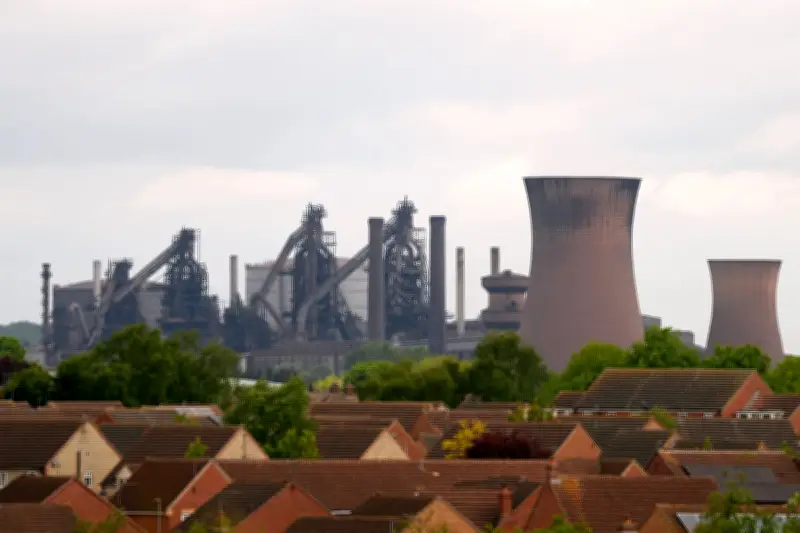
The Chinese government has voiced strong opposition to the UK's decision to nationalise British Steel, a move that it says undermines Chinese companies' confidence in investing in Britain. The nationalisation, which took effect on Thursday, was carried out under the Steel Industry (Nationalisation) Act 2026, which received royal assent earlier that day.
UK Government Cites National Security and Economic Necessity
The Department for Business and Trade stated that bringing British Steel under public ownership was essential to maintain steel production at its Scunthorpe site in Lincolnshire, protect the company's future, and safeguard UK supply chains. The move prevents the loss of around 4,000 jobs and ensures the continued operation of the blast furnaces.
Prime Minister Keir Starmer, who approved the nationalisation in one of his final significant acts before stepping down, said: "British Steel is part of the fabric of our nation and a cornerstone of Britain's industrial strength. Today's decision secures the future of steelmaking in the UK, protects skilled jobs and safeguards a vital national capability."
China's Ministry of Commerce Responds
China's Ministry of Commerce (Mofcom) expressed strong dissatisfaction, stating that the UK had "forcibly taken control of British Steel and subsequently nationalised the company in the name of national security, seriously undermining Jingye's legitimate rights and interests." Jingye, a Chinese company, had owned British Steel since 2020.
A Mofcom spokesperson told the Global Times: "The UK side, disregarding Jingye Group's important contributions to the British economy and society, forcibly took control of British Steel... dealing a severe blow to Chinese companies' confidence in investing in the UK." The spokesperson added that China would "take strong measures to firmly protect the interests of Chinese companies."
Background: Jingye's Ownership and UK Intervention
British Steel was previously owned by Jingye, which had acquired it in 2020. In April 2025, the Labour government recalled parliament to prevent the closure of the steelworks after Jingye threatened to walk away without preserving the blast furnaces. The government argued that intervention was necessary to maintain steel production and protect jobs.
Jingye has maintained in its UK accounts and on social media that British Steel is a valuable asset deserving substantial compensation, despite having been prepared to let it fail. The UK government plans to appoint an independent valuer to determine compensation for Jingye, aiming to avoid legal action under international treaties.
Geopolitical Tensions Between UK and China
The nationalisation is the latest flashpoint in UK-China relations. Earlier in 2026, Starmer visited China to seek "stability and clarity" after years of what he called "inconsistency." Previous tensions include the UK's decision to ease China General Nuclear out of the Sizewell C nuclear project in 2021 over security fears, and the 2020 ban on Huawei equipment in 5G networks.
China's ambassador to the UK criticised the Huawei ban at the time, questioning whether the UK could provide a fair business environment. In contrast, former Prime Minister David Cameron fostered closer ties, famously taking President Xi Jinping to a pub in 2015, which later became a Chinese-owned tourist attraction.
New Leadership for British Steel
Following nationalisation, a new leadership team has been appointed to stabilise the business and transform it into a "commercially sustainable, low-carbon enterprise," according to the UK government. The focus will be on securing the long-term viability of steel production in the UK while addressing environmental goals.




