Prince William's 'Quieter' Faith Approach Ignites National Debate
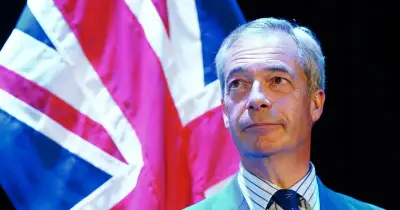
Many Independent readers are questioning whether a monarch still needs to personally believe in the faith they are meant to lead, following recent discussion of Prince William's "quieter" approach to religion. While aides stress he is committed to the Church of England and preparing for his future role as Supreme Governor, readers noted his limited church attendance and past reports that he has considered stepping back from duties.
Poll Reveals Divided Public Opinion on Monarch's Faith
A poll reflected this debate: 67 per cent of readers said faith is personal and the future monarch need not be a regular churchgoer, while 33 per cent felt attending church is an essential part of the role. This division highlights the tension between tradition and modern values in British society.
Constitutional Implications and Historical Precedents
Some argued that personal belief should matter, suggesting that if William were an atheist or non-Christian, someone else might be better placed to lead the Church. Others emphasised the symbolic nature of the monarchy's religious role, where tradition, ritual and public expectation can outweigh individual conviction.
Commenters also questioned the Church's relevance in a changing UK, citing declining attendance, rising atheism and the growth of other religions such as Islam. Some framed William's role as a broader test of religious authority and tolerance, arguing that a monarch should promote inclusivity rather than uphold a single faith.
Reader Perspectives on the Monarchy's Religious Duties
Many agreed that while the monarchy's religious duties are rooted in centuries of tradition, the personal beliefs of the future king may be increasingly private and nuanced. Here's what readers had to say:
Constitutional Crisis and Role of the Monarch
"Does William have a choice? If he decides he is an atheist or prefers Buddhism, then can someone else become Governor or can the Church be dis-established? As it stands, it would be a constitutional crisis. But these can be resolved. William III was a Calvinist. George I a Lutheran. One doesn't have to be an Anglican to be a non-executive Chair." - somerset sage
Duty to the Church of England
"One of the prices the British monarch has to pay is a born commitment to the Church of England, whatever his private view of religion. All because a 15th-century tyrant king appointed himself the head of a new order to break away from the Pope for his own purposes. Such is the heritage the present monarch has to live up to." - StansHumbleOpinion
Education, Science and Declining Religion
"Education and science have taught us that what we need is love and tolerance to have a peaceful country, and the Church does not do that. There are so many non-Christians living in Britain, and more and more Christians are leaving religious beliefs behind. Let us say we are human beings only. We see countries with religious laws becoming intolerant and poorer." - TotiCalling
Stand Against Religious Intolerance
"The best thing the Prince of Wales can do, if he wants to confirm his commitment to the Church of England, is to make a firm stand against religious intolerance and extremism. That goes for all religions. Whether it's the antics of the Taliban and their suppression of personal freedom and equality, or the right-wing Christian fundamentalists who believe in full-scale war as a prelude to the so-called 'end of times'. This latter group is more dangerous because they have money, influence and power in the White House, and their madness can affect us all." - tommy2tops
An Atheist Should Not Be Head of the Church of England
"The article's wording is notable for what it does not say. We are told that the Prince 'had a warm and substantive conversation with the new archbishop' and takes a 'genuine interest' in the Church's work and its role in preserving the Anglican tradition. Yet there is no clear statement of Christian belief. The language is very careful, but it stops short of expressing any personal beliefs." - Musil
Criticism of Religion and Schools
"No religion should have legal protection from criticism. Right back in 1906, it was proposed in the House of Commons that religion should be banned in schools, and no religious schools should be allowed (at the time that meant mostly Church of England schools, with a few Methodist ones too). The Church of England demanded that this was overturned in the House of Lords (which was much more powerful then than it is now), and sadly the idea was defeated. These days there seem to be more religious schools than ever. As Northern Ireland has demonstrated, segregated schools are a major problem in integration." - JoeRobson
Religious Symbolism
"Prince William drawing a line in the sand regarding the Church of England, and saying that his approach to the Church is a 'quieter' one, is a nice way of putting that he's not religious at all. Yet when he is crowned one day, he will have to hold the royal regalia called the Orb, and this is a symbol that the monarch's power is derived directly from God, which means he rules by the divine right of God. He has no problem holding that orb with its symbolism, but he's not even interested in religion like his father and his grandmother." - Stacey Benoit
Tradition, Monarchy and Constraint
"Ehm, as a consummate atheist and republican, I feel justified in criticising William. He is king-to-be and, as such, bound to be the Archbishop's boss in the near future. The monarchy and the Church of England are mired in, or wrapped in, heaps of tradition, convention and ritual. That is a package deal. The British C of E are stuck with Chuck and Billy, but Chuck and Billy are stuck with the rulebook as well. There will be some barquentine-style Master of Ritual to keep Billy in line, and let's face it, William is no Titus Groan to question your Gormenghast, and he knows it. All this speculation by unnamed 'aides' and 'people close to' is just to lull those in the C of E aching for some modernisation into sleep and submission." - RebootedyetagainHans2
Some of the comments have been edited for this article for brevity and clarity. The debate continues as Britain grapples with the evolving relationship between monarchy, faith, and modern society.