Women's Institute Faces Mass Branch Closures Over Transgender Membership Ban
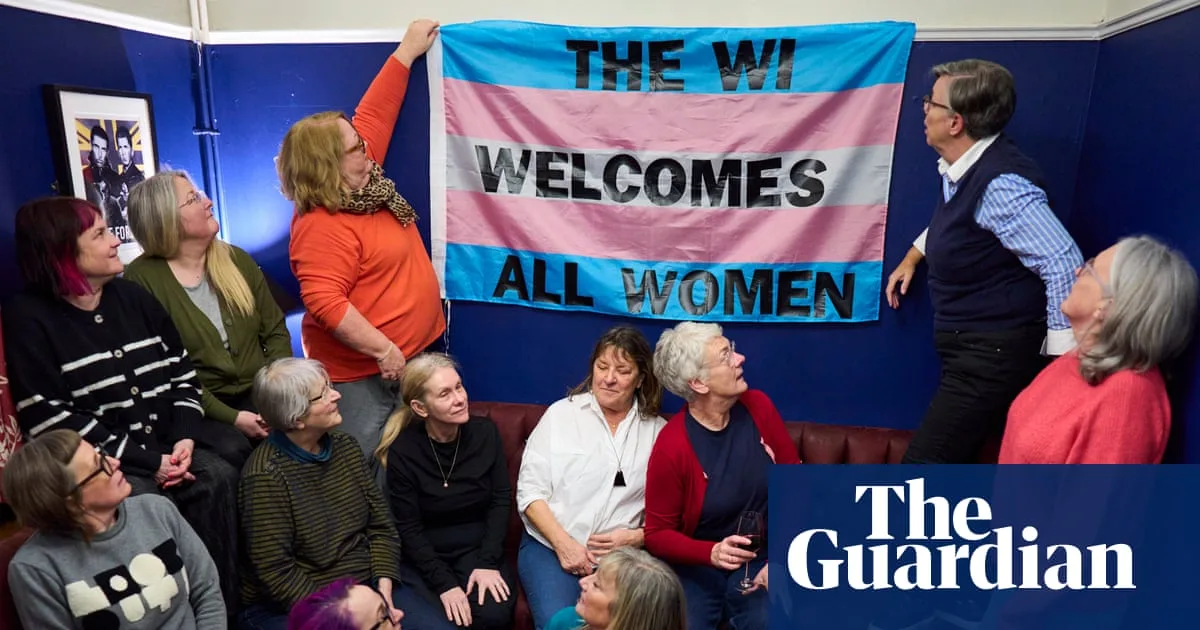
At least twelve Women's Institute groups across the United Kingdom are either closing or actively considering closure following a controversial decision by the National Federation of Women's Institutes to bar transgender women from membership. Members have warned that this policy has unleashed a toxic, traditionalist culture that is likely to deter younger women from joining the organisation in the future.
Branch Committees Step Down in Protest
Emma Hawley, chair of the Social Lites WI in Urmston, Greater Manchester, revealed that her entire committee has decided to step down in response to the new rules. "None of the other members want to take our places – many immediately said they weren't even going to renew their membership," she stated. Hawley, who has led the group for thirteen years, expressed profound disappointment, saying, "I've put 13 years into running this amazing group but I can't, ethically or morally, be a member of something that excludes transgender women."
Similarly, Seven Hills WI in Sheffield will close after its current board resigned and no other members volunteered to replace them. Clementine Dexter, vice-president of Seven Hills WI, reported receiving approximately 220 abusive online comments after announcing the closure, with only thirty supportive messages among them. "The NFWI's decision has emboldened certain members to speak their minds and I think the federation has a serious issue as a result," Dexter commented.
Practical Fallout and Venue Losses
Even branches that intend to continue operating under the new WI regulations are encountering significant practical challenges. Some have lost their regular meeting venues, while others report that scheduled speakers have cancelled bookings in protest. Sophie Hossack, president of Ladies of the Lock WI in Kentish Town, London, disclosed that their venue of nearly a decade has refused future bookings due to the policy. "They said they did not feel comfortable renting their room to us because they are a trans-inclusive space," Hossack explained.
Nora Salmon, whose Hackney Wicked Women group in Hackney Wick will close next month, described the NFWI's decision as creating "a carnage of concern and upset." She criticised the lack of support and guidance from the national federation, stating, "We were blindsided by their decision. The lack of guidance and consultation has left us feeling betrayed."
Legal Basis and Organisational Response
The NFWI's controversial policy change follows a 2025 UK Supreme Court judgment which determined that the legal definition of a woman under the Equality Act 2010 refers to biological sex. After reviewing this ruling, the NFWI announced it could no longer lawfully offer transgender women formal membership if it wished to continue operating as a women's charity.
In an official statement, the organisation expressed "utmost regret and sadness" about the decision and pledged to create alternative "sisterhood groups" open to all individuals. When approached for further comment on the branch closures, the NFWI declined to provide additional statements.
Contradictions and Unintended Consequences
Members have argued that the decision contradicts the WI's longstanding grassroots traditions. "The WI has always been an incredibly grassroots organisation where every member has a say in how it's run. But all that has been taken entirely out of our hands," Salmon remarked.
Jules Mortimore of Wells Angels, a 125-member WI group in Tunbridge Wells that also plans to close, highlighted an unintended consequence of the ruling: transgender men could potentially join WI groups under the new interpretation. "That is likely to be far more confronting and alarming for women than a trans woman," Mortimore observed. She added that the lack of guidance from the national federation suggests the WI "just haven't thought any of this through properly at all."
Growing Network of Dissenting Branches
A WhatsApp network connecting approximately a dozen branches discussing closure is reportedly expanding, with confusion and uncertainty driving increasing numbers of committees to consider leaving the NFWI. Despite this upheaval, many departing members express strong attachment to the community spirit that defined their groups and intend to preserve it outside the official structure.
"We're going to reopen as an independent community group and we're really positive about that," Mortimore stated. Hawley echoed this sentiment, emphasising continuity over rupture: "We've been through so much together and given each other so much support. We just want to carry on doing that."
The Women's Institute, one of the UK's largest voluntary organisations with thousands of local branches and approximately 180,000 members nationwide, now faces significant internal division and potential membership decline as it navigates this contentious policy implementation.