Welsh Labour Leader Launches Senedd Campaign with Keir Starmer Notably Absent
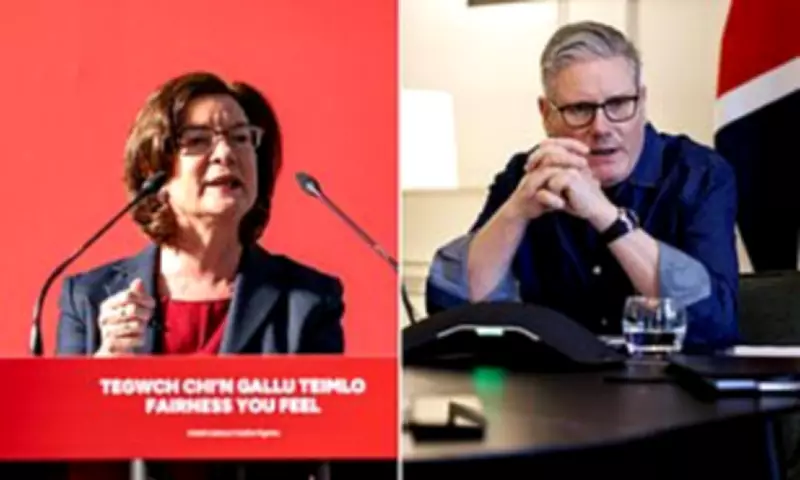
Baroness Eluned Morgan, the Welsh Labour leader, officially launched her party's campaign for the upcoming Senedd election today in Newport, striking a tone of renewal while conspicuously avoiding any direct mention of Sir Keir Starmer by name. The First Minister's address, framed under the banner of 'a new chapter for Wales', comes as her party seeks to extend its 27-year hold on power in Cardiff Bay, yet it appears Sir Keir's presence loomed as an unspoken challenge throughout the event.
Starmer's Shadow Over Welsh Campaign
Political analysts and recent polling data indicate that Sir Keir Starmer's declining popularity west of the Severn is becoming a significant drag on Welsh Labour's electoral fortunes. With the election scheduled for May 7, surveys suggest Labour could potentially fall to third place behind Plaid Cymru and Reform UK, marking a dramatic shift in Welsh politics. In response, Baroness Morgan has explicitly urged voters not to treat the Senedd contest as a referendum on the Prime Minister's tenure in Westminster, emphasizing local issues over national political sentiment.
During a post-speech question-and-answer session, the First Minister addressed Sir Keir's role in the campaign with conditional openness. She stated that the Prime Minister would be welcome on the Welsh Labour campaign trail—but only if he arrives bearing additional taxpayer funds for Welsh initiatives. This remark referenced Sir Keir's last appearance alongside her in February, when he endorsed a £14 billion pipeline of rail improvements months ahead of the election.

'If he brings me another £14 billion, he is very welcome on the campaign trail,' Baroness Morgan declared. 'That was significant, it was important, and I was pleased to welcome him, because I have been asking for that money for a long time.'
Defending Focus Amid UK Political Tensions
When pressed on whether she was content with Sir Keir Starmer serving as Prime Minister during the Welsh Labour campaign, Baroness Morgan affirmed her support but redirected attention to Welsh priorities. 'I have a country to run here,' she asserted. 'I'm much more interested in focusing on what is important to the people of Wales.'
This strategic distancing mirrors concerns within both Welsh and Scottish Labour, as each fears electoral setbacks in May's devolved elections due to the unpopularity of Sir Keir's UK Government. Notably, last month saw Scottish Labour leader Anas Sarwar publicly call for the Prime Minister's resignation, citing 'too many mistakes' despite acknowledging Sir Keir as a 'decent man'. Baroness Morgan initially refrained from comment, sparking speculation she might follow suit, but ultimately expressed her 'full confidence' in Sir Keir, describing him as an 'honourable man'.
Campaign Pledges and Political Warnings
At the campaign launch, Baroness Morgan unveiled several key pledges aimed at addressing pressing issues in Wales:
- A commitment to transform mental healthcare by establishing easy-to-access, same-day services.
- A £2 bus fare cap to improve public transport affordability.
- Enhanced access to hospital transport for patients.
- A crackdown on fly-tipping through increased fines.
Simultaneously, she issued stark warnings about rival parties, accusing Reform UK of offering 'rage, loud rage, but no real answers' and criticizing Plaid Cymru for relying on slogans without substantive plans. Baroness Morgan suggested that Plaid's 'defining project' remains Welsh independence, a stance she contrasted with her party's focus on practical governance.
'What we're seeing around us in Wales, across the UK and around the world, is politics that is louder than it is wiser, angrier than it is useful, more interested in posturing than progress,' she remarked.
Electoral Prospects and Opposition Critique
Current polling paints a challenging picture for Welsh Labour, with projections indicating the party could see its Senedd representation plummet from 29 seats to as few as eight, potentially relegating it to third-largest party status. This could pave the way for a coalition government led by Plaid Cymru and the Greens, with Reform UK heading the opposition.

In a sharp rebuttal, a Plaid Cymru spokesperson dismissed Baroness Morgan's campaign launch as 'tired stuff from a party that has been in power in Wales for almost 30 years and has long run out of ideas.' The spokesperson highlighted ongoing issues such as lengthy NHS waiting times, rising living costs, and overstretched public services, arguing that Labour has failed to reckon with its record or present a genuine plan for improvement.
'The people of Wales won't be buying it,' the spokesperson concluded, noting the absence of any meaningful challenge to Westminster's perceived neglect of Wales or Sir Keir Starmer's leadership.
As the Senedd election approaches, Baroness Morgan's campaign hinges on persuading voters to look beyond UK-wide political discontent and focus on Welsh Labour's local track record and future promises, all while navigating the delicate dynamics of her party's relationship with an increasingly unpopular Prime Minister.