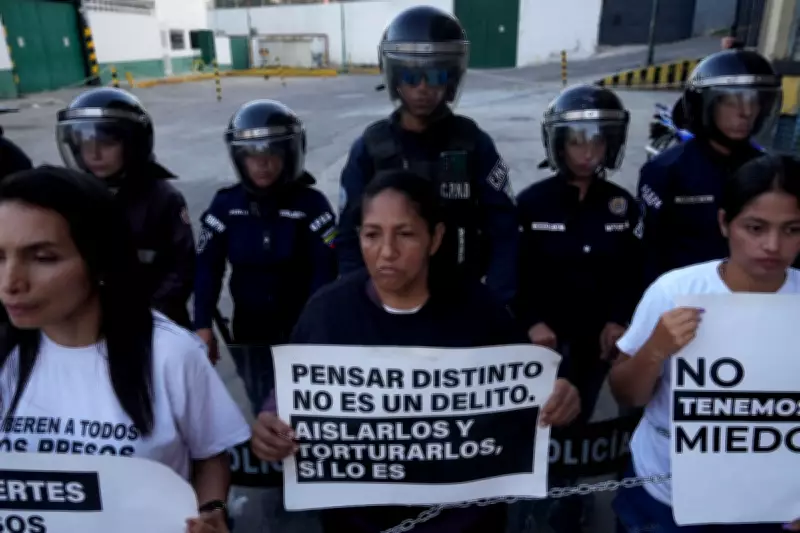
Regina Garcia Cano, an Associated Press reporter, recently chronicled the efforts of two Venezuelan women protesting the government over the detentions of their husbands. Along with video journalist Juan Arraez and photographer Ariana Cubillos, Garcia Cano shadowed the women and up to 30 others during their 64-day protest outside a police station in Caracas, where their loved ones were held.
What prompted the protest?
The Trump administration stunned Venezuelans when it backed a ruling-party loyalist to lead the country after the U.S. military deposed President Nicolás Maduro in January. The government of acting President Delcy Rodríguez released all U.S. citizens from prison but did not free hundreds of Venezuelans held on political grounds, according to human rights groups. Five days after Maduro's capture, the government announced a significant prisoner release, and Rodríguez signed an amnesty law benefiting dissidents and opposition figures. However, many detainees remained behind bars.
Dozens of women, mostly wives and mothers, began gathering outside police stations and prisons expecting to see their loved ones freed. When that did not happen, they refused to leave and set up camps to pressure the government.

How unusual are such protests in Venezuela?
These sit-ins were unimaginable before January 3. Venezuela's government had shown zero tolerance for dissent, especially after the disputed 2024 presidential election, which Maduro claimed to have won despite credible evidence to the contrary. Over 2,000 people were detained post-election, many without protesting. Fear silenced the population.
What made this protest special?
The women are the first Venezuelans to challenge the ruling party in the post-Maduro era. These mostly shy housewives had never protested before. They overcame their fears, ignored advice to stay quiet, and risked arrest to stand up to the government. For the most part, they succeeded.
Why focus on Mendoza and Rosales?
Garcia Cano and Arraez interviewed many women but centered on Mendoza and Rosales because both spent significant time camping outside a jail, leaving their children and lives behind. They were strangers who became friends through their shared struggle. Their families represent two distinct life stories: Rosales and her husband work for the state and support the ruling party, while Mendoza and her husband were apolitical and relied on private-sector income.
What did you learn about the women?
This was a story about protest but also about deep female friendships. The women went from shy, suspicious strangers to chatty, supportive friends. Together, they learned to protest, use a megaphone, advocate to lawmakers, and navigate jail rules. They held each other during tears and cheered victories. They talked through fears, love, parenting, and doubts.