Vance's 2028 Ambitions Threatened by Backing Trump's Iran War, Report Warns
Vance's 2028 Hopes at Risk Over Trump's Iran War Support

Vance's Political Future Imperilled by Support for Trump's Iran Conflict

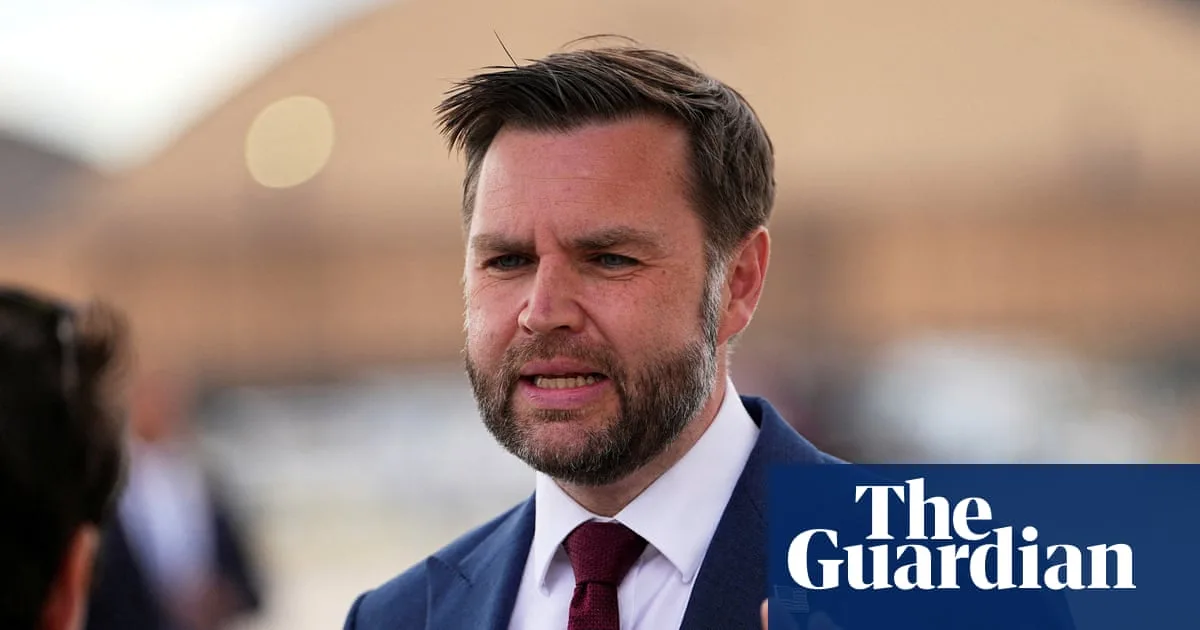
Vice President JD Vance, widely viewed as a leading contender to succeed President Donald Trump, could encounter significant political obstacles in the 2028 presidential race as a direct consequence of the ongoing war with Iran, according to a detailed new analysis. The report highlights the delicate balancing act Vance faces in aligning himself with the administration's foreign policy while managing his own political trajectory.

Public Defence and Private Doubts Create a Political Tightrope

Vance has consistently and publicly defended President Trump's decision to initiate military action against Iran, despite previously expressing reservations about prolonged American military engagements overseas. This position has placed him in a politically precarious situation, caught between loyalty to the current administration and his future electoral prospects.

Sources close to the vice president have revealed to The Washington Post that if the Iranian conflict extends over several months, it could create substantial political difficulties for whoever ultimately secures the Republican presidential nomination in 2028. These insiders emphasised that Vance has not yet made a definitive decision about launching a presidential campaign, adding uncertainty to an already complex political landscape.

Wide Pickt banner — collaborative shopping lists app for Telegram, phone mockup with grocery list

Confrontational Exchange Highlights Political Vulnerability

The political tension surrounding Vance's position became publicly evident during a recent exchange with reporters. When questioned about potential inconsistencies between his current support for the Iran war and his past criticisms of foreign intervention, Vance responded defensively, stating: "I know what you're trying to do. You're trying to drive a wedge between members of the administration, between me and the president."

He elaborated: "What the president has said consistently, going back to 2015, and I agreed with him, is that Iran should not have a nuclear weapon." This response underscores the careful political navigation required as Vance seeks to maintain alignment with Trump while preserving his own political identity.

Trump Acknowledges Initial Philosophical Differences

President Trump himself has acknowledged that Vance initially approached the Iran conflict with less enthusiasm than other administration members. In comments to reporters last week, Trump stated: "We get along very well on this. He was, I would say, philosophically a little bit different than me. I think he was maybe less enthusiastic about going, but he was quite enthusiastic."

The president further justified the military action, adding: "But I felt it was something we had to do. I didn't feel we had a choice. If we didn't do it, they would have done it to us." This public acknowledgement of philosophical differences, however slight, highlights the political complexity Vance must manage.

Behind-the-Scenes Maneuvering Reveals Political Calculations

Further complicating Vance's position are reports of private meetings and behind-the-scenes communications. The vice president reportedly met with Joe Kent, the former director of the National Counterterrorism Center who resigned in protest over the Iran war. According to a U.S. official, Vance urged Kent to "go quietly" and avoid making his resignation a "big thing," suggesting an awareness of the political sensitivity surrounding dissent within the administration.

Additional reporting from Politico indicates that Vance privately expressed skepticism about attacking Iran before Trump's final decision, though the administration has consistently maintained that the two leaders remain aligned on the issue. White House spokesperson Anna Kelly previously stated that "efforts to drive a wedge between President Trump and Vice President Vance are totally misguided," while Vance's spokesperson Taylor Van Kirk emphasised that the vice president is "a proud member of the President's national security team" who "keeps his counsel to the President private."

Pickt after-article banner — collaborative shopping lists app with family illustration

Political Consequences Extend Beyond Vance's Inner Circle

The potential political ramifications of the Iran conflict extend well beyond Vance's immediate political calculations. Former Republican lawmaker Marjorie Taylor Greene, who resigned from her House seat following a public falling-out with Trump, has speculated openly about the war's impact on the 2028 election. When asked by CNN's Pamela Brown whether the Iran conflict could damage Vance's chances of becoming Trump's successor, Greene responded unequivocally: "The longer it goes on, it definitely does hurt JD Vance."

This assessment from a former political ally turned critic underscores the broader political landscape Vance must navigate. As the Iran conflict continues, the vice president finds himself in an increasingly difficult position—publicly supporting a war that could undermine his presidential ambitions while managing private reservations and external political pressures that threaten to complicate his path to the 2028 Republican nomination.