US-Israel Iran War Scrutiny Sparks Debate on Antisemitism and Policy
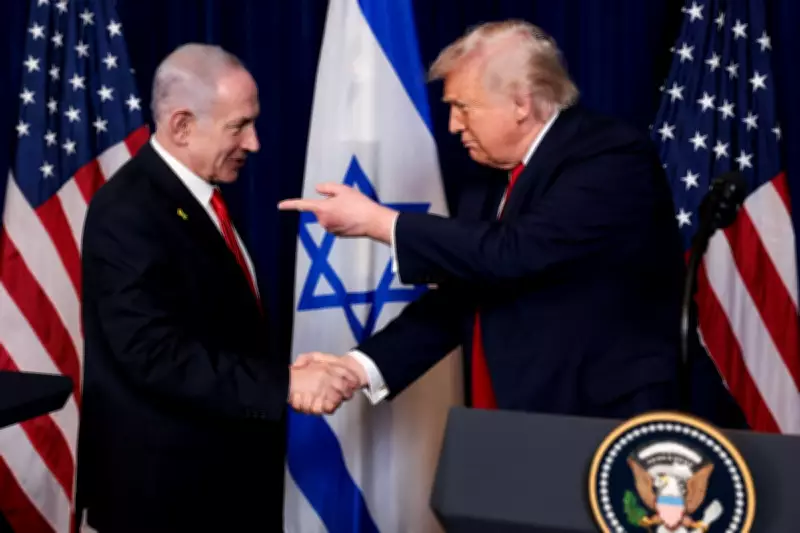
In December 2025, former President Donald Trump and Israeli Prime Minister Benjamin Netanyahu were photographed shaking hands at a press conference at Trump's Mar-a-Lago club in Palm Beach, Florida, symbolising the enduring but increasingly contentious alliance between the United States and Israel. This image comes amid a pivotal moment as Americans are finally adopting a more critical approach towards Israel, a shift that necessitates careful navigation to avoid sliding into antisemitism.
Legitimate Scrutiny of Israel's Role in the Iran Conflict
The joint US-Israel military strikes on Iran have forced a long-overdue reckoning in American political culture. Israel's involvement in drawing the United States into military action against Iran warrants serious and healthy scrutiny. According to US Secretary of State Marco Rubio, the United States participated partly because it anticipated Israel acting unilaterally and feared the potential blowback. This indicates that Israeli strategic priorities influenced American military timing, which in turn affected American casualties.
While it is inaccurate to claim that Israel forced the US into unwanted actions, the degree to which intelligence-sharing, lobbying pressure, and assumed aligned interests drove US decision-making must be thoroughly examined. Such questions are essential for democratic oversight, especially given that only 21% of Americans supported strikes on Iran before they commenced. The public deserves a full accounting of how the nation reached this point.

The Dangerous Slide into Antisemitic Conspiracies
However, this scrutiny is not confined to sober foreign policy analysts. In the days following the strikes, social media platforms have been flooded with crude language invoking tropes like "puppet masters," "dual loyalties," and insinuations that Jewish money influenced American policy. Phrases such as "Israel first" have surged, often used to imply that US politicians are controlled by Jewish interests. Far-right influencers have even recycled rat imagery reminiscent of Nazi propaganda, highlighting how legitimate criticism can easily devolve into dangerous antisemitism.
This dual-edged reality is exacerbated by the fact that criticism of Israel has become more acceptable across the American political spectrum. On the left, the Gaza war of 2023–2024 has led younger progressive voters to adopt a more skeptical view of the US-Israel relationship. On the right, nationalist isolationism, promoted by figures like Tucker Carlson and elements of the Maga coalition, questions American commitments to Israel on "America first" grounds. Carlson has described the relationship as "deeply destructive and humiliating," while also platforming Holocaust deniers, and Candace Owens has labelled the Israeli government as "not America's ally," alongside advancing antisemitic conspiracies.
Converging Critiques and Rising Antisemitism
Polling reflects this shift, with American sympathy for Israel hitting an all-time low in 2025, falling below 50% for the first time in nearly 25 years of Gallup tracking. This convergence of criticism contains a healthy element: a relationship that cannot be questioned is a dependency, not an alliance. Given Israel's actions in Gaza, which many international and Israeli human rights groups consider genocide, and its apartheid regime in the West Bank, the US cannot continue providing unquestioned financial support, even if it violates American human rights law.
Yet, this critique occurs during a period of increased anti-Jewish violence, including incidents like the arson of a Jewish governor's home, a firebombing in Boulder, and a murder outside the Capital Jewish Museum in Washington. The challenge is compounded by organizations that blur the line between antisemitism and legitimate criticism of Israel, making accurate statistics difficult to obtain. The increased acceptability of criticizing Israel can create a permission structure for greater antisemitism, with the two often traveling together.

Navigating the Fine Line Between Accountability and Decency
Figures like Marjorie Taylor Greene and Tucker Carlson use genuine concerns about US foreign policy to attract followers, some of whom may not be aware of their bigotries. Greene accused Trump of "wanting to fight wars for Israel," and Carlson referred to the conflict as "Israel's war," oversimplifying US agency in the decision-making process. This reductive attribution minimizes American responsibility and obscures clear geopolitical analysis.
There is no clean solution to this complex issue. However, it is a false choice to suggest that fighting antisemitism requires stopping criticism of Israeli policy or that honest critique must tolerate attached antisemitism. The intellectually honest path involves holding both commitments simultaneously: criticizing Israel without softening legitimate questions for fear of misuse, and fighting antisemitism without treating every accusation as a defense of Israeli policy. This requires making fine distinctions and maintaining intellectual honesty, even when it is unpopular.
Sacrificing either accountability or decency is a price that a genuinely democratic society cannot afford to pay. As Americans grapple with these dual imperatives, the need for nuanced discourse has never been more critical.