
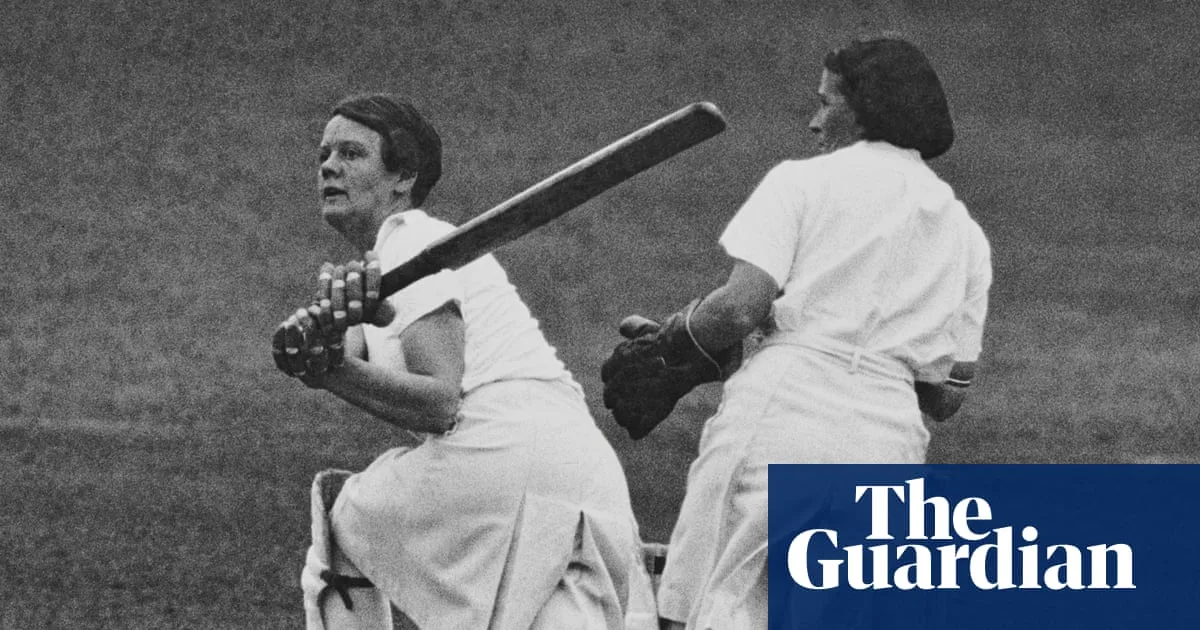
In 2011, when I began my PhD on the history of women's cricket, a visit to the MCC library at Lord's revealed a startling gap: the entire collection on women's cricket consisted of just three books. The archives were empty. Determined to change this, I set out to write a comprehensive history, a task that would take a decade and lead me to a former cowshed in Lancashire.
My research involved tracking down former England players, many of whom had faced ridicule and financial hardship. Chris Watmough described writing hundreds of letters begging for sponsorship for the 1968-69 tour to Australia and New Zealand; the only company that responded was Berlei, a lingerie brand, so the team travelled wearing sponsored bras. Ruth Prideaux, coach of the 1993 World Cup-winning team, had so little funding that players slept on blow-up mattresses in her living room and trained on Eastbourne beach.
The Women's Cricket Association (WCA) had run the game for over 70 years before the ECB took over in 1998. The first women's Tests were played in 1934-35, and more than 140 women had represented England by 2011. I interviewed many of them, including Enid Bakewell for three and a half hours, and Rachael Heyhoe Flint, who invited me to tea at the House of Lords.
The breakthrough came when I learned that the WCA archive was stored in a former cowshed near Blackpool, cared for by former England player Carole Cornthwaite. I spent two weeks there, walking six miles daily from a B&B, and discovered minute books dating back to 1926, scrapbooks, letters, tour diaries, and newspaper cuttings. These treasures allowed me to piece together the history of the women's game and its key figures, such as Betty Archdale, nicknamed 'Hitler' for her captaincy style, and Myrtle Maclagan, who looked down on Australian players for their working-class roots.
The result is my book, The Women in Whites: A History of Women's Cricket in England, published on 1 June. I hope the MCC will acquire a copy to fill the gap I found a decade ago.




