Former Extremism Adviser Warns UK Charities May Be Iran 'Soft Power' Hubs
The Government's former extremism adviser has issued a stark warning that fears over being accused of racism may have allowed a network of charities to become 'soft power' hubs for Iran. A landmark report by Labour peer Lord Walney has identified more than 30 organisations across the United Kingdom that he alleges have become part of this network with connections to the hardline Iranian Islamic Republic.
Organisations Under Scrutiny
The organisations highlighted in the report include religious institutions, cultural centres, community hubs, and charities operating throughout the UK. Lord Walney, a former Labour MP, asserts that apprehension about becoming embroiled in racism rows has prevented authorities from taking decisive action against these groups, but he emphasises that they must do so urgently.
He further argues that the Charity Commission, which regulates charities in the UK, must be granted enhanced powers to address the 'underlying mission' of potentially rogue charities. Former commission head Sir William Shawcross informed Lord Walney that there was 'widespread fear amongst police, amongst schools, the headmasters and others of being accused of being racist' if they challenged any suspect organisations.

Systemic Delays and Resource Issues
The new report, titled Undue Influence, claims that Iran utilises this network to maintain its 'influence and interests' in the UK while separately plotting violent attacks against dissidents, Iranian media, and the Jewish community. Although eight of the ten charities detailed in the report as part of an alleged Iranian soft power network are already subject to some kind of ongoing investigation by the Charity Commission, Lord Walney contends there have been 'systemic delays' in dealing with them.
He warned that the commission lacks sufficient power to address these organisations, struggles to obtain information from the Home Office and other institutions, and often becomes bogged down with technical issues like complex governance problems rather than striking at core concerns. This has left some organisations free to operate without sanction for years.
In his findings, Lord Walney reported that Sir William Shawcross cautioned the commission had 'never had the resources it needs for any investigations, and certainly not for counter-terrorism or counter-extremism investigations'.
Fear of Islamophobia Allegations
Kasra Aarabi, of United Against Nuclear Iran, which highlights the threats posed by the Islamic Republic, agreed that authorities were afraid of being accused of Islamophobia. 'I think this goes back to political will, and also unfortunately the fear of being labelled Islamophobic. The first thing that these people [the charities being scrutinised] will allege is Islamophobia,' said Mr Aarabi.
Key Organisations Identified
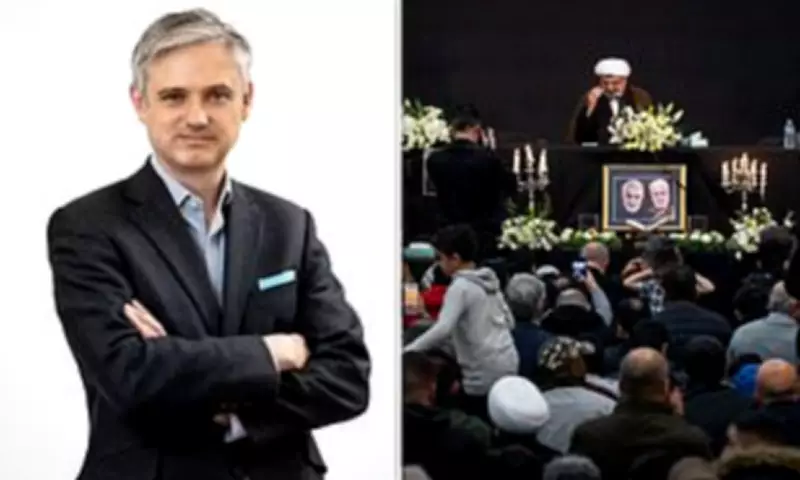
Lord Walney identified the Islamic Centre of England (ICE), which was closely linked to Iranian Ayatollah Ali Khamenei, as an apparent 'central node' in the Iran-linked charity network. Khamenei apparently appointed its past director and secretary, and last week mourners paid tribute to him outside the building in Maida Vale, north west London.
ICE has long been accused of being linked to the brutal regime. Last year, the Government's cross-party Intelligence and Security Committee even stated that ICE may provide Iranian intelligence agents 'with a useful base from which to act'. Aliasghar Ramezanpour, deputy minister of culture in the Iranian government between 2000 and 2003, described ICE as a 'kind of a headquarters that supervises all the network [of charities in the UK]' in the report.
In 2020, ICE received an official warning from the Charity Commission after hosting a vigil for Qasem Soleimani, a commander of the Islamic Revolutionary Guard Corps (IRGC) killed by the US, who was subject to UK sanctions. The event was attended by more than 2,000 people, including Iran's ambassador to London. Soleimani was praised as a 'dedicated soldier of Islam' who had died at the hands of 'the most wicked members of the human race'.

In 2021, further regulatory concerns were identified and an action plan was issued. A statutory inquiry, which it is still subject to, was opened in November 2022 by the commission because ICE failed to fully comply with both the official warning and action plan.
Denials and Rebuttals
Following accusations in the report, ICE has denied it acts as a headquarters for any network linked to Khamenei. It wrote to Lord Walney claiming that neither the Iranian political system nor any political figure influenced or controlled its activities and denied representing any foreign government. ICE said it believed the publication of what it described as inaccurate and inflammatory claims risked promoting religious hatred and causing harm.
The Islamic Human Rights Commission (IHRC) has also hit back at Lord Walney, accusing him of 'McCarthyite bluster' in a reference to Senator Joseph McCarthy who triggered the infamous 1950s hearings into an alleged communist spy ring in the US State Department. His report details allegations against the IHRC, which organises the annual Al Quds demonstration linked to the Iranian regime.
He reported how the group's director has praised the Iranian regime and backed the fatwa issued against Sir Salman Rushdie, author of The Satanic Verses, who famously was forced into hiding for years after it was issued. In a deeply personal rebuke, its Iranian Chair Massoud Shadjareh accused Lord Walney of 'inappropriately using' his position as a peer to write the report as well as being a 'pro Israel bad faith actor'.
Further Investigations
The Charity Commission has also opened a regulatory compliance case into Dar Alhekma Trust after one of its trustees Saeed Shehabi praised a commander of the IRGC and wrote after the October 7 terrorist attacks by Hamas that Palestinians 'rose up and became the master of the situation'. Lord Walney cited an incident in May 2024 in which a man who worked with the charity was involved in an incident with Iranian dissidents, which left one victim with serious spinal cord injuries.
But Dar Alhekma distanced itself from the man, saying he had never held a leadership or governance role but only performed at the mosque on a limited freelance basis as a radod, or singer. It 'categorically rejected' claims that it exists to further the interests of Iran's regime, and that Shehabi was a 'long-standing peaceful campaigner'. A spokesman said that his personal comments did not represent the trust's views and it was 'misleading to present them as proof that Dar Alhekma Trust is acting to advance the interests of the Iranian regime'.
Recommendations and Commission Response
Lord Walney's report recommends strengthening the Charity Commission with a range of measures including expanding its disqualification powers, mandating information sharing by other authorities to the commission, expediting its appeals process for extremism-related investigations, and introducing identity verification for trustees.
A spokeswoman for the Charity Commission told The Times on Saturday that it takes alleged links between charities and extremism very seriously and assessed all reports 'without fear or favour'. 'As a civil regulator, we use the powers granted to us by Parliament to respond robustly to evidence of wrongdoing and make referrals to other agencies where appropriate, including where there is evidence of criminality.'
'In light of this week's developments in Iran we have been in direct contact with a number of the charities mentioned in this report to remind the trustees of their legal duties relating to any political activity, proactively warning them of the consequences of breaching charity law.'
'However, it is not presently open to the commission to remove charitable status as a sanction and, in the absence of proscription of the IRGC, the commission can only act where there is clear evidence of a breach of charity law.'
'As the threat from extremism grows, we know our powers must keep pace. We are currently in welcome dialogue with the government to ensure our powers and our corresponding resources are fit for the present and the future.'