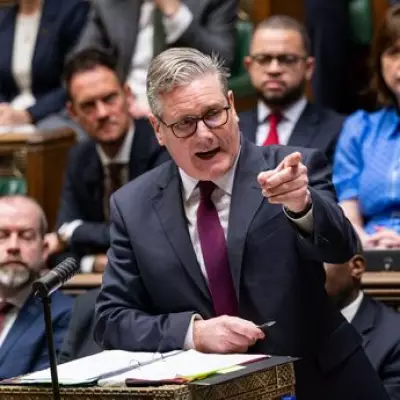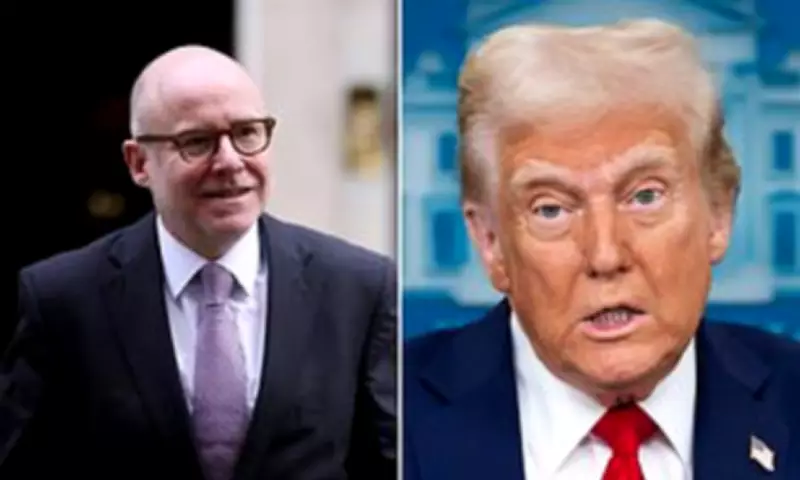
In a significant address tonight, Attorney General Lord Hermer, a key ally of Labour leader Sir Keir Starmer, will robustly defend the United Kingdom's adherence to international law, positioning it as a vital national interest. This stance is widely interpreted as a subtle yet pointed rebuke of former US President Donald Trump's confrontational approach towards Iran, which has sparked fears of potential war crimes.
A Transatlantic Divide Over Legal Norms
The speech, to be delivered at Manchester University, Lord Hermer's alma mater, comes against a backdrop of escalating tensions between London and Washington. The transatlantic rift has deepened following Trump's recent ultimatum to Tehran, demanding it allow cargo passage through the Strait of Hormuz within 48 hours or face the obliteration of its power plants—a threat the United Nations has warned could constitute a war crime.
No Contradiction Between Law and Military Strength
Lord Hermer is expected to argue that there is no inherent contradiction between a steadfast belief in international law and human rights and the necessity of maintaining a strong military. He will emphasise that military strength, exemplified by the defeat of Nazism, remains crucial in a dangerous world, particularly in countering threats like that posed by Russia.

The Attorney General will also mount a vigorous defence of the NATO alliance, directly countering persistent criticism from Trump and his administration. Trump has lambasted member states for not supporting US-Israeli offensive actions against Iran and for insufficient defence spending. Lord Hermer is set to label any advocacy for UK withdrawal from NATO, such as that proposed by Green Party leader Zack Polanski, as utterly reckless.
UK's Strategic Adjustments and Broader Political Context
This address follows the UK's decision to ease restrictions on missions by US forces based in Britain, permitting strikes on Iranian targets that threaten traffic through the Strait of Hormuz. Lord Hermer's speech is also anticipated to critique the Conservative Party and Reform UK for their support of leaving the European Convention on Human Rights, highlighting a broader domestic political divide.
In his remarks, Lord Hermer will assert, "It is not despite being a human rights lawyer that I passionately believe in the strength and professionalism of our armed forces—it is because of it." This underscores his view that legal frameworks and military capability are complementary, not conflicting, pillars of national security.
Escalating Rhetoric and International Warnings
The situation has been inflamed by Trump's recent comments, where he warned of the "total decimation of Iran" and criticised Britain and other NATO allies for their reluctance to engage in the US's faltering campaign against Iran. Meanwhile, Iran has retaliated with threats to destroy energy infrastructure across the entire region if its plants are targeted.
UN Secretary-General António Guterres has cautioned both sides that attacks on energy infrastructure may amount to war crimes, adding to the international urgency. Lord Hermer's speech thus serves as a clarion call for upholding global legal standards while navigating complex geopolitical challenges, reinforcing the UK's commitment to a rules-based international order amidst growing uncertainty.