
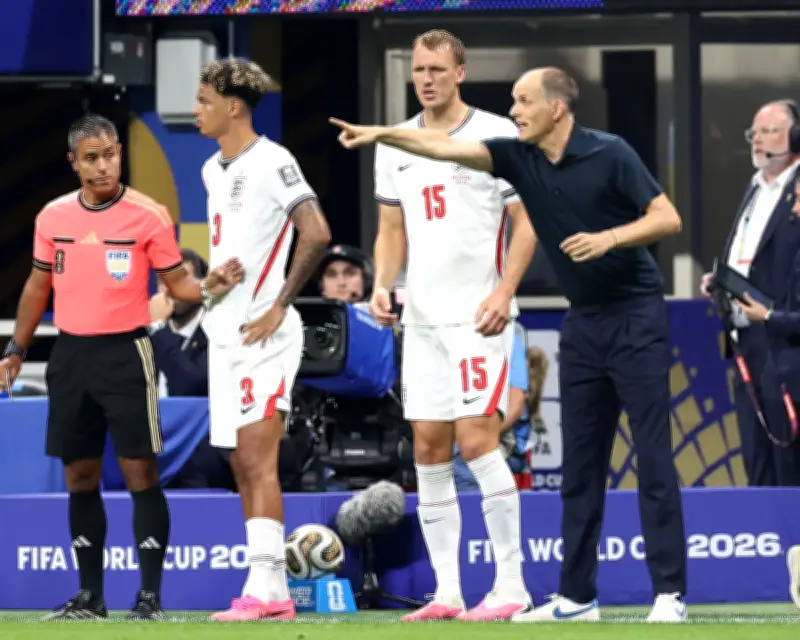
Thomas Tuchel's tactical decisions in the World Cup semi-final against Argentina have drawn heavy criticism, but the root cause of England's exit may be deeper than one manager's choices. The German coach will be pilloried for his selections and in-game management, yet English football culture itself is not structured to win major tournaments.
The Semi-Final Collapse
England took the lead in the 55th minute but then unraveled. From the 72nd to the 92nd minute, the team retreated into a defensive shell, losing all attacking threat. Tuchel responded by switching to a deep back five, and by the 82nd minute, England had six defenders on the pitch. This tactic had worked against Norway and Mexico, but against Argentina—featuring Lionel Messi—it proved disastrous. Messi exploited the space, and England's hopes evaporated.
Tuchel's post-match appearance showed a man already bracing for blame. “When you lose, every choice you made is wrong, and every other choice you didn’t is right,” he said, acknowledging the inevitable criticism.
Pattern of Failure
This exit follows a familiar pattern. Previous managers—Gareth Southgate, Roy Hodgson, Fabio Capello, Sven-Göran Eriksson—all faced similar accusations: bad selections, a team shrinking on the big stage. The common denominator is not the manager but the English football system. International football rewards cultural connectivity, game intelligence, and off-the-cuff creativity—qualities England's midfield lacks. The team lost to Croatia in 2018 when Luka Modrić took control, and to Italy in 2021 when the ball disappeared into calm possession.
England simply does not produce the high-end controlling midfielder whose game is entirely craft and intelligence. The Premier League, an international talent clearinghouse, prioritizes athleticism and directness over technical mastery. Academy players fulfill a brief but lack a coherent style.
Tuchel's Role in Context
Tuchel's squad selection was largely successful: England beat the hosts and reached the semis. His tactical missteps in the semi-final were a single-game failure. Overall, his performance rated an eight, downgraded to a seven post-Atlanta, with a four for that game alone. The FA's plan to hire a high-end club manager for 18 months was always a shortcut, an attempt to outsource expertise rather than fix the underlying system.
As one observer noted, “Maybe a happy ending doesn’t include a guy. Maybe it’s you, on your own, picking up the pieces and starting over.” The real problem is not Tuchel but the culture of short cuts, bodge jobs, and lack of game intelligence at the executive tier.
What Winning Would Mean
What would England winning the World Cup even express? Neglect coaching, produce no managers, create academy players without a coherent style, then stick a highly paid internationalist on top and hope it works when a genius-level player asks what you are actually made of. England have narrowed the gap but still crash in the same car. Until the culture changes, the cycle will continue.




