Trump's State of the Union Address Fails to Impress Across Party Lines
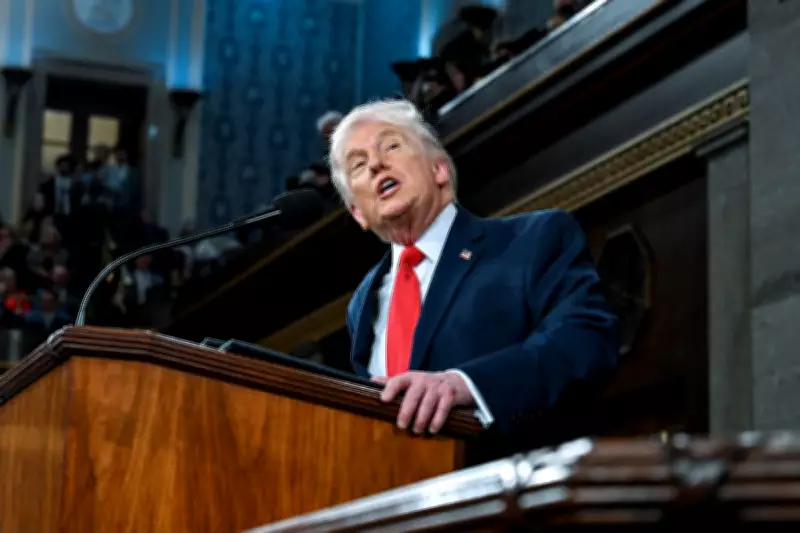
President Donald Trump's highly anticipated State of the Union address has left members of both major political parties feeling underwhelmed and critical of his performance. Delivered on Tuesday evening, the speech was Trump's prime opportunity to present his administration's accomplishments to a national audience and set the tone for the upcoming midterm elections.
Military Focus Overshadows Domestic Concerns
The president's address placed significant emphasis on America's military strength and foreign policy achievements, with detailed descriptions of operations in Venezuela and repeated praise for U.S. armed forces. Trump awarded Medals of Honor to two military pilots during the event, followed by a controversial quip about wanting one himself despite never having served.
This foreign-heavy approach drew criticism from conservative commentator Curt Mills of the American Conservative magazine, who described the speech as exhibiting "more low IQ than in term 1" and criticized what he termed "Hegsethism" - a reference to Defense Secretary Pete Hegseth's influence on Trump's military-focused agenda.

Domestic Policy Takes Backseat
Despite being the president's best chance to connect with average Americans about economic concerns, Trump devoted minimal time to domestic policy specifics. Only approximately five minutes of the more than 100-minute address focused on healthcare affordability, with the president promoting his "Great Health Care Plan" that faces significant legislative hurdles.
Kelly Dietrich, founder of the National Democratic Training Committee, criticized Trump's approach, stating: "The man is not in touch with what it means to be a normal person. He's in his billionaire bubble."
Democratic Response Highlights Affordability Crisis
Virginia Governor Abigail Spanberger delivered the Democratic Party's official response to the address, focusing squarely on economic concerns facing American families. Her remarks questioned whether the president was genuinely working to make life more affordable for ordinary citizens, concluding that most Americans would answer "no" to that fundamental question.
The Democratic National Committee amplified these concerns, noting that Trump's limited healthcare discussion came as millions face rising costs due to the expiration of federal Obamacare subsidies in January.
Republican Concerns About Midterm Strategy
Even within Trump's own party, the address failed to generate enthusiasm. Critics like former Representative Marjorie Taylor Greene have long urged the president to refocus on economic policy and reducing costs for American families, rather than emphasizing foreign policy achievements.
Mills, despite supporting Trump's trade policies, acknowledged that the president has substantial work ahead to convince Americans of his economic agenda's effectiveness, bluntly stating: "I don't think this was much of a game changer."
Polling Challenges Loom Large
The address comes at a challenging time for the president's political standing. Recent Washington Post/Ipsos polling reveals that more than sixty percent of Americans believe Trump is not doing enough to address inflation and bring down prices. His approval ratings on immigration have reached their lowest levels since September 2017, shortly after he rescinded the DACA program.
As both parties prepare for the 2026 midterm elections, there is growing consensus that Trump will need to substantially adjust his messaging and policy focus if he hopes to avoid becoming a liability for Republican candidates. The State of the Union address, rather than providing clarity and direction, has instead highlighted the president's struggle to balance foreign policy ambitions with domestic economic realities.