Trump Signs Executive Order to Restrict Mail-in Voting and Create National Voter List
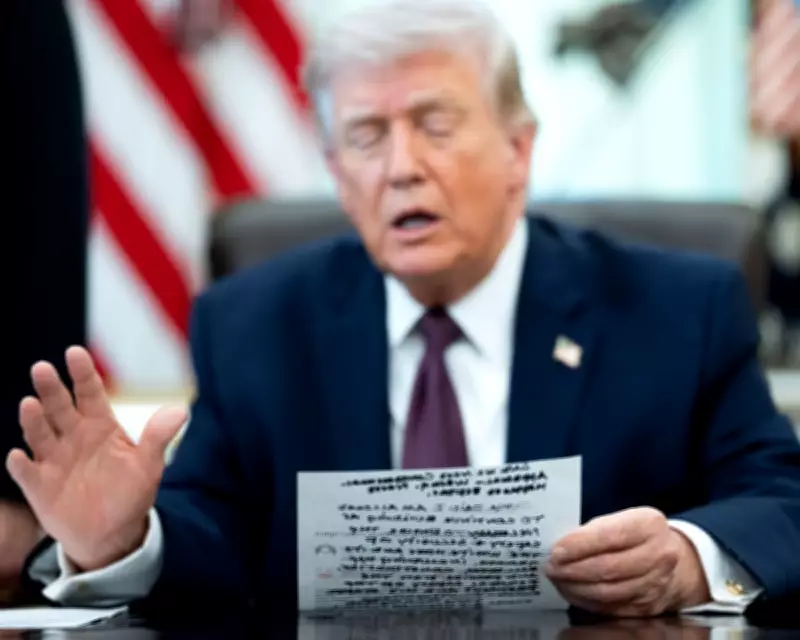
Donald Trump signed an executive order at the White House on Tuesday, aiming to limit mail-in voting and compile a national voter list. Critics have labeled the move as unprecedented and likely unconstitutional, with legal challenges expected to block its implementation.
Details of the Executive Order
The order directs the administration to establish a federal list of confirmed citizens eligible to vote in each state. It mandates the postal service to send mail-in ballots only to individuals on this list. During a press conference, Trump reiterated falsehoods about mail-in voting and expressed a desire to require voter ID and proof of citizenship.
Trump has consistently attacked mail-in voting, describing it as a scam that fosters election fraud, despite having voted by mail himself, including in a recent Florida special election.

What the Order Entails
Framed as an effort to enhance election integrity, the order instructs the Department of Homeland Security to collaborate with the Social Security Administration to create and share a national voter list with states. Additionally, it requires the postmaster general to use secure ballot envelopes with official markings for all mail-in and absentee ballots.
The attorney general is ordered to withhold federal funds from non-compliant states and cities and to prioritize investigating and prosecuting election officials who distribute ballots to ineligible voters.
Criticism and Legal Concerns
Voting rights advocates and Democrats argue the order is an unlawful voter suppression tactic ahead of the midterms. Senator Jeff Merkley of Oregon, which conducts elections entirely by mail, stated, Trump's attack on voting by mail isn't about integrity – quite the opposite. He knows vote by mail protects against all the well-known election-day voter-suppression tactics.
Experts assert the order is unconstitutional, as the president lacks legal authority over elections. The US constitution allows states to set their own election rules, with only Congress able to enact changes to federal election policy. Federal courts previously blocked a similar Trump order on citizenship requirements.
The Brennan Center commented, The president has signed an executive order on mail voting. He has no lawful authority to write the rules that govern our elections. He tried a year ago; we sued him; we won. A year later, he has tried again. He can expect the same result.
Challenges with Postal Service Compliance
Legal experts highlight potential flaws in enforcing the order through the US Postal Service. David Becker, a former justice department lawyer, noted that the USPS is run by a board of governors, and the president cannot dictate mail delivery. A spokesperson said the agency would review the order, as Trump has previously sought to bring the independent agency under more presidential control.
Popularity and Fraud Rates of Mail-in Voting
Voting by mail is widely used across the US, with tens of millions of Americans participating, including Trump. Nearly a third of Americans voted by mail in 2024, according to the States United Democracy Center, with particular popularity among white voters, older voters, and military members.
Despite Trump's claims of rampant fraud, data shows mail-voting fraud is exceedingly rare. A Brookings Institution report indicates such cases account for 0.000043% of total mail ballots cast, roughly four cases per 10 million votes.
Motivations Behind the Order
Trump has long attempted to interfere with state-run elections. A March 2025 executive order sought sweeping changes, including proof-of-citizenship requirements and election-day ballot receipt deadlines, much of which has been blocked by legal challenges.
Trump has expressed a desire to take over elections from Democratic-run areas, but US elections are decentralized, run by local officials rather than the federal government. The constitution's elections clause grants Congress power over election regulations, not the president.

Maya Wiley of the Leadership Conference on Civil and Human Rights remarked, This is Donald Trump turning the Department of Homeland Security into the department of controlling the homeland. The Trump administration's campaign targets alleged voter fraud, with the justice department demanding voter registration lists from states under the guise of election security.